US Army grounds all Apache helicopter training missions after deadly crash in Texas

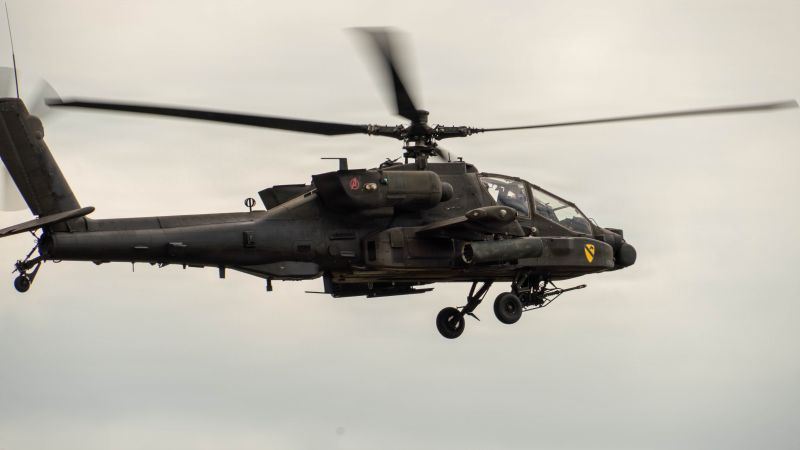
US Army Grounds All Apache After Texas Crash
Activelifezero.com – The US Army grounds all Apache helicopter training missions following a fatal accident at Fort Hood in Texas that killed two aviators. Military officials announced an immediate suspension of flight operations while investigators determine the cause of the crash. This precautionary action impacts training schedules across the installation as safety protocols undergo thorough review.
Crash Investigation Details
Experts from the Army Combat Readiness Center in Fort Rucker, Alabama, arrived Thursday to lead the investigation. The team will analyze flight data, weather patterns, mechanical systems, and crew actions to identify contributing factors. This comprehensive review includes collecting physical evidence, interviewing witnesses, and conducting technical assessments of aircraft components.
The incident has broader implications for Army aviation readiness. Commanders emphasized that safety remains paramount as operations eventually resume normal schedules.
Soldiers Remembered
Chief Warrant Officer 2 Deontre Huey, 34, and Warrant Officer Seth Olmstead, 25, perished in Wednesday’s crash. Both pilots served with Bravo Company, 1st Battalion, 227th Aviation Regiment, part of the 1st Air Cavalry Brigade at Fort Hood. Their deaths represent a significant loss to the aviation community.
Our hearts and deepest condolences are with the families of the Soldiers we lost Wednesday. The Army is a family, and a tragedy like this is felt throughout our formations and our community.
Lt. Gen. Kevin Admiral, Fort Hood’s commanding general, issued this statement expressing collective grief. The aircraft carries two crew members in a unique configuration: the pilot sits in the rear while the co-pilot and gunner share the front position, enabling effective task division during missions.
Combat Capabilities
The four-bladed aircraft represents one of the Army’s most advanced weapons systems. It carries 16 Hellfire missiles, 76 aerial rockets, and 1,200 rounds for its 30 mm cannon. The platform engages armor, personnel, and equipment targets in obscured conditions at ranges up to 8 kilometers, or roughly 5 miles.
The AH-64E variant features enhanced situational awareness, flight performance, and joint interoperability. Military officials call it the most advanced aerial fighting vehicle worldwide. Since entering service in 1984, the program has received continuous upgrades, with projections showing the aircraft remaining active through 2050.
Training Impact
The suspension affects multiple units at Fort Hood, one of America’s largest military installations. Soldiers preparing for deployment and those completing qualification courses must adjust their timelines while investigators work. Officials have not set a specific duration for the stand-down, stating operations will resume once leadership understands the accident’s root cause.
Military aviation accidents, though uncommon, trigger systematic examinations of every operational aspect. The investigation team will likely produce recommendations influencing training procedures, maintenance schedules, and protocols for units nationwide. Families have been notified, and support resources are available to those affected.
Frequently Asked Questions
Why did the US Army ground all Apache helicopters? The Army suspended training missions following a fatal crash at Fort Hood that killed two aviators. The temporary halt allows investigators to thoroughly examine flight data, mechanical systems, and other contributing factors before resuming operations.
When did the crash occur? The accident happened on Wednesday at Fort Hood in Texas. Army Combat Readiness Center specialists arrived at the scene on Thursday to begin their investigation.
Which unit operates the affected helicopters? The crashed aircraft belonged to Bravo Company, 1st Battalion, 227th Aviation Regiment, part of the 1st Air Cavalry Brigade stationed at Fort Hood.
How long will training remain suspended? The Army has not specified an exact timeline. Operations will resume once leadership determines the accident’s cause and implements any necessary safety measures.