Ex-Chinese military men accused of espionage activities near US bases in South Korea, police say

Daftar Isi
Former Chinese Military Personnel Face Espionage Charges in South Korea
Activelifezero.com – South Korean authorities have detained two individuals with ties to China’s armed forces, accusing them of gathering sensitive military intelligence near critical American installations on the peninsula. The arrests, announced in separate proceedings, highlight growing concerns about foreign surveillance activities targeting defense operations in one of Washington’s most important Asian partnerships.
Both suspects have been formally charged with aiding an enemy state, a serious offense under South Korean law that carries substantial penalties. The cases involve distinct methods of intelligence gathering—one centered on human sources and financial transactions, the other on technical interception of radio communications—yet both point to coordinated efforts to extract information about American and South Korean military activities.
Human Intelligence Operation at Camp Humphreys
The first case centers on a man in his forties who previously served in the Chinese military and has been running a military supply business near Camp Humphreys since 2021. Investigators allege that he cultivated a personal relationship with a South Korean woman employed at the facility, providing her with financial support in exchange for access to classified information about base operations.
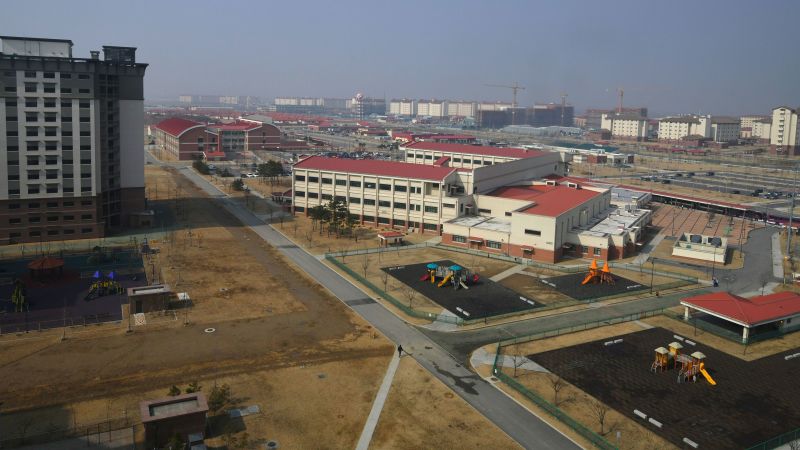
Camp Humphreys, situated approximately forty miles south of Seoul in Pyeongtaek, represents the largest American overseas military installation globally. The complex houses US Forces Korea headquarters alongside numerous supporting commands, serving as the operational nerve center for American military readiness across the Korean Peninsula.
Police said the man obtained information about US-South Korea joint military exercises, including Ulchi Freedom Shield, as well as changes in command positions.
The woman, who has since been reassigned from her duties, allegedly received payments specifically tied to military intelligence she could access through her position. According to the Gyeonggi Nambu police national security investigation division, the information gathered encompassed details about Ulchi Freedom Shield, the annual combined military exercise designed to enhance bilateral defense capabilities, as well as personnel rotations within the command structure.
When questioned by investigators, the suspect explained that he required the intelligence to support his military equipment commerce. He faces charges under both the aiding an enemy state statute and the Military Base and Installations Protection Act. South Korean authorities have notified American military officials about the investigation, which coincides with preparations for this year’s Ulchi Freedom Shield drills scheduled to commence next week.
Technical Interception Near Gunsan Airport
The second arrest involves a Chinese national in his sixties, also a former member of China’s armed forces, who was detained on Monday. Police allege that he employed a software-defined radio, commonly known as SDR, to capture military communications in the vicinity of Gunsan Airport in North Jeolla Province. The facility sits roughly one hundred ten miles south of Seoul and operates as a joint military-civilian airport adjacent to Kunsan Air Base, which hosts the American Air Force’s 8th Fighter Wing.
Investigators claim the suspect entered South Korea multiple times beginning in January 2024 on tourist visas, typically remaining for approximately one week per visit. During each stay, he reportedly checked into accommodations near the airport and deployed his compact SDR equipment to monitor military transmissions.
During questioning, police said the man told investigators that “listening to military-related communications is my hobby.”
Officers are currently examining the intercepted signals to determine whether any of the captured information was transmitted to Chinese recipients. The suspect faces charges of aiding an enemy state alongside violations of the Communications Secrets Protection Act, which governs the unauthorized acquisition and dissemination of classified communications.
Diplomatic and Strategic Implications
China’s Foreign Ministry responded to inquiries by stating it was not familiar with the circumstances surrounding the arrests. South Korea’s Defense Ministry and US Forces Korea both declined to provide additional commentary on the ongoing investigations.
These cases arrive at a moment of heightened strategic importance for the South Korea-US alliance. The peninsula has long served as a flashpoint for regional security, with North Korea’s nuclear ambitions and military posturing requiring constant vigilance from allied forces. Camp Humphreys and Kunsan Air Base represent critical infrastructure for rapid response capabilities, making them natural targets for intelligence gathering by potential adversaries.
The espionage charges carry significant weight in South Korean law. Aiding an enemy state can result in imprisonment of up to ten years, while violations of the Communications Secrets Protection Act may lead to additional penalties depending on the sensitivity of the information involved. The fact that both suspects are former Chinese military personnel suggests a pattern of utilizing individuals with defense backgrounds for intelligence operations.
South Korean authorities have indicated that the investigations remain active, with particular attention focused on whether the intercepted communications were forwarded to Chinese destinations. The timing of these arrests, coinciding with preparations for major joint military exercises, underscores the operational sensitivity of the information allegedly being collected.
The cases also reflect broader trends in modern espionage, where traditional human intelligence operations complement technical surveillance methods. The combination of financial incentives for insider access and sophisticated radio equipment for signal interception demonstrates the multifaceted approach being employed to gather military intelligence in the region.
Related Reading
Frequently Asked Questions
What is Ex Chinese military men accused of espionage?
Ex Chinese military men accused of espionage is the main topic of this guide. The article explains the context, practical details, and next steps readers should understand.
Why does Ex Chinese military men accused of espionage matter?
Ex Chinese military men accused of espionage matters because readers are looking for a useful answer, not just a short summary. Good content should match search intent and help them decide what to do next.