Trump keeps saying the US controls the Strait of Hormuz. Does it?

Daftar Isi
Who Really Commands the Strait of Hormuz Amid Escalating Conflict?
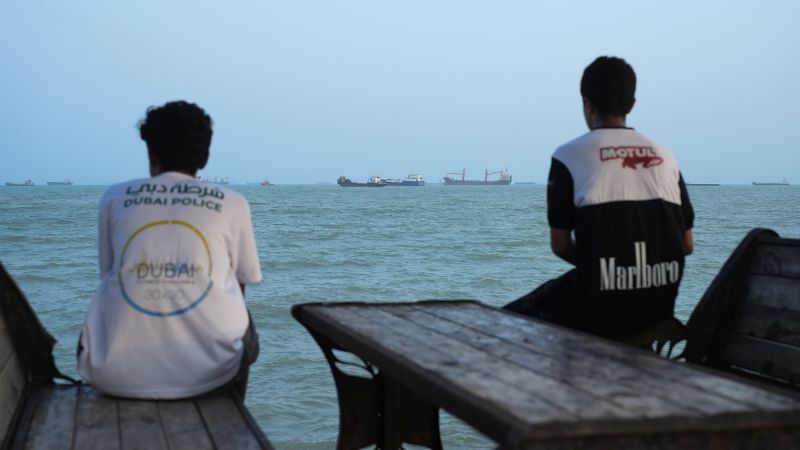
Activelifezero.com – As the confrontation between Washington and Tehran enters its sixth month, the world’s attention has turned to one of the most critical maritime chokepoints on Earth. The Strait of Hormuz, a narrow passage connecting the Persian Gulf to the Arabian Sea, has become a flashpoint where military posturing meets economic vulnerability. While American leadership has made bold declarations about dominance over this vital waterway, the situation on the ground—and on the water—tells a more nuanced story of contested authority and mutual deterrence.
Presidential Claims Meet Maritime Reality
President Donald Trump has been unequivocal in his assertions regarding American supremacy over the strait. Speaking to journalists, he declared that the United States possesses complete authority over the passage through which crude oil travels from major producers like Saudi Arabia and Iraq to international markets. His comments have been characteristically direct, suggesting that any challenge to American control would be met with decisive force.
They don’t have control. We have total control. We own it, and at some point, maybe they’ll do something, and then they get blown away. Right now, we’re in a very good position.
Trump’s assertions were bolstered by claims that the American Navy had cleared the strait of underwater obstacles, removing potential threats to commercial navigation. Yet Iranian officials have remained steadfast, refusing to restore full maritime traffic until their demands are satisfied. This diplomatic impasse has created a situation where the strait exists in a state of partial functionality, neither fully open nor completely closed.
The Blockade’s Economic Stranglehold
Central to understanding the current dynamics is the American naval blockade that has effectively isolated Iran from global maritime commerce. Ships traveling to or from any Iranian port—whether situated within the strait or beyond its boundaries—face restrictions that have severely impacted Tehran’s financial inflows. While some vessels continue to navigate the Persian Gulf toward non-Iranian destinations, the volume represents merely a fraction of pre-conflict levels.
The statistics paint a stark picture of disruption. On a recent Tuesday, only fourteen commercial vessels managed to cross the strait, a dramatic decline from the approximately one hundred and twenty ships that routinely passed through before hostilities began. This reduction reflects not just physical obstacles but growing apprehension among shipping operators worldwide.
Fear and Insurance: The Human Cost of Conflict
Carl Schuster, who previously directed the United States Pacific Command’s Joint Intelligence Center, identified the root cause of reduced traffic as diminished confidence in American security guarantees. Merchant shipping companies and their vessels remain hesitant to risk passage through waters where attacks continue to occur.
These concerns proved well-founded last week when at least four ships owned by the Abu Dhabi National Oil Company came under simultaneous assault from drones and missiles within the strait. Such incidents serve a dual purpose: they inflict immediate damage while simultaneously driving up insurance premiums, creating a financial barrier that further discourages commercial navigation during the ongoing conflict.
Beyond direct attacks, Iranian forces have employed harassment tactics that keep shipping companies on edge. The United Kingdom Maritime Trade Operations, a Royal Navy-affiliated organization monitoring regional security, documented fifty-four instances of vessel damage since the war commenced. Three ships have been completely lost, and thirteen near-misses have been recorded in the strait and adjacent waters of the Persian Gulf and Gulf of Oman.
Defining Control in a Contested Space
The question of who truly controls the strait requires examining multiple dimensions of power. Schuster offered a straightforward assessment: until safe passage can be guaranteed for all vessels, no single party can claim total dominion. This perspective was echoed by Cedric Leighton, a CNN military analyst and retired Air Force Colonel, who described the situation as a standoff rather than a clear victory for either side.
Leighton noted that American proximity to the region, combined with the ongoing blockade and Iran’s demonstrated capacity to deploy mines and small boats for harassment, creates a balanced dynamic. Neither Washington nor Tehran possesses the ability to exercise unrestricted authority over the waterway that carries twenty percent of global oil production and an even larger share of natural gas supplies critical to certain nations.
Iran’s Strategic Patience and Political Calculus
Iran benefits from several advantages in this prolonged confrontation. Geographic proximity provides tactical flexibility, while the disruption of maritime traffic offers psychological and political leverage. Schuster emphasized that the economic disruption serves Tehran’s strategic interests by demonstrating its ability to influence global markets.
The political dimension extends beyond immediate military considerations. The upcoming American midterm elections in November could reshape the conflict’s trajectory. Should a new Congress emerge with different priorities, it might pressure the president to conclude hostilities on terms favorable to Tehran. Recognizing this possibility, Iranian leadership appears willing to extend the timeline of the conflict.
We have to attain deterrence so that the enemy never dares to attack us, so we can live with security.
Mohammad Reza Naqdi, a senior adviser to Iran’s Revolutionary Guards, stated publicly that Tehran could prolong the war until Trump leaves office. This long-game strategy reflects confidence in Iran’s ability to withstand economic pressure while maintaining military readiness.
A Complex Balance of Power
The United States retains significant military and economic advantages, particularly through heavy sanctions targeting Iranian oil exports and frozen assets. However, the strait’s importance to global energy security means that neither side can afford to escalate beyond a certain threshold without risking broader consequences. The waterway remains a symbol of contested authority, where control is measured not in territorial claims but in the ability to ensure safe passage for the vessels that keep the world’s economy functioning.
Related Reading
Frequently Asked Questions
What is Trump keeps saying the US controls?
Trump keeps saying the US controls is the main topic of this guide. The article explains the context, practical details, and next steps readers should understand.
Why does Trump keeps saying the US controls matter?
Trump keeps saying the US controls matters because readers are looking for a useful answer, not just a short summary. Good content should match search intent and help them decide what to do next.