
Your guitar may depend on elephant poop. Here’s why
Your Guitar May Depend on Elephant Poop. Here’s Why
Your guitar may depend on elephant – Fate often operates in ways that defy easy explanation. Deep within the heart of central Africa’s Congo Basin, the world’s second-largest tropical rainforest, this truth has become strikingly evident. A seemingly mundane pile of elephant excrement holds the key to a complex web of ecological and economic consequences, linking the survival of ebony trees, the fate of an endangered species, Cameroonian communities, and a prominent US guitar manufacturer. What began as a curiosity in ecological research has since evolved into a critical insight: the decline of African forest elephants could spell doom for the iconic ebony wood used in musical instruments.
The Disappearing Giants
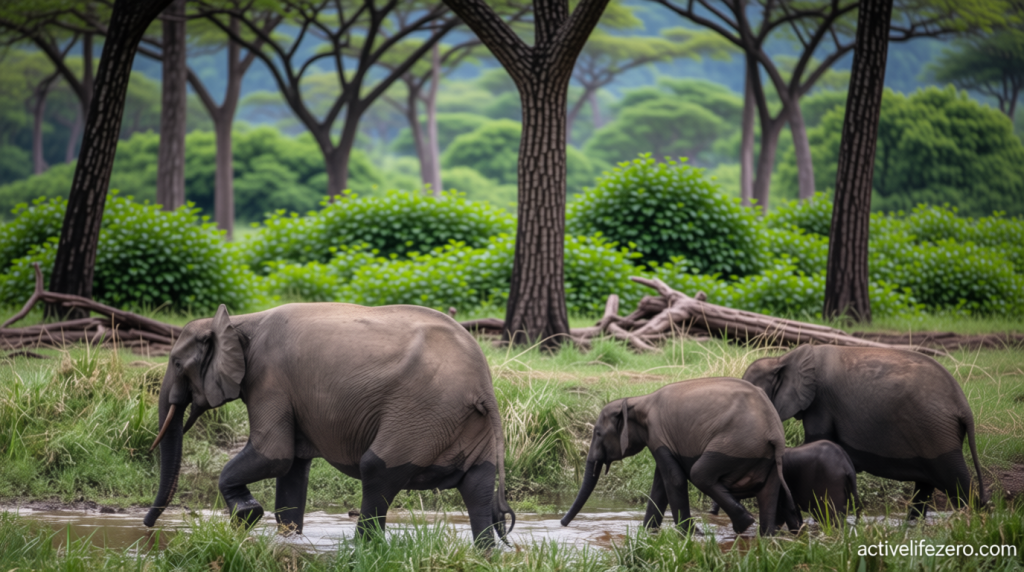
The African forest elephant, a keystone species in the region, has faced a dramatic population collapse. Over the past three decades, its numbers have plummeted by an estimated 80%, according to the International Union for Conservation of Nature (IUCN). This decline, driven by habitat loss and the relentless ivory trade, has left the species on the brink of extinction. But the impact of their disappearance extends far beyond the forests. Their role as natural seed dispersers has become a lifeline for the ebony tree, a species now at risk of following the elephants into oblivion.
Camera traps and analysis of elephant dung have revealed a surprising ecological truth: these giants are essential for the ebony tree’s survival. By consuming the fruit of the tree and transporting its seeds across vast distances, elephants ensure genetic diversity and expand the tree’s range. Their dung also acts as a protective barrier, deterring rodents from feasting on the seeds. A nine-year study led by the UCLA’s Congo Basin Institute (CBI) found that forest regions lacking elephants had 68% fewer ebony saplings. This discovery underscores the elephants’ irreplaceable role in maintaining the tree’s population.
“The results are quite frightening,” said Eric Onguene, a research assistant at the CBI. “We initially assumed ebony seeds could be spread by any animal, but if elephants vanish, the species may not survive.”
The connection between the two species is both profound and paradoxical. While the elephant’s extinction threatens the ebony tree, the tree’s survival is equally vital for the elephant. The study highlights a delicate balance: without elephants, the ebony tree’s ability to regenerate is severely compromised. This interdependence has led researchers to advocate for urgent conservation measures, emphasizing that the future of the Congo Basin’s ecosystems hinges on the survival of both species.
A Sustainable Solution
The revelation has not only shaken ecologists but also music industry leaders. Taylor Guitars, a California-based company known for its premium instruments, has played a pivotal role in funding this research. The question arises: why would a guitar manufacturer invest heavily in a study thousands of miles away? The answer lies in the unique properties of ebony wood, which is prized for its dense, durable, and smooth texture. This material is crucial for crafting the bridges and fretboards of Taylor’s guitars, contributing to their global reputation. However, the demand for ebony has made it a target for deforestation, threatening its long-term availability.
As a co-owner of the Crelicam ebony mill in Yaoundé, Cameroon, Taylor Guitars’ founder Bob Taylor recognized the urgency of the situation. “In most areas where ebony was harvested, the supply had run out,” explained Matthew LeBreton, director of the Crelicam Mill. This scarcity has prompted Taylor to adopt a proactive strategy: investing in the inevitable. “You wake up one day and think, ‘Uh oh. This isn’t going to last forever,’” Taylor told CNN. “We can’t keep taking more than the forest can replace. So, we need to plant trees before they’re gone.”
The Ebony Project, launched in 2016, has since become a collaborative initiative involving businesses, local communities, and scientists. Its goal is to secure the future of the ebony tree by leveraging the elephants’ role in seed dispersal. The project’s strategy includes distributing ebony seeds to Indigenous Baka communities, who coexist with both the elephants and the forests. This approach aims to foster stewardship and ensure the trees continue to thrive in their natural habitat.
“To protect the Congo Basin’s ecosystem, you must not just declare it a protected area,” said Zac Tchoundjeu, a CBI researcher. “You need to engage the local people and demonstrate the value of preserving these resources.” The Baka communities, who have lived in harmony with the forests for generations, are now key partners in the effort. By involving them in seed collection and planting, the project seeks to create a sustainable cycle that benefits both the environment and the people who depend on it.
The journey from discovery to action has been anything but simple. The slow growth rate of ebony trees—requiring up to a century to mature—means that conservation efforts must be long-term. Yet, the collaboration between scientists, local populations, and industry leaders has provided a glimmer of hope. As the study’s findings gain traction, they are reshaping how we view the relationship between wildlife and economic interests. What was once a niche ecological concern has become a global issue, with implications for music, conservation, and the future of Africa’s forests.
Taylor Guitars’ investment underscores a growing awareness of the interdependence between natural resources and human innovation. The company’s decision to support the Ebony Project reflects a commitment to sustainability that goes beyond profit. By ensuring the survival of the ebony tree, Taylor aims to secure the material that has been central to its success. This effort also highlights the broader significance of conservation: protecting ecosystems is not just about saving species but about preserving the very foundation of industries and cultures that rely on them.
In a world where the lines between nature and human activity are increasingly blurred, the story of the ebony tree and the African forest elephant serves as a powerful reminder of the interconnectedness of life. It is a tale of survival, adaptation, and the need for collective action. As the research continues, it may yet redefine how we approach conservation, ensuring that the music of the future is not only heard but also rooted in the natural world that has sustained it for centuries.
