
‘Africa is the next wave of global talent’: This CEO is all about tech education
‘Africa is the next wave of global talent’: This CEO is all about tech education
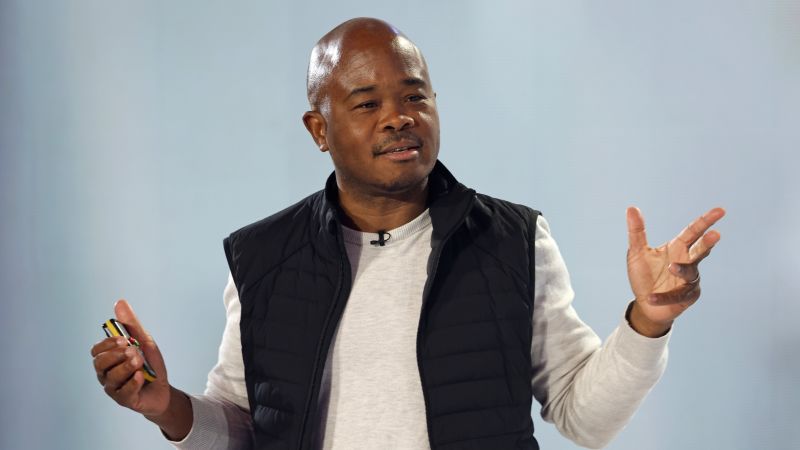
Africa is the next wave of global – Fred Swaniker, the visionary CEO of Sand Technologies, is reshaping the global tech landscape by nurturing African talent through innovative educational programs. His mission centers on equipping young Africans with the skills needed to thrive in the digital economy, emphasizing that the continent is poised to become a powerhouse of innovation. With a focus on scalability, Swaniker’s initiatives have already trained over 700,000 individuals in 2024, and his long-term goal is to reach 3 to 5 million by the next decade. This ambitious plan underscores Africa’s potential to not only compete globally but also lead in solving complex challenges through technological advancement.
The Rise of African Tech Education
Swaniker’s journey began in 2004 with the launch of the African Leadership Academy (ALA), a pioneering institution dedicated to cultivating exceptional African youth for higher education. Recognizing the need for broader opportunities, he expanded his vision in 2015 by establishing African Leadership Universities (ALUs), which provide a more comprehensive pathway for students to develop leadership and technical competencies. These programs are designed to address the gap in skilled professionals while fostering a new generation of innovators ready to tackle global issues.
A key milestone in Swaniker’s work came in 2017 with the creation of the African Leadership Xcelerator (ALX). This initiative offers short, virtual courses in critical fields such as software engineering, data analytics, and now, emerging areas like film, music, gaming, and animation. By leveraging digital platforms, ALX ensures accessibility for learners across the continent, breaking down geographical barriers and enabling individuals to acquire high-demand skills remotely. Swaniker’s approach is rooted in the belief that technology can democratize education, allowing talented Africans to contribute to the global workforce without leaving their home countries.
One striking example of this transformative approach is the initiative within a Kenyan youth detention center, where coding classes are empowering incarcerated individuals to build digital futures. Such programs highlight how education can create opportunities even in underserved communities, proving that talent is not confined to urban centers. Swaniker’s efforts have also extended to partnerships with local institutions, ensuring that the curriculum aligns with Africa’s evolving economic needs and technological aspirations.
Global Opportunities for African Talent
Swaniker acknowledges the reality of brain drain, where skilled Africans often seek employment in the United States or the United Kingdom. However, he views this as a positive trend rather than a setback. “Brain drain is only a problem when you’re training talent at low scale,” he explains. With his programs now reaching 700,000 people annually, the scale of investment has shifted the equation. “We’re doing this at scale,” Swaniker emphasizes, noting that Africa’s demographic dividend—where the average age is just 19—positions it to become a critical hub for innovation.
“The continent should train 100 million people,” he adds, stressing that Africa’s youth represent the future of human progress. By equipping this population with digital skills, Swaniker argues, the continent can produce the ingenuity required to address global challenges. “What Africa has that no one else has is young people,” he says. “We’re going to be 40% of the world’s population by the end of the century, and 60% of its youth. That’s a massive opportunity.”
Swaniker’s perspective is shaped by his belief in the power of technology to bridge gaps. “What the world needs to realize is that Africa is the source of ingenuity that will solve problems for the rest of the world,” he states. This is evident in the innovations developed by Sand Technologies, which are already making an impact across various industries. The same potential, he argues, exists in creative fields like film and music, where African talent is set to redefine global culture.
“If you’re in Liberia, you’re no longer isolated and you can compete with somebody from Los Angeles.”
Swaniker highlights the growing ability of African professionals to access global markets. He points to Nigerian musicians as a case study, noting that their earnings have surged from $10,000 per performance locally to millions through international platforms. “Nigerians have shown that when talent goes global, it can thrive,” he says. This trend is not limited to music; Swaniker envisions similar success in film, gaming, and design. “Young people set the cultural zeitgeist for the world,” he explains. “And the source of these young people? It’s in Africa.”
“You can be a trader and create content and build movies. You can use AI to do all these things. It’s a leveler. It’s a great equalizer in society.”
Swaniker’s vision extends beyond individual success. He emphasizes the ripple effect of remote work, where educated Africans contribute to their local economies while competing globally. “When someone is educated and can work remotely, they’re earning more money,” he says. “That money can be spent in local shops, supporting communities and creating jobs.” He estimates that one trained professional can uplift five to 10 others, illustrating how education becomes a catalyst for broader economic growth.
The conversation with CNN’s Nick Watt reveals Swaniker’s optimism about Africa’s role in the digital age. “The same thing can happen in the creative industry,” he says. “The next wave of culture and entertainment will come from young Africans.” This sentiment is echoed in his belief that digital skills are not just for tech sectors but for all industries. “It has expanded the realm of possibility,” he explains. “You can be a trader, a content creator, a filmmaker—anyone with the right tools can innovate.”
Swaniker’s work underscores a broader shift in how Africa is perceived on the global stage. From the African Leadership Academy to ALX, his initiatives are redefining the continent’s place in the world. “Africa is the last remaining store of what has always driven human progress: human capacity and talent,” he asserts. With continued investment and strategic planning, he envisions a future where Africa is not just a recipient of global technology but a leader in its own right, shaping the next era of innovation and creativity.
