
Why no one knows what to expect from the Fed decision today
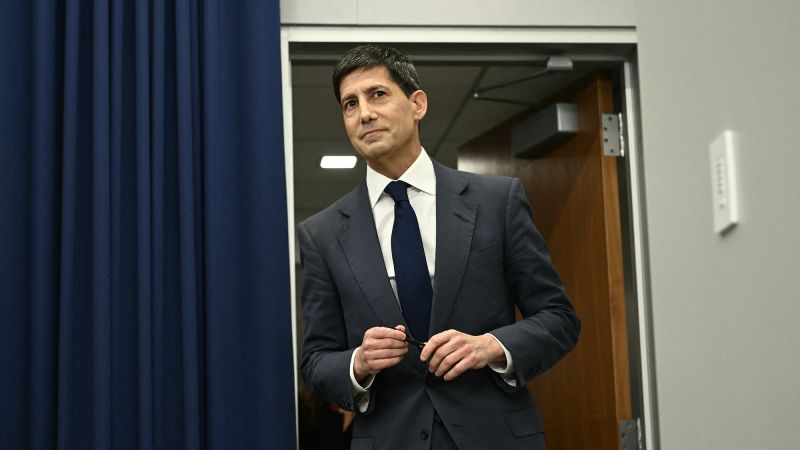
Fed Rate Decision Looms Amid Uncertainty and Shifting Economic Signals
Activelifezero.com – Investors and economists alike are bracing for Wednesday’s Federal Reserve announcement, as the central bank faces a complex landscape of competing forces. Chairman Kevin Warsh has maintained an unusually quiet demeanor regarding future interest rate movements, leaving markets to speculate about the next policy move. The decision will be revealed at 2 p.m. Eastern Time, with Warsh scheduled to address reporters thirty minutes later at 2:30 p.m. ET.
Energy Prices and Global Tensions Create Volatility
Recent economic data presents a mixed picture for policymakers. The latest Consumer Price Index revealed that inflation decelerated significantly during June, primarily driven by declining energy costs. This improvement coincided with a temporary de-escalation in hostilities involving Iran. Such positive developments led market participants to reduce their projections for an interest rate increase—the first potential hike since July 2023.
However, the situation has evolved rapidly. Earlier in the month, conflicts in the Middle East intensified, causing global energy markets to surge. While tensions have moderated somewhat in recent days, allowing energy prices to retreat, transportation through critical maritime corridors remains constrained. The Bab al-Mandeb Strait and the Strait of Hormuz continue to experience reduced shipping activity, a concern given that approximately one-quarter of worldwide oil shipments pass through these waterways.
Warsh’s Unconventional Approach Deepens Market Confusion
Adding to the uncertainty is Warsh’s deliberate departure from traditional communication methods. Since the year 2000, Federal Reserve officials have relied heavily on “forward guidance”—a practice of providing investors with clearer signals about the trajectory of interest rates. Warsh has indicated his intention to abandon this longstanding convention. During his confirmation hearing in April, the chairman explicitly stated he would avoid making predictions about the economic future while serving as Fed head.
This shift has not gone unnoticed. Narayana Kocherlakota, an economics professor at the University of Rochester and former president of the Federal Reserve Bank of Minneapolis, noted the challenge this creates. “The Fed is looking at all these inflationary impulses and determining if they will be there over the longer term,” Kocherlakota explained to CNN. “But it’s becoming very difficult to know what the Fed is going to do in the next few months, because Chair Warsh has been studiously uncommunicative about how the Fed is going to react to these changes in economic conditions.”
Market Reaction and Broader Economic Implications
Current market sentiment remains divided. Some participants anticipate that the Fed will maintain its benchmark lending rate for the fifth straight meeting, while others expect a rate increase. This ambiguity represents a departure from recent years of relative clarity.
Kocherlakota warned that this uncertainty could have tangible consequences for economic activity. “It’s going to lead to market volatility,” he said. “It makes businesses more reluctant to invest, meaning they’ll be less likely to demand workers to build the kinds of goods and services … because they’re uncertain about what the Fed is going to be doing.” He characterized this situation as “a complete unforced error on the part of the Fed.”
Not everyone views Warsh’s approach negatively. Kezia Samuel, chief market strategist at wealth management firm AssetMark, suggested that excessive communication may have become problematic in recent years. “We got to a point where the dissection of the Fed’s forward guidance was so acutely broken down into parts that I’m not sure it helped in the way it was meant to help either,” Samuel observed.
Inflation Outlook and Core Measures
Federal Reserve officials generally concur that temporary energy price increases should not trigger interest rate adjustments, as these costs are expected to normalize independently. Fed Governor Christopher Waller emphasized this perspective this month, stating that “conventional wisdom among central bankers is to look through one-time price increases, such as those associated with higher tariffs and a jump in oil prices.”
Nevertheless, persistent price pressures could cause inflation to spread beyond the energy sector, potentially undermining public confidence that price growth will eventually align with the Fed’s 2% annual target. To assess the true direction of inflation, central bankers examine core measures that exclude volatile food and energy components. These metrics, combined with market- and survey-based inflation expectations, provide valuable insight into how persistent price pressures may evolve and how Americans perceive the cost environment.
As Wednesday’s announcement approaches, all eyes will be on whether Warsh’s unconventional strategy will ultimately reduce or amplify the uncertainty that currently characterizes monetary policy expectations.
Related Reading
Frequently Asked Questions
What is Why no one knows what to expect?
Why no one knows what to expect is the main topic of this guide. The article explains the context, practical details, and next steps readers should understand.
Why does Why no one knows what to expect matter?
Why no one knows what to expect matters because readers are looking for a useful answer, not just a short summary. Good content should match search intent and help them decide what to do next.
