
Who can call themselves a ‘New Yorker’?
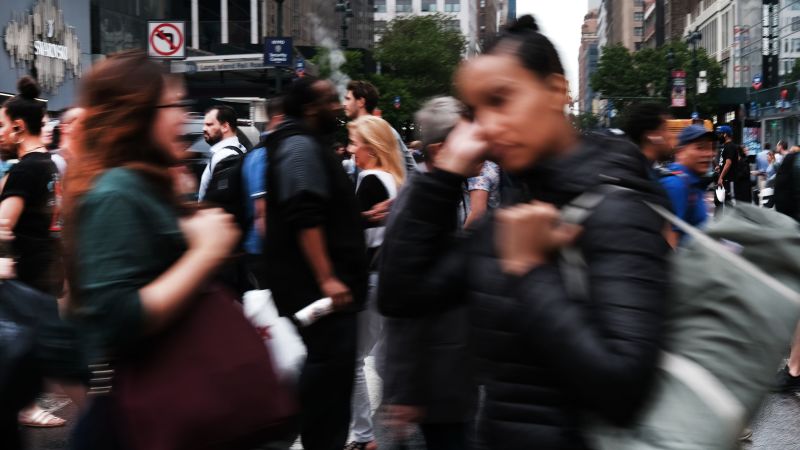
Who can call themselves a ‘New Yorker’?
Who can call themselves a New Yorker – At the heart of a growing debate lies a seemingly simple question: What qualifies someone as a New Yorker? The discussion took center stage last week when Jennifer Lopez, a globally recognized entertainer, made a bold statement during an appearance on the online talk show “Subway Takes.” Sitting aboard a New York City subway, Lopez shared her perspective on geographical identity, asserting that only those born in the city could claim the title. Her words sparked a wide-ranging conversation among residents, immigrants, and newcomers, challenging the notion of what it means to belong to a place as diverse and dynamic as New York.
The Birthplace Controversy
Lopez, who has made Los Angeles her primary residence, emphasized that living in the city for decades does not automatically confer New Yorker status. “You have to be born in New York to be a New Yorker,” she declared, referencing her own upbringing in the Bronx. The show’s host, Kareem Rahma, who was born in Egypt, grew up in Minnesota, and has called New York home for 14 years, pressed her on the matter. “Does 50 years of living here make someone a New Yorker?” he asked. Lopez responded with certainty, stating that while residency shapes one’s character, “you live in New York. You take on characteristics of New Yorkers, probably by that time. You have a New York sensibility.”
“You have to be born in New York to be a New Yorker.”
Her stance, however, left out many individuals whose contributions to New York’s cultural and social fabric are undeniable. Consider Mayor Zohran Mamdani, born in Kampala, Uganda, or Spike Lee, a prominent director and Knicks fan raised in Atlanta. Even Fran Lebowitz, a celebrated writer from Morristown, New Jersey, and Chloë Sevigny, an actress hailing from Springfield, Massachusetts, are included in the city’s iconic narrative despite being born outside its borders. The debate extends to historical figures like Andy Warhol, born in Pittsburgh, and the Harlem Renaissance pioneers — Zora Neale Hurston, Langston Hughes, and Louis Armstrong — who arrived from the American South as part of the Great Migration.
Historical Roots and Evolving Identity
The concept of “New Yorker” has deep historical roots, yet its definition remains fluid. The original inhabitants of the area, the Lenape people, referred to their territory as Lenapehoking, meaning “the land of the common people.” Dutch traders, in a contested agreement, acquired the land and named it New Amsterdam. During a brief conflict with the English, the city was also called New Orange. When the English settlers took control in the late 17th century, they renamed it New York, honoring King James II, who was the Duke of York at the time and had never lived there.
Historical records reveal that the term “New Yorker” first appeared in print in 1738, used by Benjamin Franklin in his “Poor Richard’s Almanack.” The variant “New Yorkian” emerged in the 1800s and occasionally surfaces in modern publications, but “New Yorker” has become the more widely accepted designation. This evolution reflects the city’s transformation from a colonial outpost to a global metropolis, where identity is shaped not just by birthplace, but by cultural influence and lived experience.
A City of Contradictions
New York’s identity is a paradox — it is both a melting pot of cultures and a place where local pride can be fiercely defended. The debate over who is a New Yorker mirrors this duality. Some argue that the city’s immigrant communities, such as Bangladeshi cab drivers and Yemeni bodega owners, should be recognized as authentic New Yorkers, despite being born elsewhere. Others question whether Lopez’s definition aligns with nativist sentiments, suggesting it might exclude those who have contributed to the city’s legacy through generations of effort.
Supporters of Lopez’s view acknowledge that a strict birthplace criterion may seem restrictive, but they defend it as a way to distinguish those who are deeply rooted in the city’s history. For example, someone born in New York but raised outside the city could be excluded, while a child arriving from another country and growing up in one of the five boroughs might qualify. Immigrants who settled as adults are sometimes included, but those from other U.S. regions are often left out, highlighting the complexity of the issue.
Voices from the City
Amid the discourse, residents like Xochitl Gonzalez, a Brooklyn native and author of “Last Night in Brooklyn,” offer nuanced perspectives. “I would never tell somebody who’s been here longer than 10 years they’re not a New Yorker,” she said, noting that the city’s evolving demographics challenge traditional definitions. “But when I think about people who represent New York, I reserve that label for those born and raised in the city or those who arrived young and grew up in its streets.”
Such divisions underscore the city’s unique identity as a place of paradoxes. While it is home to nine million people, its residents often disagree on what it means to be part of its community. This tension is evident in the way the term “New Yorker” is used — as both a badge of honor and a point of contention. The city’s history of immigration and its role as a cultural crossroads make the debate inevitable, with each new generation adding its own interpretation to the label.
Ultimately, the question of who is a New Yorker hinges on the balance between heritage and adaptation. For some, the birthplace criterion is a way to honor the city’s origins and the people who shaped its identity. For others, it is a barrier that ignores the contributions of those who have built their lives in New York through resilience, creativity, and shared experience. As the city continues to grow and change, so too will the definitions that define its people. What remains constant is the enduring dialogue about belonging — a conversation that reflects the very essence of New York itself.
Historians and linguists have long noted the evolution of place-based identities in America. The Oxford English Dictionary records the earliest use of “New Yorker” as a demonym in 1738, yet its meaning has shifted over time. The founding of the magazine “The New Yorker” in 1925 by Harold Ross and Jane Grant, both born outside the city, further illustrates how the concept of New York identity is not confined to geography alone. The magazine’s legacy, shaped by editors who were not born in New York, underscores the idea that the city’s essence is as much about culture and perspective as it is about where one was born.
As the debate continues, it becomes clear that the term “New Yorker” is not a fixed label but a dynamic one, shaped by personal narrative, historical context, and societal change. Whether someone is a native-born resident or a newcomer who has embraced the city’s spirit, the definition of belonging is as varied as the people who call New York home. The question, then, is not just about geography — it is about the shared experiences and identities that define a place as much as its boundaries.
