
Ukraine launches largest attack on Moscow since start of full-scale war
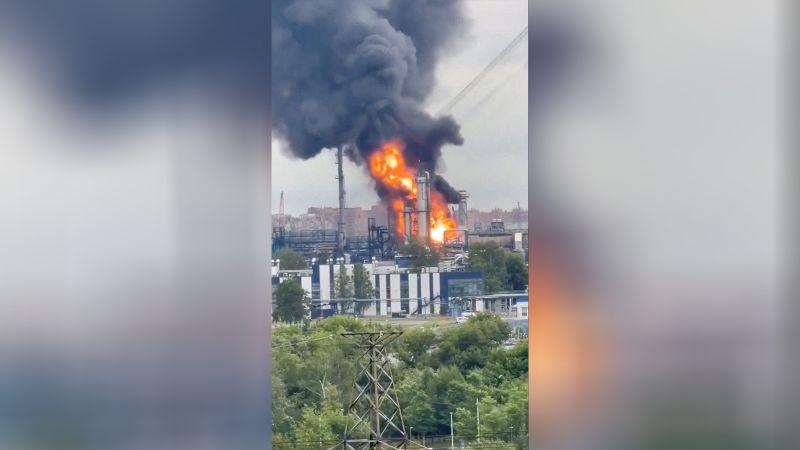
Ukraine Executes Largest Drone Assault on Moscow Since Full-Scale War Escalation
Ukraine launches largest attack on Moscow – Ukraine launched its most significant drone offensive on Moscow since the conflict expanded into a full-scale war, targeting a critical oil refinery and causing widespread damage. The strike, which occurred overnight into Thursday, saw air defenses neutralize at least 194 drones en route to the Russian capital, according to Moscow Mayor Sergei Sobyanin. This figure surpasses previous days of intense attacks, where drone numbers typically ranged in the double digits. The assault was part of a broader campaign against Russian infrastructure, with the Ministry of Defense reporting over 555 drones intercepted across the country, including in the Sea of Azov region.
Strategic Focus on Energy Infrastructure
Recent weeks have seen Kyiv intensifying its focus on Russian energy systems, a move that President Volodymyr Zelensky has described as pivotal to pressuring Moscow into ending the war. During a Telegram post from Brussels, where he met with NATO leaders, Zelensky emphasized that the attacks were a “fully justified response” to Russian strikes on Ukrainian cities. He highlighted the precision of Ukrainian strikes, noting that partners have observed their effectiveness in mid-range and long-range operations. This strategy aligns with efforts to weaken Russia’s economic backbone, which relies heavily on oil exports.
“In recent days, all our partners have noted the precision and effectiveness of our mid-range strikes and long-range sanctions,” Zelensky stated.
Damage and Debris Across Moscow
The Moscow Oil Refinery in Kapotnya, a southeastern district just 15 kilometers from the Kremlin, was among the primary targets. Video footage geolocated by CNN revealed a ground-launched projectile fired from a road as drones approached the facility, generating thick black smoke. Another clip captured a massive explosion that blew the roof off a fuel tank, sending debris into the air. Elsewhere, smoke rose near the Sadovod trade center, Russia’s largest mall, while an apartment building and a fitness center in the capital sustained damage from falling wreckage, as reported by TASS.
At least 16 individuals were injured in the strikes, per Andrei Vorobiev, the governor of Moscow’s region. The attack also targeted an oil depot in Rostov and two bridges in occupied territories of Ukraine, according to the Ukrainian General Staff. These strikes underscore Ukraine’s determination to disrupt Russia’s energy supply, which is crucial for sustaining its military operations.
Russian Retaliation and Escalation
Russia responded with a counterattack, deploying seven missiles and 239 drones, as confirmed by the Ukrainian Air Force. The retaliation struck multiple locations, including a private home, an energy facility, a hangar, and oil infrastructure in Kyiv and Poltava regions. Both Ukrainian and Russian authorities confirmed the damage, highlighting the escalating intensity of the conflict. Analysts note that Russia’s state budget depends on oil revenues for roughly a third of its income, making these strikes a direct blow to its financial stability.
Political Context and G7 Summit
The attack followed a G7 summit in France, where world leaders convened to address global challenges. Zelensky stated that all participants had committed to aiding Ukraine in securing advanced air defense systems. He noted that U.S. President Donald Trump had positively received his proposals. Earlier, Trump had advocated for a peace deal, suggesting Russia might agree to terms after five years of war. “Russia’s lost tremendous amounts of people, and so had Ukraine,” Trump remarked, framing the conflict as a shared burden.
Meanwhile, the NATO summit in Brussels brought discussions on continued support for Ukraine. Secretary General Mark Rutte confirmed that Zelensky had met with NATO officials to assess the war’s progress. “Ukraine is doing really well,” Rutte said, citing monthly Russian casualties of 30,000 to 35,000. He added that efforts to bolster Ukraine’s defenses, including missile interceptors and weapons systems, remain a priority. However, tensions persisted over the Trump administration’s plans to reduce U.S. military presence in Europe.
Global Implications and Sanctions
While the war has strained Russia’s oil market, the Iran conflict provided an unexpected boost. Rising global fuel prices and eased sanctions allowed Moscow to benefit financially, though the EU and Washington’s sanctions have significantly narrowed the pool of buyers. The recent strikes on Moscow’s energy infrastructure aim to reverse this trend, targeting the capital’s strategic vulnerabilities. Analysts suggest that such attacks could further pressure Russia’s economy, which has already faced challenges from international sanctions and reduced exports.
Broader Impact on Russian Infrastructure
Ukraine’s drone attacks have extended beyond Moscow, hitting naval facilities, oil depots, and terminals across Russia. The Leningrad region, home to St. Petersburg, was also targeted. This area recently hosted a global economic forum, often compared to Vladimir Putin’s version of the Davos summit. The strikes in Leningrad highlight Ukraine’s efforts to undermine Russia’s strategic assets, even in regions with economic significance.
The NATO gathering in Brussels underscored Europe’s critical role in the conflict. However, the Trump administration’s statements about withdrawing forces from Europe raised concerns. Defense Secretary Pete Hegseth reinforced this stance during the meeting, emphasizing a potential reduction in U.S. military commitments. Despite this, the alliance remains focused on ensuring Ukraine’s access to essential weapons and defense systems. The combination of direct attacks on Russian infrastructure and geopolitical maneuvering continues to shape the war’s trajectory, with Ukraine vying to secure a decisive advantage.
As the conflict evolves, the interplay between military strikes and economic pressures grows more complex. With Russia’s energy sector under threat and global markets fluctuating, the war’s impact on both sides extends beyond the battlefield. The recent assaults on Moscow and other key targets reflect Ukraine’s strategic shift toward crippling Moscow’s resources, while Russia’s countermeasures reveal its ongoing commitment to maintaining control. The coming weeks will likely determine whether these tactics can force a breakthrough in the war’s stalemate.
