
These Alaska villages were swept away by a typhoon. They’re fighting with FEMA to not rebuild in the flood zone
Alaska Villages Confront Typhoon’s Devastation, Challenge FEMA’s Rebuilding Plans
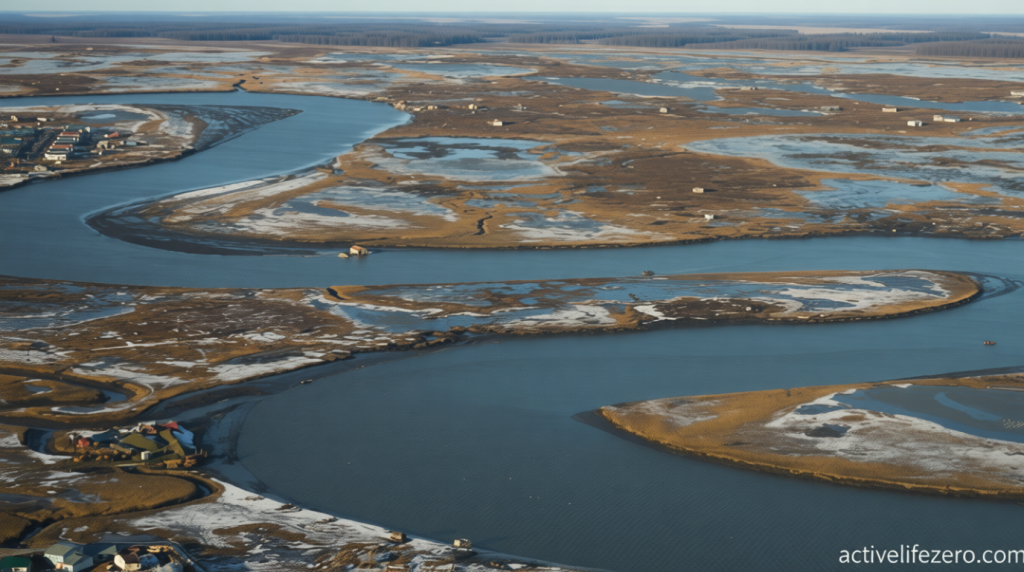
These Alaska villages were swept away – Last October, the aftermath of Typhoon Halong left two Alaskan villages in ruins. In the remote coastal communities of Kipnuk and Kwigillingok, situated along the Bering Sea, the storm’s relentless floodwaters uprooted homes from their foundations and swept them downstream, dragging people and belongings into the river’s path. The disaster exposed decades-old caskets buried in the ground at local cemeteries, a grim reminder of the community’s vulnerability to nature’s fury. By the time the waters subsided, one life was lost and two others were still missing, leaving families to grapple with the emotional and physical toll of the event.
Kipnuk and Kwigillingok, home to over 1,000 residents, were built in a flood-prone area where permafrost has been thawing for years due to rising global temperatures. As the ground eroded, homes, schools, and infrastructure such as wastewater systems collapsed, amplifying the damage caused by the typhoon. The floodwater, now contaminated with a noxious blend of sewage, fuel oil, and debris, lingered in the air and on clothing, creating an environment that was both hazardous and disheartening for survivors. For these communities, the disaster was not an isolated incident but a continuation of a pattern exacerbated by climate change.
A Typhoon’s Legacy and a State in Crisis
Alaska, the fastest-warming state in the United States, has long faced the threat of extreme weather events. Its western coast, in particular, has seen a surge in disasters, with three federal declarations of emergencies occurring within three years. Yet, despite the growing frequency of such events, key federal funding programs have been frozen under the Trump administration, and two Biden-era grants were rescinded, leaving the villages without critical support to recover or adapt.
The destruction of Kipnuk and Kwigillingok has forced their residents to confront a difficult choice: rebuild in the same flood zone or relocate to higher ground. The tribal leaders of these communities argue that returning to the original site would be a mistake, given the recurring threats from storms and rising sea levels. “Our people know that’s no longer safe,” said Rayna Paul, the tribal administrator of Kipnuk, during a recent statement. The villages’ decision to move has sparked an ongoing conflict with FEMA, which insists that rebuilding in place is the only option allowed under current federal guidelines.
FEMA’s position has drawn criticism from advocates and experts who emphasize the importance of resilience. “For every dollar spent on resilience, the federal government could save $6 on future recovery costs,” stated FEMA Administrator Deanne Criswell in 2023. This logic underscores the urgency of relocating vulnerable communities to safer areas. However, the Trump administration’s policies have stymied such efforts, with disaster recovery costs increasingly shifting to state and local governments. As a result, Kipnuk and Kwigillingok are now classified as “ghost towns,” their original settlements abandoned in the wake of the typhoon’s destruction.
Funding Freeze and a Battle Over Resilience
Under the Biden administration, two critical programs aimed at helping communities adapt to climate threats were launched. These initiatives provided billions in funding to elevate homes, strengthen infrastructure, and purchase properties in high-risk zones. However, when Trump took office, key components of these programs were halted, including grants intended for the villages of Kipnuk and Kwigillingok. The cancellation of these funds has left the tribes without the resources needed to implement long-term solutions.
FEMA’s stance has been a central point of contention. In internal discussions, officials explored the idea of constructing new, elevated homes in the original locations and incorporating skis into the design to allow for winter mobility. This approach, while innovative, would still require communities to reside in a flood zone, which tribal leaders argue is unsustainable. “Spending federal dollars to rebuild a community in the same place they were wiped out sounds crazy,” said Sheryl Musgrove, director of the Alaska Climate Justice Program, which collaborates with Kipnuk and Kwigillingok. “But maybe that is the limitation of the statute,” Musgrove added, highlighting the bureaucratic hurdles in securing safer alternatives.
Meanwhile, the Alaska state government has proposed a separate plan, requesting FEMA to construct permanent housing for the villages. However, this initiative remains pending approval, and relocation is not guaranteed. The uncertainty has left residents in a state of limbo, torn between the desire to rebuild and the fear of facing another disaster. “We want to move forward, but we’re stuck,” said Paul, reflecting the community’s frustration with federal policies that prioritize immediate recovery over long-term safety.
Political Divides and a Call for Flexibility
The dispute over rebuilding in the flood zone has become emblematic of broader debates about climate adaptation and disaster management. Republican Senator Lisa Murkowski of Alaska, who chairs the U.S. Senate Committee on Indian Affairs, has voiced support for granting displaced tribes more flexibility. In a statement from the committee’s communications director, Hannah Ray, Murkowski urged the federal government to “secure flexibilities” for these communities, enabling them to rebuild in safer locations. This call for adaptability aligns with the growing recognition of climate change as a defining challenge for the nation’s infrastructure and populations.
Despite Murkowski’s advocacy, FEMA has yet to respond to CNN’s inquiry on the matter. The agency’s position, as outlined in correspondence with the tribes, asserts that existing laws prevent the use of public assistance funds for relocation. Federal officials also argue that the villages’ subsistence-based lifestyles—reliant on hunting and fishing—require proximity to the ocean, making relocation a complex issue. This reasoning, while practical for some, has been met with skepticism by climate experts who stress that the cost of inaction far outweighs the challenges of moving to higher ground.
The situation in Kipnuk and Kwigillingok highlights a systemic issue: the U.S. has long been trapped in a cycle of rebuilding in disaster-prone areas. This pattern, driven by short-term economic considerations and outdated policies, has led to repeated losses for communities that should be prioritized for long-term resilience. The Biden-era grants, for instance, were designed to break this cycle by funding infrastructure upgrades and property buyouts. Their rescission under Trump’s administration has left a void, with Alaska’s Native tribes now bearing the brunt of climate change without federal backing.
As the villages prepare for the next chapter, the struggle over their fate remains unresolved. While residents of Kipnuk and Kwigillingok have voted to relocate, the fight with FEMA continues. The outcome of this battle could set a precedent for future climate adaptation efforts across the country. For now, the communities remain hopeful, yet wary, as they await decisions that could determine whether they are forced to rebuild in a place that no longer feels safe or given the resources to start anew in the face of an ever-changing climate.
In a recent internal memo, a federal official described the idea of elevating homes and incorporating skis as a “potential solution” to balance immediate needs with long-term safety. This concept, while creative, illustrates the ongoing tension between practicality and foresight in disaster response. For the people of Kipnuk and Kwigillingok, the stakes are clear: their survival depends on the ability to adapt, but the current system seems poised to keep them in the same perilous location, repeating the cycle of destruction and recovery. As the Arctic continues to warm, the question is no longer if these villages will face another disaster, but when—and whether the federal government will finally prioritize resilience over repetition.
