
The oceans are in deep trouble. The Trump administration is ditching a vital deep-sea monitoring system
The Trump Administration’s Plan to Disband a Vital Ocean Monitoring System Sparks Global Concern
The oceans are in deep trouble – As the planet faces escalating climate challenges, the Trump administration has taken a controversial step by committing to dismantle a $368 million deep-ocean monitoring system. This decision has raised alarms among scientists, who warn that it risks sidelining critical oceanic research during a period of unprecedented environmental shifts. With record-breaking sea temperatures, the looming threat of a super El Niño, and growing fears about the stability of key ocean currents, the removal of this infrastructure could leave the world ill-equipped to predict and respond to climate-related disasters.
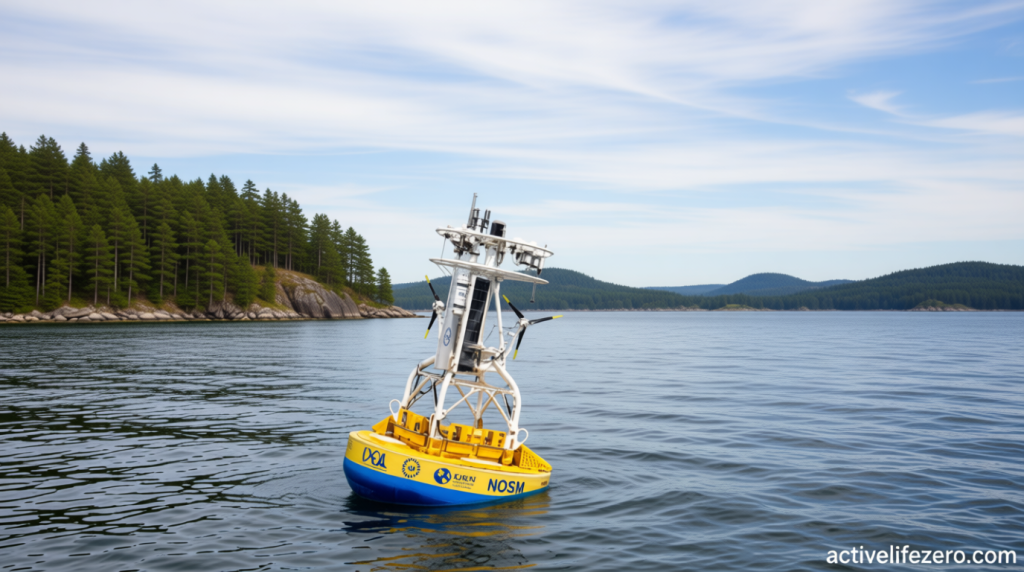
The Ocean Observatories Initiative (OOI), established in 2016, was designed to track changes in the world’s oceans through a network of nearly 900 instruments spread across the Pacific and Atlantic. These devices, engineered to endure extreme underwater pressures and corrosive saltwater, provide real-time data on ocean health. From measuring chemical fluctuations to monitoring powerful currents that influence global weather, the system has been a cornerstone of marine research. Yet, the National Science Foundation (NSF), which funds the OOI, has announced it will “descoping” the project, effectively shrinking its scope over the next 15 months.
According to Mike England, the NSF’s head of media affairs, the move aligns with the organization’s strategy to adopt a more flexible approach. “This decision reflects our commitment to prioritizing support for evolving scientific priorities and emerging technologies,” he stated in a press release. The plan involves removing “in-water infrastructure” from several key locations, including the coasts of Alaska, Washington, Oregon, and North Carolina, as well as from arrays off southeast Greenland in the North Atlantic. While the NSF frames this as lifecycle management, critics argue it undermines decades of investment in ocean science.
Global Implications of the OOI’s Dismantling
Scientists emphasize that the OOI has been essential in tracking the health of the Atlantic Meridional Overturning Circulation (AMOC), a vital system of currents that regulates climate patterns. Recent studies suggest the AMOC could be on the brink of collapse, potentially within this century. Such an event would trigger catastrophic consequences, including accelerated sea level rise along the US East Coast, severe winters in Europe, and prolonged droughts in parts of Africa. “Ongoing monitoring of the ocean is critical, especially now,” said Stefan Rahmstorf, a professor at Potsdam University in Germany who specializes in ocean dynamics. “The oceanography community is deeply worried about major changes to current systems that could disrupt global climate stability.”
The OOI’s removal also threatens progress in understanding ocean acidification, a growing crisis that impacts marine ecosystems. At the Ocean Station Papa in the Gulf of Alaska, autonomous buoys and gliders collect data on acidity levels in a region crucial to the fishing industry. Helen Findlay, a biological oceanographer at the Plymouth Marine Laboratory in the UK, highlights the importance of long-term observations. “Without these tools, we’re essentially navigating a volatile ocean with less clarity,” she said. Her research shows that large portions of the global ocean have already entered a “zone of risk” for ecosystem collapse, a situation she describes as “dangerous” for the planet’s climate resilience.
Rick Spinrad, a former director of the National Oceanic and Atmospheric Administration (NOAA) under the Biden administration, criticized the decision as short-sighted. “I’d call this penny wise, tons foolish,” he remarked. “The OOI has demonstrated its value in addressing a wide range of issues, from fisheries management to weather forecasting and coastal flood prevention. Where is the analysis showing that eliminating OOI benefits taxpayers?” His comments underscore the broader debate over the administration’s priorities, with many arguing that the system’s dismantling weakens the US’s scientific leadership in a time of urgent need.
Environmentalists and climate scientists have expressed frustration over the Trump administration’s pattern of rolling back climate protections. Alongside the OOI’s cuts, efforts to weaken regulations on carbon emissions and reduce funding for climate research have intensified. This has led to fears that the US is prioritizing short-term economic gains over long-term ecological stability. “The deep sea is a critical resource for minerals and energy, but without the data from OOI, we’re blind to the risks,” noted a spokesperson for a coalition of marine research organizations. The administration’s push for deep-sea mining, meanwhile, is seen as a potential threat to fragile marine habitats, which could be exacerbated by the loss of monitoring capabilities.
Proponents of the NSF’s decision point to the need for efficiency in scientific spending. They argue that the OOI’s expanded scope, while valuable, may be overkill given the current focus on emerging technologies. However, opponents counter that the system’s reduction could create a “data gap” that hinders the ability to track climate trends. The OOI’s real-time data has been instrumental in identifying shifts in ocean chemistry, which are linked to broader climate phenomena like coral bleaching and extreme weather events. Without this system, experts warn that the US may lose its ability to detect early warning signs of environmental catastrophe.
David Halpern, a marine biologist at the University of Hawaii, adds that the OOI’s instruments have also provided insights into the deep-sea environment, which remains one of the least understood parts of the Earth. “The deep ocean is a key indicator of global climate change,” he said. “Removing these tools means we’re not only losing visibility into oceanic processes but also risking the ability to respond to crises as they unfold.” His concerns align with those of Helen Findlay, who stressed the importance of sustained monitoring in tracking the “zone of risk” for marine ecosystems. “The data we gather is not just academic—it’s essential for making informed decisions about the planet’s future,” she said.
The OOI’s dismantling has also sparked a debate about the role of government in funding scientific infrastructure. While the NSF claims the reduction is part of a strategic realignment, critics argue that the US is abandoning a vital asset that has already delivered significant returns. The system’s instruments, installed at a cost of millions, have been used to study everything from carbon sequestration to marine biodiversity. With climate change accelerating, the argument is that such investments are more crucial than ever. “Eliminating the OOI is like closing the door on a window that’s the only way to see the storm coming,” said a climate scientist based in California. “We need to be looking ahead, not back.”
As the Trump administration continues to reshape the landscape of climate science, the OOI’s fate serves as a symbol of the broader challenges facing global environmental research. The loss of this system not only impacts the US but also threatens the collective understanding of oceanic systems that affect every corner of the world. With the AMOC at risk and ocean temperatures rising faster than ever, the decision to dismantle the OOI raises serious questions about preparedness for the climate crisis. The warning is clear: without robust monitoring, the consequences of inaction could be far-reaching and irreversible.
“The OOI has been a lifeline for ocean science, and its dismantling is a major blow to our ability to track and respond to climate change,” said a former NOAA scientist. “It’s not just about saving money—it’s about losing sight of the big picture.”
As the world grapples with the dual threats of a warming climate and deep-sea resource extraction, the OOI’s removal highlights a growing disconnect between policy and science. The system’s data has been foundational in studies of oceanic changes, yet its decline signals a shift toward short-term priorities. Scientists urge that the US must invest in maintaining its monitoring capabilities to ensure that it doesn’t fall behind in the race to understand and mitigate the effects of climate change. For now, the oceans remain under observation, but the loss of this vital network may soon leave humanity in the dark.
