
The last ‘little crappy ship’: What’s the future for the US Navy’s troubled LCS?
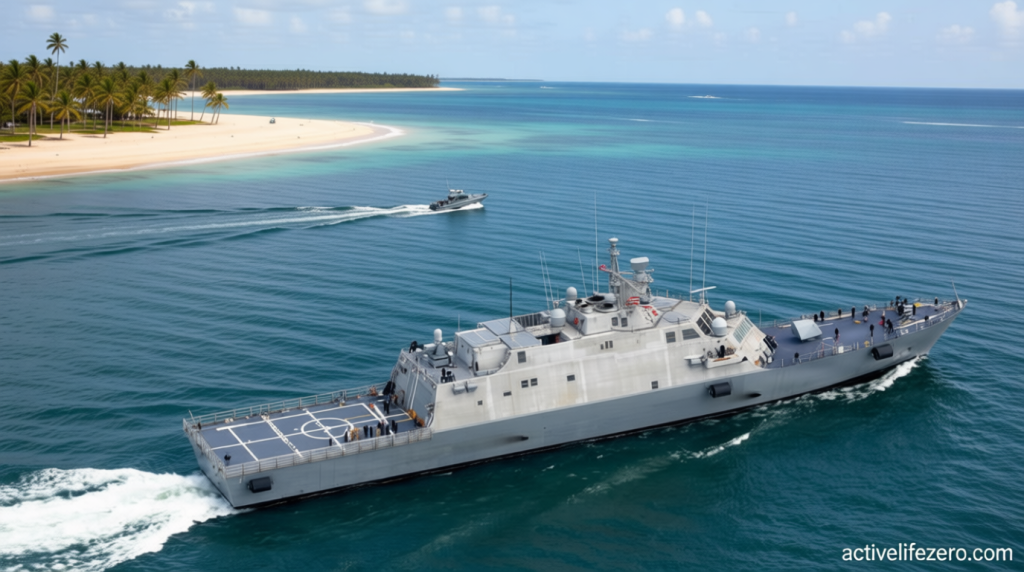
The Last ‘Little Crappy Ship’ Ends LCS Program
The last little crappy ship – The final LCS vessel, the USS Cleveland, was commissioned this month, completing the U.S. Navy’s 35-unit littoral combat ship (LCS) fleet. The ship, named after a city in Ohio, symbolizes the end of a program long criticized for its challenges. While Acting Secretary of the Navy Hung Cao praised the LCS as a testament to “steel, strength, and power,” some observers called it a “reluctant compromise.” The program, initially seen as a bold innovation, has faced repeated setbacks, with critics dubbing it “little crappy ships” due to recurring technical and financial issues.
A Vision for Coastal Flexibility
The LCS was designed to address evolving threats in coastal waters, where traditional warships struggle. In the early 2000s, the Navy sought a smaller, adaptable platform to replace aging vessels while maintaining operational reach. The concept promised agility and cost-efficiency, allowing rapid reconfiguration for missions like mine sweeping, anti-submarine warfare, or anti-missile defense. However, its dual design—Freedom and Independence classes—introduced complexity. The two variants, built by Lockheed Martin and Austal USA, required separate maintenance and supply chains, complicating the program’s execution.
Admiral Vern Clark, former Chief of Naval Operations, championed the LCS as a “revolutionary” platform, emphasizing its speed and versatility. Yet, his vision was criticized for lacking concrete planning. A 2014 report by Undersecretary of the Navy Robert Work highlighted that Clark’s decision to prioritize speed over specificity left the LCS’s purpose ambiguous. This confusion led to frequent design changes and an unclear role in modern naval strategy, making the program a test case for innovation in military procurement.
Technical and Financial Struggles
The LCS’s technical shortcomings have defined its legacy. Early models, like the USS Freedom (commissioned in 2008) and USS Independence (2010), revealed persistent issues with propulsion systems and software. Mechanical failures and high maintenance costs have plagued the fleet, with the program’s total expenditure surpassing $100 billion—a figure more than double the original estimate. Critics argue these challenges undermine the LCS’s core promise of cost-effective, mission-flexible vessels.
“The LCS program is one of the worst examples of overpriced, underperforming military technology,” said a ProPublica report from 2023.
Despite these struggles, the Navy remains committed to the LCS as a cornerstone of its coastal operations. The ships’ unique propulsion system, using gas turbines and water jets, allows them to navigate shallow waters with greater ease than traditional propeller-driven vessels. However, their smaller size and limited firepower have raised questions about their effectiveness in high-intensity conflicts. The program’s future now hinges on whether these vessels can fulfill their intended roles or be replaced by more reliable alternatives.
The Road Ahead for Naval Modernization
The commissioning of the USS Cleveland marks a turning point for the LCS program, but it does not signal the end of debates over its future. The Navy’s plan to retire the LCS and replace it with more advanced systems is gaining momentum. The program’s critics, including former officials and military analysts, argue that its legacy is one of overambition and mismanagement. However, proponents maintain that the LCS laid the groundwork for future naval innovation, particularly in modular ship design and rapid mission adaptation.
As the U.S. Navy moves forward, the LCS’s fate will serve as a case study in balancing ambition with practicality. Whether it is remembered as a costly failure or a necessary step in modernizing coastal fleets remains uncertain. The “last little crappy ship” has become a symbol of a program that, despite its flaws, pushed the boundaries of naval engineering and strategy—a legacy that will be scrutinized for years to come.
