
Taylor Swift’s wedding may change how couples think about their big day
Taylor Swift’s wedding may change how couples think about their big day
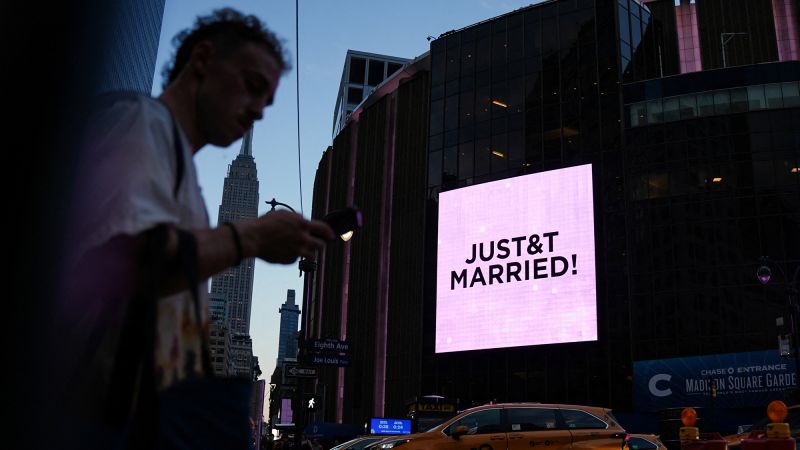
Taylor Swift s wedding may change – Taylor Swift and Travis Kelce’s nuptials, held in the iconic Madison Square Garden, have sparked a shift in the way modern couples approach their celebrations. While the venue isn’t the first place one might imagine for a wedding, the couple’s choice of location—combined with unique elements like arcade games and a raffle—has transformed the event into something far removed from the traditional wedding scene. This unconventional setup isn’t a mistake; it’s a deliberate strategy to prioritize emotional engagement over rigid formality. The trend of crafting weddings that focus on the feelings of attendees rather than the visual spectacle is gaining momentum, and Swift’s celebration serves as a powerful example of this movement.
A redefinition of the wedding experience
Experience designers are now rethinking the core purpose of a wedding. Akeshi Akinseye, founder of Kesh Events, a global luxury wedding planning firm, notes that the shift reflects a broader desire to strip away the stiffness of traditional ceremonies and infuse them with joy. “Weddings are evolving from static events to immersive journeys,” she explains. “The goal isn’t just to impress with grandeur but to create a memorable atmosphere that resonates with guests long after the ceremony ends.” The inclusion of interactive elements like arcade games and a raffle underscores this philosophy, allowing attendees to actively participate in the celebration rather than passively observe it.
“It introduces anticipation. Guests are not just consuming the event — they’re part of it,” said Akinseye.
For couples aiming to follow this trend, Akinseye emphasizes that the key lies in personalization. “They don’t need to copy every detail of the Swift-Kelce wedding,” she advised. “Instead, they should explore what elements of the day evoke genuine emotion and translate that into something authentic for their story.” This approach aligns with the idea that a wedding’s success isn’t measured by its scale but by the depth of connection it fosters among those present.
Julie Comfort, an experience designer who collaborates with wedding planners, describes her role as blending art and functionality to craft emotional moments. “Wedding design is about making guests feel something, whether it’s nostalgia, excitement, or joy,” she said. “It doesn’t always require extravagant spending—sometimes the smallest details can make the biggest impact.” Comfort’s recent project, for instance, involved creating a karaoke-centric first dance. A few close friends joined in, their voices harmonizing with the couple’s as the music gradually faded, transforming the moment into a shared, intimate experience.
“Couples are realizing they don’t have to go over the top to make an impact, they just have to be more thoughtful, intentional, and generous with how they host people,” said Comfort.
Comfort’s insights highlight how experience design techniques—often borrowed from the theater and art worlds—are becoming more prevalent in weddings. These methods aim to generate anticipation, surprise, and a sense of magic, making the event feel less like a checklist and more like a narrative. “A lot of these ideas come from creating a storyline that unfolds throughout the day,” she explained. “It’s about guiding guests through an emotional arc rather than simply providing a backdrop.”
The power of anticipation
Swift and Kelce’s wedding exemplifies the magic of anticipation. The venue, typically a hub for sports events, was transformed into a whimsical space that felt both intimate and grand. A guest’s since-deleted tweet captured this transformation, describing how a section of Madison Square Garden was “cordoned off” to become a “lush countryside retreat” with an outdoor garden. “They say there were around one thousand attendees, but surprisingly, it all felt intimate and small,” the guest wrote. The success of this reimagining is often attributed to strict non-disclosure agreements, which ensured the event remained private and exclusive.
“There is something incredibly powerful about anticipation,” said Akinseye. “This wedding could absolutely encourage more couples to look beyond traditional venues and ask, ‘What could this space become?’”
The couple’s decision to use a high-profile location like Madison Square Garden also challenges the notion that a wedding must be set in a traditional venue. Akinseye, who designed the wedding for NBA star Tobias Harris, pointed out that the choice of location is critical to the overall experience. “Where a wedding takes place is the front door into the atmosphere,” she said. “It’s not just about the place itself but how it can be redefined to reflect the couple’s vision.”
As online fatigue continues to grow, couples are increasingly seeking experiences that foster presence and connection rather than content for social media. “Fewer people are chasing viral moments,” Comfort noted. “They’re prioritizing what makes the day feel meaningful in the moment.” This shift has led to a rise in demand for event designers who can blend creativity with practicality, ensuring that every detail contributes to a cohesive, emotional narrative.
The Swift-Kelce wedding isn’t just a celebration of love; it’s a blueprint for the future of weddings. By transforming an ordinary space into an extraordinary experience, the couple has demonstrated that the essence of a wedding lies in its ability to evoke shared memories. As more couples embrace this philosophy, the wedding industry may see a significant transformation—from formal, static events to dynamic, story-driven gatherings that prioritize connection over convention.
