
Suspected Ebola patients ‘escape’ health center in DR Congo
Suspected Ebola Patients ‘Escape’ Health Center in DR Congo
Suspected Ebola patients escape health center – Residents in the town of Mongbwalu, located at the heart of the ongoing Ebola outbreak in eastern Democratic Republic of Congo (DRC), stormed a health facility on Saturday, setting fire to a tent used for treating suspected and confirmed cases of the virus. The incident, reported by staff at the site, marked the second such disruption in the region within a week, escalating concerns over community resistance to containment efforts. While no casualties were confirmed during the attack, the chaos forced 18 individuals with possible Ebola infections to flee the premises, leaving their whereabouts unknown, according to a local hospital director.
Dr. Richard Lokudi, head of the Mongbwalu hospital, recounted the events to The Associated Press, emphasizing the severity of the situation. “We strongly condemn this act, as it caused panic among the staff and also resulted in the escape of 18 suspected cases into the community,” he said. The attack occurred after a group of angry locals arrived at the clinic on Friday night, targeting a tent set up by Doctors Without Borders. This humanitarian group had been working to isolate patients, but the residents’ aggression undermined their efforts, creating a dangerous rift between health workers and the public.
Meanwhile, tensions in the nearby town of Rwampara had already reached a critical point earlier in the week. On Thursday, a treatment center there was destroyed in a similar act of protest. The incident followed a dispute over the retrieval of a deceased man’s body, suspected to be infected with Ebola. Family members, barred from collecting the remains, reportedly grew frustrated, leading to the burning of the facility. The decision to restrict access to bodies was based on the virus’s high contagiosity during the burial process, which often involves close contact and communal gatherings.
David Basima, a Red Cross team leader overseeing burials in Rwampara, described the heightened emotions surrounding the outbreak. “We experienced a lot of difficulties, including resistance from young people and the community,” he said. “We were forced to alert the authorities so that they could come to our aid, just for safety.” To address the spread, authorities in northeastern DRC had previously banned funeral wakes and gatherings exceeding 50 people. This measure aimed to minimize exposure but also sparked backlash, as cultural practices are often central to community identity.
Despite these challenges, the World Health Organization (WHO) has raised the risk level for the DRC to “very high,” a significant jump from its prior classification of “high.” This assessment reflects the growing scale of the outbreak, though global transmission remains deemed unlikely. WHO Director-General Tedros Adhanom Ghebreyesus noted on Friday that 82 confirmed cases and seven deaths had been documented, yet the actual numbers are believed to be much larger. With surveillance expanding, the tally of suspected cases has surged to 750, and 177 suspected deaths have been recorded, though more are expected as investigations continue.
The outbreak is linked to the Bundibugyo strain of Ebola, a less common variant that has proven difficult to detect. After the first known death in late April in Bunia, the capital of Ituri province, authorities initially focused on testing for the more prevalent Zaire strain. The Bundibugyo virus, however, spread undetected for weeks before being identified. This delay highlights the complexities of diagnosing rare strains and the challenges faced by local health systems in resource-limited settings.
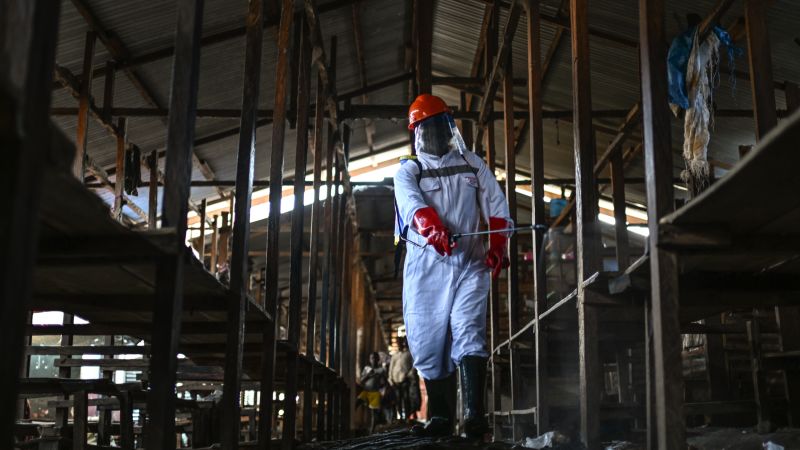
Community distrust has been a recurring theme in the response to the outbreak. In Rwampara, a communal burial was conducted on Saturday under strict security measures to ensure safety. Armed soldiers and police monitored the event, while Red Cross workers in white protective gear carefully lowered sealed coffins into the ground. Family members, though grieving, remained at a distance, symbolizing their apprehension about the virus. “The situation is delicate,” said Basima. “We have to balance respect for cultural traditions with the urgency of preventing further spread.”
Among the human toll of the crisis are the three Red Cross volunteers who succumbed to the disease in Mongbwalu. The International Federation of Red Cross and Red Crescent Societies reported their deaths on Saturday, stating that the individuals likely contracted the virus on March 27 while handling deceased bodies as part of a humanitarian mission unrelated to Ebola. If confirmed, this would shift the timeline of the outbreak back by several weeks, challenging earlier assumptions about its origin. The first confirmed case had been reported in late April, but the presence of Bundibugyo suggests the virus may have been circulating longer than initially thought.
Dr. Jean Kaseya, director-general of the Africa Centers for Disease Control and Prevention, underscored the importance of community engagement in combating the outbreak. “A response to the outbreak must include building trust with communities,” he said. “Without that, containment efforts will struggle to gain traction.” This sentiment aligns with the experiences of health workers on the ground, who face not only the physical challenges of managing an outbreak but also the social and cultural hurdles of working with local populations.
The conflict between authorities and residents has created a cycle of fear and resistance. In Mongbwalu, the attack on the health center was driven by frustration over the strict measures imposed on families. Similarly, in Rwampara, the ban on funeral activities led to anger that culminated in the destruction of a treatment facility. These incidents highlight the delicate balance required to control the disease while respecting the traditions and concerns of the affected communities.
As the situation unfolds, the WHO and local health organizations are working to coordinate a multifaceted response. This includes enhancing surveillance, distributing protective gear, and educating the public about the risks of handling infected bodies. However, the success of these efforts hinges on community cooperation, which remains uncertain. “We are in a race against time,” said Basima. “Every day the virus spreads, the risk to the community increases.”
With the outbreak now classified as a “very high” risk, the focus is shifting toward containing the virus within the DRC and preventing its spread to neighboring countries. The Bundibugyo strain, while less contagious than others, has a higher mortality rate, adding to the urgency of the response. Health workers continue to operate in challenging conditions, navigating both the virus’s spread and the emotional toll of their work. The events in Mongbwalu and Rwampara serve as stark reminders of the human dimension of the outbreak and the need for a compassionate, culturally informed approach to public health interventions.
