
Sunken wreck of WWII ‘hell ship’ used to transport POWs discovered after more than 80 years
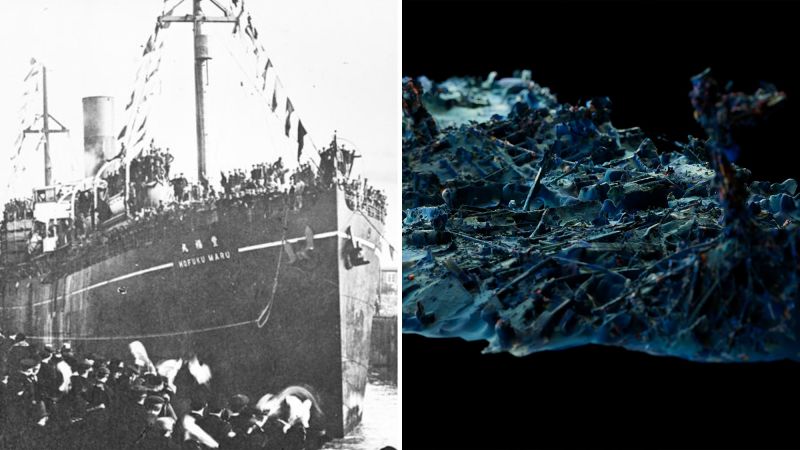
Sunken WWII Hell Ship Wreck Found After 80 Years
Sunken wreck of WWII hell ship – The sunken wreck of a WWII hell ship has been discovered off the Philippines after more than 80 years, shedding light on one of the most harrowing chapters of the Pacific War. The Hōfuku Maru, a Japanese vessel, was part of a convoy transporting over 1,200 British and Dutch prisoners of war through the South China Sea. Its cargo hold became a cramped, suffocating space where captives endured extreme conditions, many of whom perished when the ship was struck by U.S. warplanes. The tragic incident, marked by four torpedoes and a swift sinking, left only a handful of survivors. Now, after decades of searching, the wreck has been identified near Zambales province, offering a tangible link to the suffering of those aboard.
A Legacy of Harrowing Conditions
The Hōfuku Maru was one of 56 Japanese “hell ships” that ferried prisoners of war across the Pacific during World War II. These vessels, often unmarked and overloaded, became synonymous with brutality, carrying thousands of captives in cramped quarters with minimal resources. The sinking of the Hōfuku Maru is a grim reminder of the perilous conditions faced by Allied POWs. Survivors described the ship’s hold as a living tomb, where the air was thick with despair and the cries of the dying echoed through the depths. “It’s like a coffin of steel,” said Tim Beckensall, a World War II historian and director of the Hellships Memorial Foundation, capturing the ship’s dual role as both a transport and a death trap.
“The most chilling aspect of this discovery is how the hell ship’s story has been preserved in the ocean,” Beckensall added. “Each piece of wreckage tells us something about the lives lost and the resilience of those who survived.”
The Search for a Lost Chapter
The identification of the Hōfuku Maru’s wreck came from a combination of historical research and modern technology. Researchers analyzed digitized Japanese documents and U.S. aircraft reports, cross-referencing details to narrow down the ship’s location. A breakthrough in June 2025 provided crucial coordinates, confirming the wreck’s position in the Philippine waters. Local fishermen, who had long reported strange shapes beneath the surface, played a vital role in validating these findings. Their eyewitness accounts, combined with sonar scans, helped uncover the ship’s resting place, marking a significant milestone in preserving the history of WWII’s forgotten tragedies.
“The Japanese records were the key to unlocking the mystery,” Beckensall noted. “They revealed the ship’s role in the convoy and the devastating attack that sealed its fate.”
The sunken wreck of the WWII hell ship now stands as a silent monument to the war’s atrocities. Marine archaeologists and historians have begun documenting the site, ensuring that the stories of the victims are not lost to time. The discovery has also reignited interest in the broader history of hell ships, which were notorious for their inhumane treatment of POWs. As the wreck is explored, it promises to provide new insights into the challenges faced by captives and the technological advances that have allowed such a long-lost ship to be found.
Historical Significance and Modern Discovery
With the wreck of the Hōfuku Maru located, its significance as a historical artifact is undeniable. The ship’s remains offer a unique glimpse into the conditions of wartime transportation, where prisoners were often treated as expendable cargo. The collaboration between the Hellships Memorial Foundation, the Netherlands’ Cultural Heritage Agency, and the Discovery Channel has brought this hidden chapter to the forefront of public awareness. The two-part *Expedition Unknown* episode, which aired in June 2026, highlighted the importance of the wreck in understanding the human cost of the Pacific War.
“This wreck isn’t just a piece of history—it’s a symbol of the sacrifices made by those who were forced to endure it,” Beckensall emphasized. “It connects us to the past in a way that words alone cannot.”
