
Russia holds scaled-down Victory Day parade as temporary ceasefire in Ukraine war takes effect
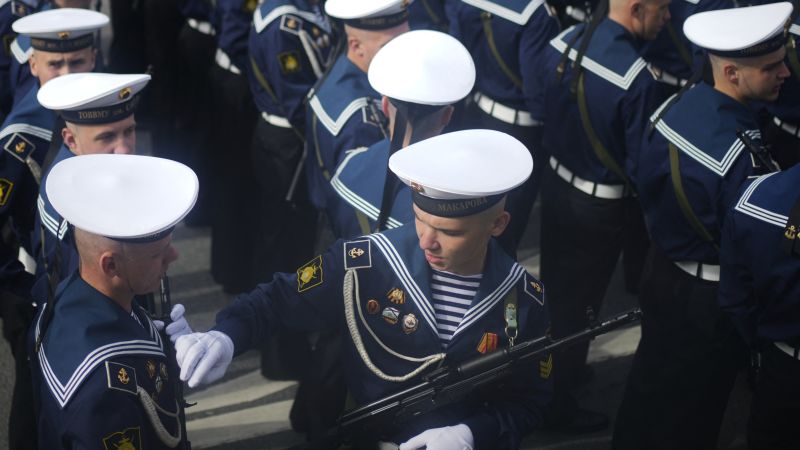
Russia Scales Back Victory Day Parade Amid Ukraine Ceasefire
Russia holds scaled down Victory Day parade – As the temporary ceasefire between Russia and Ukraine enters its third day, Moscow hosted a scaled-back Victory Day parade, marking a notable departure from the grand military displays of recent years. President Vladimir Putin led the event, which featured a more subdued showcase of Russia’s military presence. Unlike previous ceremonies, this year’s parade omitted heavy weaponry, focusing instead on symbolic gestures and the broader context of the ongoing conflict. The decision to reduce the scale of the event was framed as a reflection of current challenges, including the toll on Russian infrastructure from Ukrainian strikes and the nation’s shifting priorities.
A Strategic Shift in Celebration
This year’s parade underscored a strategic shift in how Russia commemorates its historical victories. Traditionally a platform to highlight military strength, the event now emphasized endurance and resilience over ostentatious displays. The absence of tanks, armored vehicles, and artillery was deliberate, aligning with the ceasefire agreement announced by US President Donald Trump. This pause in hostilities allowed both sides to exchange prisoners and regroup, yet the ceremony served as a reminder of the war’s ongoing nature. State media emphasized the parade’s symbolic role in reinforcing national unity and the sacrifices of the past.
“The triumph of the Great Patriotic War continues to inspire our soldiers in the special military operation,” Putin stated during the event. “They are defending the Motherland against a global aggression that spans across continents.”
This rhetoric tied the present conflict to World War II, reinforcing the idea of continuity in Russia’s military efforts. The choice to feature pre-recorded footage of frontline activities over live demonstrations highlighted the government’s control over the narrative, while also addressing concerns about the war’s impact on daily life and economic stability.
Symbolism Over Spectacle
The parade’s emphasis on symbolism over military hardware was evident in its visual elements. Instead of showcasing tanks and aircraft, Red Square displayed pre-recorded videos highlighting Russia’s drone technology and air defense systems. These clips underscored the nation’s strategic capabilities, particularly its long-range bombers and nuclear-powered submarines. While the event lacked the traditional grandeur of past years, it still managed to convey a sense of readiness and technological advancement, framing Russia’s military operations as both modern and historically grounded.
Despite the reduced scale, the ceremony drew international observers. However, access for foreign journalists was restricted, with the Kremlin limiting entry to a select group of host broadcasters. This limitation left many global outlets dependent on state-provided footage, which presented a curated view of the war’s progress. The presence of four military units, including one from North Korea, and a flyover of fighter planes over the Kremlin added a layer of geopolitical significance to the event.
Economic and Social Context
Russia’s scaled-down parade coincided with growing domestic unease over economic stagnation and tightened internet controls. The government justified these measures as necessary for public safety, citing the need to prioritize stability during the ceasefire. A major Moscow telecom operator warned of potential mobile data and messaging limits around the capital, further reflecting the challenges of maintaining infrastructure under pressure. Meanwhile, the event’s organizers highlighted its role in honoring the sacrifices of the past, with over 27 million Soviet citizens perishing during the war.
The ceasefire agreement, which included a prisoner exchange of 1,000 for 1,000, offered a brief lull in hostilities. However, its effectiveness remained uncertain as military operations continued. The parade served as a microcosm of Russia’s broader approach—balancing the need to project strength with the acknowledgment of present-day constraints. For many, the ceremony was a poignant reminder of how historical narratives shape contemporary conflicts, even as the realities of war persist. The event’s tone, while optimistic, underscored the complex interplay between past triumphs and present struggles.
