
Passenger used suspected fake boarding pass to sneak onto United flight, forcing plane back to gate, authorities say
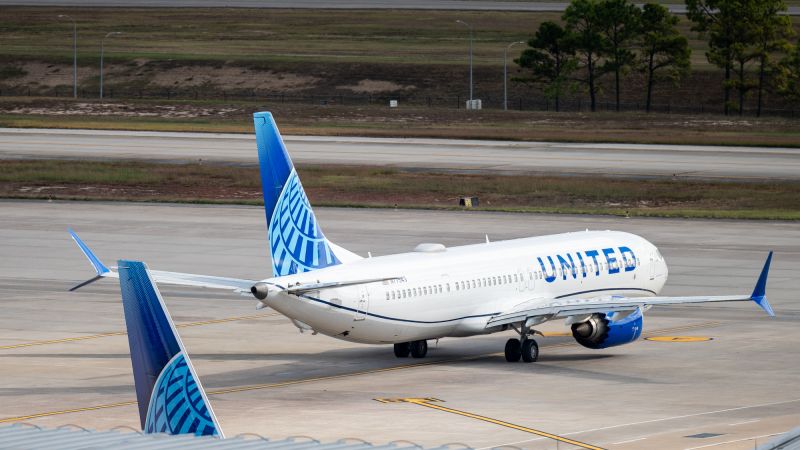
Unauthorized Passenger Sneaks Onto United Flight, Forces Aircraft to Return to Gate
Passenger used suspected fake boarding pass – Last month, authorities in Texas reported discovering a man concealed in the restroom of a United Airlines aircraft after he reportedly bypassed TSA security and gate agents with a boarding pass suspected to be counterfeit. The incident unfolded at George Bush Intercontinental Airport in Houston, where the passenger managed to board the plane unnoticed before being detected during the flight.
Man Charged with Disrupting Airline Operations
Abdulrahman Oriyomi, 25, was formally charged with a felony related to disrupting the operation of a critical infrastructure facility last week. He was subsequently detained at Harris County Jail in Texas, as noted in court documents. The charges stem from his actions that led to the plane being diverted back to the gate, according to law enforcement.
“Oriyomi pretended he is going to show his boarding pass, walks past the United employees, then proceeds down the jetway while the two other United employees are still distracted,” the complaint stated.
Oriyomi’s journey to board the flight began with a series of calculated moves. Surveillance footage revealed him approaching a checkpoint booth at Bush Airport around 5:45 a.m. on May 18. He was seen “staring at his phone and delaying speaking to a TSA agent,” as described in court records. After several moments and some difficulty with his boarding pass, he was escorted to another TSA booth, where his photo was taken and he was allowed to proceed into the terminal.
Hours later, Oriyomi arrived at gate E16, where he was initially turned away after attempting to scan his boarding pass multiple times. The complaint noted he “appeared to have a disagreement with United staff for several minutes” before being directed to the next gate. Less than two hours after his first attempt, he approached gate D4, where he “awkwardly paces and stands in the area,” according to the documents. At 9:08 a.m., he joined the queue for flight 469, scheduled to depart Houston at 9:45 a.m. and arrive in Los Angeles at 11:28 a.m.
Once aboard, Oriyomi sought an empty aisle seat. A nearby passenger observed him “acting unsure if it was his seat” and then standing up to go to the restroom. When he returned 15 minutes later, the seat was occupied, and he moved to another restroom, the complaint alleged. As the plane began taxiing away from the gate, a flight attendant noticed the commotion and alerted the crew. The attendant knocked on the bathroom door, found Oriyomi, and instructed him to return to his seat.
However, Oriyomi remained elusive. After the first discovery, he was seen again in a different restroom, prompting the flight crew to investigate further. When asked for his name, he responded with “Mr. Lopez,” a name not listed on the flight’s manifest. The flight attendants then cross-checked the passenger list and realized he was unauthorized. The crew informed the captain, leading to the plane diverting back to the gate for a full inspection.
Security Screening and Passenger Discrepancies
The TSA confirmed that the individual “presented a valid boarding pass at George Bush Intercontinental Airport. The individual did go through standard screening and did not possess any prohibited items,” as stated in their official response. Yet, the boarding pass Oriyomi used was later found to be questionable, raising concerns about how he bypassed the security process.
Following the incident, multiple agencies were dispatched to the scene, including the Houston Police Department, its Explosive Detection K-9 Unit, the FBI, city airport services, and TSA. Once passengers deboarded, the K-9 unit conducted a thorough search for explosives, as part of the investigation. United Airlines’ customer service was also involved, which eventually uncovered Oriyomi’s reservation, confirming his unauthorized presence.
Oriyomi’s ability to slip past security highlights potential vulnerabilities in the boarding process. Despite presenting a boarding pass that passed initial checks, he was able to board the aircraft unnoticed. The TSA’s statement emphasized that “all security screening measures are implemented by federal and local authorities,” suggesting that multiple layers of verification were involved but failed to detect the discrepancy.
Authorities are now reviewing the incident to determine whether Oriyomi’s boarding pass was forged or if there were procedural lapses. CNN has contacted both Oriyomi’s attorney and the Houston Police Department for further clarification. United Airlines, in turn, referred inquiries to the TSA, underscoring the collaborative nature of air travel security.
The incident has sparked discussions about the effectiveness of security protocols. While the TSA confirmed Oriyomi met standard screening requirements, the boarding pass he used may have been a key factor in his unauthorized entry. Investigators are examining the sequence of events to assess whether the man’s actions were deliberate or if errors in the security system contributed to the oversight.
Oriyomi’s case is not isolated. Law enforcement has noted similar instances of stowaways this year, indicating a pattern of passengers evading security checks. The man’s decision to board the aircraft while it was full, and his subsequent request to use the “jump seat,” highlights the challenges of managing capacity during peak travel times. His presence on the plane, though brief, caused significant disruption, forcing the crew to halt the flight and address the situation immediately.
The incident also raises questions about the coordination between airport staff and airline personnel. Oriyomi’s ability to bypass gate agents and TSA checkpoints suggests a possible gap in communication or an opportunity for someone to exploit the system. As investigations continue, authorities aim to strengthen security measures to prevent such occurrences in the future.
United Airlines has not commented on the specifics of the case but confirmed the passenger was processed through their system. The airline’s response aligns with the TSA’s assertion that security protocols were followed, leaving the question of the boarding pass’s authenticity to be resolved through further evidence. Oriyomi’s attorney has not yet responded to CNN’s request for comment, leaving the public to await more details about the man’s intentions and the circumstances of his unauthorized boarding.
This event underscores the importance of vigilance in airport security, particularly during high-traffic periods. While the TSA’s screening process is designed to detect threats, incidents like Oriyomi’s demonstrate that human factors and procedural steps can be exploited. As the investigation into his actions progresses, it may lead to enhancements in security practices, ensuring passengers like Oriyomi are less likely to slip through unnoticed in the future.
