
Man with Tibetan flag dies after setting himself on fire in front of UN’s New York headquarters
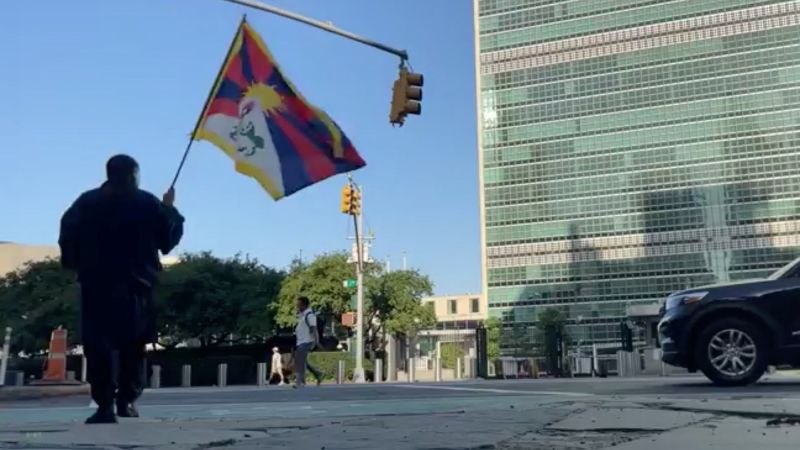
Tibetan Man Dies in Self-Immolation at UN Headquarters
Man with Tibetan flag dies after – A Tibetan man who held the Tibetan flag died after setting himself on fire near the United Nations building in New York City. The act, which occurred on Thursday, drew immediate attention from local authorities and international observers. The man, identified as Lobga Rangzen, was discovered unconscious by police at approximately 6:30 p.m., with severe burns covering his body. Despite emergency medical interventions, he passed away in the hospital, marking a tragic moment in the ongoing struggle for Tibetan autonomy.
His death took place just days after China passed a sweeping ethnic unity law, which has intensified debates about cultural preservation in Tibet. The legislation requires greater use of Chinese in education and government, while promoting Sinicization of religious practices. Critics argue that the law undermines Tibetan identity, culture, and language, prompting a wave of protests and acts of defiance, including self-immolation. Lobga, who had lived in exile since the 1980s, was known for his activism and efforts to rally global support for Tibetan rights.
Symbolism of the Tibetan Flag and Protest Tactics
The Tibetan flag, which represents the aspiration for independence, has been a powerful symbol of resistance against Chinese rule. In China, its display is often restricted, with authorities viewing it as a challenge to their sovereignty. Lobga’s act of self-immolation was a dramatic demonstration of this defiance, a method used by many Tibetans to express their grievances. The event unfolded on First Avenue, where he ignited himself while holding the flag, collapsing as bystanders attempted to extinguish the flames. His final message urged Tibetans to remain united in their fight for cultural survival.
Despite the tragedy, Lobga’s actions underscored the deepening tensions between Tibetans and Chinese authorities. His death has been linked to the recent ethnic unity law, with activists claiming it represents a broader crackdown on Tibetan identity. The law, which emphasizes the integration of minority groups into the Chinese framework, has been criticized for eroding traditional practices. Lobga’s self-immolation, however, took place in the U.S., highlighting the global reach of the movement and the role of diaspora communities in sustaining it.
International Response and Advocacy
Reactions to Lobga’s death quickly spread across social media, with videos capturing the moment and amplifying his legacy as a community leader. Jamyang Norbu, a Tibetan writer and activist in New York, praised his commitment to the cause, noting his decades-long advocacy for Tibetan independence. Meanwhile, the Tibetan government-in-exile expressed sorrow over the incident, calling for the preservation of human life as a priority for the movement. “While his sacrifice is deeply honored, the survival of Tibetans remains essential to the future of the struggle,” stated Penpa Tsering, the exile government’s head.
The United Nations acknowledged the event but noted it occurred after all meetings had concluded, causing no disruption to its operations. A spokesperson highlighted the symbolic significance of the protest, which drew global attention to the cultural and political challenges facing Tibet. The Associated Press reported that the incident sparked renewed discussions about the impact of China’s policies on minority communities. Lobga’s act, though not in Tibet itself, resonated with those who see self-immolation as a form of nonviolent resistance against perceived cultural erasure.
Historical and Political Background
Tibet’s struggle for autonomy has a long history, with self-immolation emerging as a notable tactic in the 1980s. These acts, often carried out in public spaces, have become a poignant form of protest against Chinese rule. Lobga’s choice to self-immolate in New York City underscores the diaspora’s role in keeping the movement alive, even beyond the borders of Tibet. His death adds to a growing list of Tibetan activists who have used extreme measures to highlight their demands for self-determination and cultural preservation.
China maintains that Tibet has been an inseparable part of its territory for centuries, celebrating its integration as a sign of progress. Officials emphasize policies aimed at economic development and national unity, while downplaying concerns about cultural erosion. The ethnic unity law, however, has been criticized for prioritizing assimilation over diversity. Lobga’s self-immolation serves as a reminder of the sacrifices made in the pursuit of Tibetan identity, drawing attention to the ongoing conflict between tradition and modernization in the region.
