
‘Leave or return in a coffin’: The threat driving migrants out of South Africa
‘Leave or return in a coffin’: The threat driving migrants out of South Africa
Leave or return in a coffin – South Africa has seen a dramatic rise in anti-immigrant sentiment, fueled by growing frustration over economic pressures and social tensions. The situation reached a boiling point in early June when a Malawian gardener named Kaunga Nyirenda received a stark warning from two men in his Johannesburg neighborhood. They told him that if he did not leave the country soon, he would face a grim fate: “We want to fix our country. If you don’t leave now, you’re going to leave in a coffin because we don’t need anyone after the 30th of June,” one of the men reportedly said.
Protest Groups and the Campaign for a ‘Deadline’
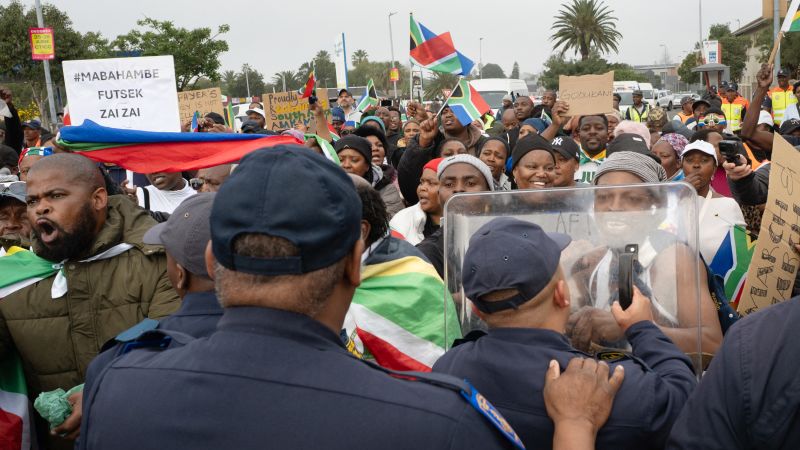
These threats are part of a broader movement led by protest groups and self-proclaimed vigilantes who argue that foreign nationals are burdening South Africa’s resources. In recent weeks, their demonstrations have escalated, with some appearing to incite violence against both documented and undocumented immigrants. Critics claim the attacks are driven by resentment toward job competition, crime, and the strain on public services. While organizers insist their rallies remain peaceful, the resulting chaos has left many migrants in fear.
“June 30 is the deadline, but you don’t have to wait until then – leave now,” said Nkosikhona Ndabandaba, a prominent figure in the movement.
One of the most vocal groups, March & March, has called for mass protests if their demands are not met. These include the “immediate and massive deportation of all illegal foreigners currently in the country.” The group’s leader, Ndabandaba, known as “Phakel’umthakathi” in Zulu, has amassed over 1.7 million followers on Facebook. His rhetoric has galvanized thousands, with some demonstrations featuring men dressed in traditional Zulu warrior regalia. According to Ndabandaba, the June 30 deadline is not just a symbolic date but a critical turning point for the nation.
Government Response and Security Measures
South Africa’s government has dismissed the “deadline” as an overstatement, warning against any attempts to destabilize the country. President Cyril Ramaphosa has condemned the violence, emphasizing that it does not reflect the views of the majority of South Africans or the policies of his administration. “Opportunists are exploiting legitimate grievances, particularly those of the poor, under the false guise of community activism,” he said, urging calm and vigilance.
Security forces are on high alert as the situation continues to intensify. Ramaphosa’s statements come amid rising concerns about a potential violent climax by the end of June. The president has also highlighted the government’s efforts to address the issue of illegal immigration, acknowledging the challenges without endorsing the radical measures being pushed by protest groups.
Incidents of Violence and Public Fear
Authorities have reported several violent incidents linked to the anti-migrant protests. In late May, two Mozambican men were killed during clashes in Mossel Bay, a coastal town in the Western Cape. The violence led to the destruction of over 50 shacks in an informal settlement, with Mozambique later stating that five of its citizens had died in what it described as “xenophobic attacks.”
Similarly, a Malawian man was allegedly murdered by a mob in Pietermaritzburg, near Durban. The attack forced hundreds of migrants to seek refuge in churches and mosques, as reported by state broadcaster SABC. These events have deepened public anxiety, with many fearing further retaliation in the coming days.
Roots of the Movement and Targets of the Protests
The current unrest stems from campaigns targeting undocumented migrants, led by groups such as March & March and Operation Dudula. The latter’s name, derived from the Zulu language, translates to “push back” or “force out,” reflecting its goal of expelling foreign nationals. Operation Dudula has taken aggressive steps, including targeting foreign-owned businesses, checking identification documents on the streets, and obstructing access to public hospitals.
While Ndabandaba has claimed his movement focuses solely on undocumented migrants, he has also criticized the behavior of South Africans, saying that the people are now “out of control” after Tuesday’s deadline. His statements suggest a shift from organized protests to more spontaneous acts of violence, as seen in the recent attacks.
Migration Exodus and the Role of Social Media
As the June 30 deadline approaches, the migrant exodus has continued unabated. Fear of further attacks has spread rapidly through poor communities and informal settlements, prompting many to leave voluntarily. One video circulating on social media shows a young man holding a machete and counting down to the deadline, intensifying the sense of urgency among migrants. The image has become a powerful symbol of the threats they face, with Nyirenda among those deeply affected.
According to the South African Border Management Authority, more than 13,000 foreign nationals have been repatriated or deported in the past two weeks. This includes approximately 9,000 Malawians, 3,000 Zimbabweans, 900 Ghanaians, and 300 Nigerians. The numbers highlight the scale of the movement, though experts caution that the exact impact on the migrant population may be more complex than the statistics suggest.
Challenges and Uncertainty Ahead
Despite the government’s efforts to manage the crisis, uncertainty remains about the future. While Ramaphosa has pledged to address the issue of illegal immigration, he has stopped short of endorsing the extreme tactics of the protest groups. The president’s warnings, however, have not quelled the unrest, with some activists demanding immediate action.
The anti-migrant groups, though unified in their goal, are not without internal debate. Ndabandaba has denied that his supporters have engaged in violence, blaming other factions for the chaos. Yet, the recent deaths of foreign nationals have raised questions about the effectiveness of these denials. As the final days of June draw closer, the situation could reach a critical juncture, with the potential for widespread conflict or a negotiated resolution.
The broader implications of the movement extend beyond immediate violence. With many migrants leaving the country, South Africa faces a possible labor shortage, particularly in sectors reliant on foreign workers. Meanwhile, the debate over immigration policy continues to divide communities, with some supporting the push for stricter controls and others condemning the xenophobic violence as a threat to national unity.
In the end, the June 30 deadline may be more than a symbolic date—it could serve as a catalyst for a deeper reckoning with the role of migration in South Africa’s social and economic landscape. As the government works to balance its commitments to immigrants with the demands of its citizens, the country stands at a crossroads, where fear and frustration converge into a powerful force shaping its future.
