
Can the so-called nanobubbler save the Reflecting Pool?
Can the so-called nanobubbler save the Reflecting Pool?
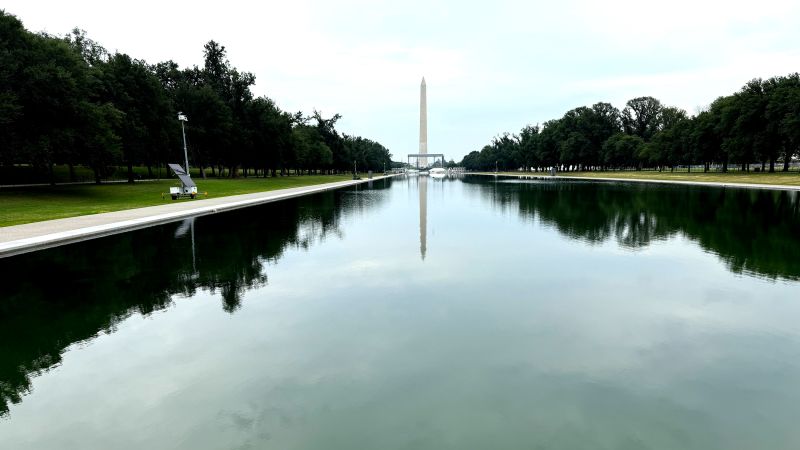
Can the so called nanobubbler save – The Lincoln Memorial Reflecting Pool, a cherished national landmark, has long struggled with maintaining its pristine water appearance. To address this, the Trump administration has deployed a $1.7 million ozone nanobubbler system, a technology that claims to generate 500 million microscopic bubbles per teaspoon of water. This device is designed to oxidize algae, bacteria, and other contaminants by injecting oxygen into the pool. The administration has hailed it as an innovative solution, though its effectiveness in a large, shallow body of water remains uncertain.
The Technology’s Promise
Greenwater Services, a small company from Brookfield, Ohio, was tasked with implementing the nanobubbler system. As one of the few firms in the country with this specialized equipment, the company was chosen to tackle the high-profile challenge of restoring clarity to the 6.5 million-gallon pool. Despite its novelty, the technology has not yet been formally tested on such a scale. The project’s success hinges on whether the nanobubbler can consistently maintain the water’s visual appeal, a goal that has been complicated by political scrutiny.
Chas Antinone, president and chief operating officer of Greenwater Services, described the project as a straightforward technical endeavor. “Yes,” he told CNN when asked if the initiative had proceeded as planned. “Our job was to come here and bring a technology that we think can keep the Reflecting Pool looking clean and reflect the way it is supposed to.” He emphasized that the company’s work was driven by its belief in the system’s efficacy, not political affiliations.
“I’ve got no political affiliation in this thing whatsoever either way. And I don’t really care about that part,” Antinone said.
However, the project has become entangled in a broader political narrative. Campaign finance reports reveal no direct contributions from Antinone, yet the company’s no-bid contract has sparked controversy. As algae returned to the pool, questions arose about the connection between the technology and Trump’s campaign donations. The pool, once a symbol of unity, now seems to reflect the nation’s growing divisions.
A Political Dilemma
The algae bloom, which reappeared shortly after the system was activated, has raised doubts about its long-term viability. The National Park Service reportedly requested the removal of temporary structures on June 12, but the reason for this action was not disclosed. Greenwater Services complied, taking the four mobile units offline. The decision left the pool’s water quality temporarily compromised, according to a project insider and video footage captured by CNN.
Despite the setback, the company maintains that the temporary equipment functioned as intended. “The four machines were operating at the same power level as the permanent system would have,” a spokesperson noted. “At that point, the water was clear, and everything was working well.” Yet the algae’s resurgence suggests that the system’s performance may not be as consistent as promised. Without a timeline for repairing decades-old pipes essential to the nanobubbler’s operation, the pool’s future remains uncertain.
Industry Perspectives
Joe Trusty, editor of Pool Magazine and a veteran in the water treatment field, acknowledged the nanobubbler’s potential but questioned its application in such a large, public setting. “It’s not surprising they were brought into the conversation,” he said. “But whether it can work effectively in a body of water this size and depth is still to be determined.” Trusty noted that while the technology has gained traction in the industry, its real-world performance requires further validation.
“Whether or not it is going to be able to be effective in as large a body of water and as shallow a body of water such as the Reflecting Pool remains to be seen,” Trusty added.
The project’s timeline also highlights the pressure faced by Greenwater Services. To meet the administration’s deadline for the pool’s refurbishment by the July Fourth celebrations marking America’s 250th birthday, the company had to act swiftly. Initially, the permanent ozone nanobubbler unit had not been fully assembled in Ohio, so temporary equipment was installed to ensure the system ran before completion. This improvisation, while necessary, has added complexity to the process.
The Path Forward
Greenwater Services has taken steps to manage the project’s public perception, hiring a crisis communications firm to navigate the political landscape. The company’s efforts to focus on the technical aspects of the water treatment have been challenged by the ongoing algae issue and the pool’s status as a symbolic focal point. The Interior Department and White House have not yet provided explanations for the removal of temporary structures, leaving questions about the project’s management.
As the nanobubbler system continues to be tested, its ability to deliver lasting results will be critical. While the technology promises a modern approach to water clarity, its success depends on factors beyond its design, including maintenance schedules and the condition of the pool’s infrastructure. The Reflecting Pool’s fate may serve as a microcosm of the broader challenges facing the Trump administration’s renovation initiatives.
The nanobubbler’s potential to revolutionize water treatment is undeniable, yet its implementation at the Lincoln Memorial has exposed vulnerabilities in both the technology and the political process. The project’s timeline, from the initial deployment of temporary units to the algae bloom’s return, underscores the delicate balance between innovation and reliability. As the pool remains a visual centerpiece of Washington, D.C., its restoration efforts will continue to draw attention, testing the limits of both scientific solutions and public expectations.
