
Immigration authorities detain former Kansas mayor who voted illegally
Immigration authorities detain former Kansas mayor who voted illegally
Former Coldwater mayor arrested after admitting to voting without citizenship
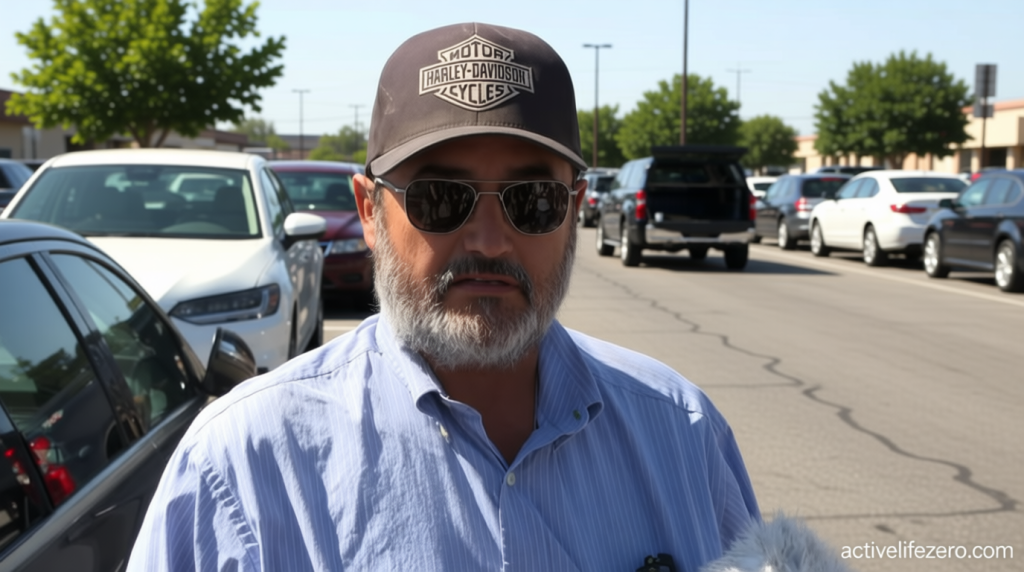
Immigration authorities detain former Kansas mayor – Wednesday, immigration officials detained Joe Ceballos, the ex-mayor of Coldwater, Kansas, following his recent acknowledgment that he had participated in elections without being a U.S. citizen. The arrest occurred during a meeting at a U.S. Immigration and Customs Enforcement (ICE) office in Wichita, according to his attorney, Jess Hoeme. Ceballos, a legal permanent resident of the United States, now faces uncertainty about his future, with fears of deportation mounting. The 55-year-old mayor resigned from his position in December after state authorities charged him with voting as a noncitizen. At the time, he was also embroiled in legal proceedings for election perjury. Hoeme revealed that Ceballos admitted during a 2025 interview that he had cast ballots, unaware that green card holders are not eligible to vote. This admission came as he sought citizenship, a process that requires proving lawful status. Ceballos’s case has drawn scrutiny from the Trump administration, which has used it to highlight alleged voting irregularities. His legal team is working to secure his release on bond, with plans to present the case before an immigration judge. “He has not been convicted of any kind of voter fraud,” Hoeme emphasized. “It should not have impacted his immigration status.” The attorney accused the administration of amplifying a “nonsense” narrative that equates legal voting with criminal activity. The incident has sparked a divide in Coldwater, a small town with a population of 700. While some community members support the Trump administration’s stance, others rallied behind Ceballos, holding signs that read “We Support Mayor Joe” and “ICE Out” as he entered the federal building. “Let Joe go!” the crowd chanted, expressing concern over the broad reach of the immigration enforcement. Ceballos, who was brought to the U.S. from Mexico by family when he was four, has long been a respected figure in the town. He was twice elected mayor and also served on the city council. In November, he secured a new term but stepped down after facing charges from state Attorney General Kris Kobach. The state reached a plea deal with Ceballos, who admitted to disorderly election conduct, a charge Hoeme described as similar to disturbing the peace. The arrest of Ceballos has intensified debate over the legal boundaries of voting rights. Trump and other Republicans have consistently warned about the risks of noncitizens influencing elections, particularly as the 2024 presidential race progressed. Despite these warnings, research from election officials across the political spectrum shows that the number of noncitizens voting illegally is relatively low. Ceballos’s situation has become a focal point for the SAVE Act, a Republican-backed bill aimed at strengthening voting restrictions. The act would require voters to provide documented proof of citizenship, a measure that could affect millions. Homeland Security has also enhanced its citizenship verification program, which is used in at least 25 states—mostly governed by Republicans—to audit voter rolls. The case has deepened tensions between local support for Ceballos and federal enforcement actions. “He’s kind of got to live the American dream, to come from absolutely nothing and build up — I don’t know about wealth — but to build up a business and have a job and be a productive part of society,” said Ryan Swayze, a longtime friend of Ceballos. The quote reflects the community’s belief in his contributions to society despite the legal misstep. During a school field trip to the Comanche County courthouse at age 18, Ceballos was encouraged to register to vote on the spot. He has previously stated in interviews that he supported Republican candidates, underscoring his alignment with the party’s values. However, his actions have become a symbol of the broader debate on immigration and voting rights. As Ceballos awaits further legal proceedings, the case has sparked discussions about the balance between immigration enforcement and civic participation. His attorney argued that the charges are politically motivated, pointing to the rarity of actual voter fraud cases. “The Trump administration has doubled down on this issue,” Hoeme said, “even though the evidence doesn’t support the severity of the charges.” The community’s reaction highlights the personal stakes involved. While some residents express apprehension about the implications of ICE actions, others remain steadfast in their belief that Ceballos should be allowed to continue his civic duties. The arrest has also reignited conversations about the role of legal permanent residents in the political process and whether their voting rights should be protected. As the SAVE Act moves closer to potential passage, the case of Joe Ceballos serves as a reminder of the polarizing impact of immigration policies. His story is now a flashpoint in the national discourse, illustrating how individual actions can be magnified by broader political agendas. Whether this leads to broader reforms or stricter enforcement remains to be seen, but for now, Ceballos’s fate is a matter of intense local and national interest.
Community and political implications
The arrest has not only affected Ceballos personally but has also brought attention to the political climate in Kansas. Many residents view him as a community leader who has worked tirelessly for local development. His legal team is optimistic about securing his release, arguing that the charges are not severe enough to justify deportation. “Thinking what could happen — it’s just kind of crazy,” Ceballos told reporters during his detention. “Obviously nervous. I don’t know what’s going to happen. I don’t know where they’re going to take me and what I can and can’t do inside there.” The former mayor’s words capture the anxiety of those who see his case as a potential precedent for broader immigration crackdowns. In Coldwater, the town’s newspaper, The Western Star, ran an advertisement urging people to support Ceballos. This underscores the importance of his role in the community and the emotional weight of his arrest. Meanwhile, the Trump administration continues to leverage cases like this to justify its approach to immigration enforcement, even as critics point to the minimal impact of such actions on the overall voting population. The broader context of the SAVE Act further illustrates how this case fits into a larger strategy. The bill aims to reduce voter fraud by requiring more rigorous verification of citizenship status. However, its implementation has raised concerns about potential discrimination against legal residents. As the debate continues, the case of Joe Ceballos remains a key example of how immigration policies can intersect with local governance. His experience highlights the challenges faced by individuals who are both citizens and noncitizens in navigating the legal landscape. Whether he will be released or face deportation hinges on the outcome of his legal battle, which could set a precedent for similar cases in the future. The incident also serves as a reminder of the complexities of U.S. immigration law. While Ceballos has lived in the country for decades, his legal status and voting eligibility have become points of contention. His case has brought together local and national voices, demonstrating the far-reaching effects of immigration enforcement on everyday lives.
