
‘I need to be the lion’: Inside a boot camp teaching men how to talk to women
‘I need to be the lion’: Inside a boot camp teaching men how to talk to women
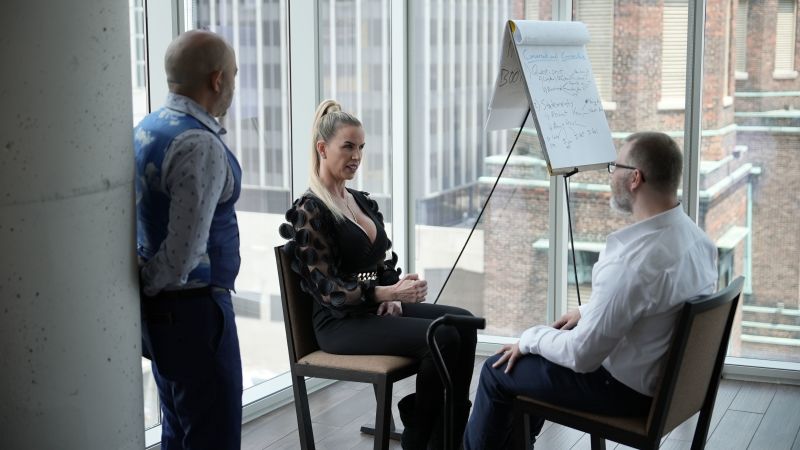
I need to be the lion – In the heart of Nashville, a unique trend is gaining traction among men seeking to refine their social skills. Known as “manosphere” boot camps, these intensive programs aim to equip participants with strategies to navigate the complexities of romantic interaction. Matt Artisan, a seasoned instructor, leads one such session, where the focus is not just on charisma but on mastering the art of communication in a world increasingly dominated by screens and digital connections.
The setting is a sunny afternoon on a bustling street, where the hum of city life blends with the sounds of laughter and chatter. Steve Crook, a 55-year-old recently divorced man, embodies the camp’s ethos as he scans the scene. His gaze is sharp, his movements deliberate. “I’m very picky,” he admits, his voice steady. To Crook, the key to success lies in physical attributes—long legs, a defined frame, and a confident demeanor. “I’m a bit of a Barbie guy, really,” he says, his tone casual yet firm. “Big boobs, slim, and that classic, effortless vibe.”
As Crook’s attention lands on a young woman engaged in conversation with friends, the moment is set. He springs into action, his pace quickening as he maneuvers through the crowd. “I just thought, f**k it,” he later explains, offering a candid breakdown of his approach. “Let’s get out of the head and just do it.” The result is a bold but clumsy attempt at connection. He stops her, heart pounding, and delivers a compliment—“she’s breathtaking.” However, the woman’s response is unexpected: she begins to step away. The exchange falters, leaving Crook visibly shaken. “It’s awkward,” he says, his voice tinged with frustration. “It’s over in seconds.”
“You were kind of behind them,” Artisan notes, offering a critique as Crook retreats. “You’ve got to get in front of all of them.”
Throughout the session, Artisan provides real-time feedback, adjusting Crook’s posture, vocal tone, and timing. “I heard the voice go up a few times,” he adds, pointing out areas for improvement. The coach’s guidance is relentless, pushing participants to shed their hesitance and embrace a more assertive approach. For Crook, the goal is clear: to move beyond his “nice guy tendencies” and embody the alpha male persona he envisions. “I need to be the lion,” he says, his resolve evident. “I feel like a p*ssy, basically.”
The boot camp’s structure mirrors the intensity of traditional military training, with participants engaging in repeated drills to build muscle memory. Over the course of three days, Crook practices approaching women in diverse settings—on sidewalks, in crowded nightclubs, and even in silent, intimate encounters. Each attempt is a lesson, each failure a stepping stone. “We’ll work on that,” Artisan reassures, his tone encouraging as he reviews the progress of multiple trainees. The program’s focus is on transforming self-consciousness into self-assurance, even as it sparks debate about the boundaries of respect and objectification.
While the camps evoke imagery of the early 2000s “lad mags” with their bro-centric language, participants insist their methods are rooted in respect. Yet, conversations outside the camera’s gaze reveal a more nuanced perspective. “They’ve got to be physically attractive,” one trainee remarks, his words echoing the criteria that define success. The group’s dynamic is one of both camaraderie and competition, as they vie to master the skills that once defined masculinity. For many, the pursuit of this ideal is a response to a modern dilemma: the erosion of face-to-face interaction in an era of digital convenience.
The loneliness epidemic and its influence
Brandon Viall, a participant in Artisan’s program, attributes the rise of these camps to a growing sense of disconnection. “We’re suffering from an epidemic of loneliness,” he says, his voice steady but his words heavy with conviction. “We’re connected by all these screens, but is that real connection?” The group cites several factors contributing to their isolation—dating apps that prioritize quick swipes over meaningful dialogue, political polarization that fragments communities, and a post-#MeToo culture that has left some men wary of initiating conversations.
According to a 2024 Pew Research Center study, about one in six Americans report feeling lonely or disconnected from others most or all of the time. Men, in particular, are more likely to experience this solitude without seeking support from friends, family, or mental health professionals. “It’s like we’re all alone in a crowd,” Viall explains, his frustration palpable. “We don’t know how to talk to each other anymore.”
A global phenomenon with local roots
Artisan’s company, The Attractive Man, has expanded its reach beyond the United States. By the end of 2026, boot camps are scheduled in cities across North America, including New York, Los Angeles, San Francisco, Seattle, Dallas, Miami, Las Vegas, and Boston. In Europe, Asia, and Central America, the demand for such programs has grown, reflecting a shared desire to reclaim lost social skills. “It’s not just about dating,” Artisan says, his perspective broader than the immediate goal of attracting a partner. “It’s about rebuilding human connection.”
The Nashville camp, however, serves as a microcosm of the broader movement. Its participants range in age and background, united by a common aspiration: to master the art of approaching women with confidence. For some, like Crook, the experience is transformative. “I feel like I’m unlocking something,” he says, his tone shifting from self-doubt to determination. “It’s like training for a battle that’s always been fought in the shadows.”
Despite its critics, the program has found a loyal following. Artisan’s clients often describe the boot camp as a necessary step in reclaiming their self-esteem and navigating a world where traditional masculinity is redefined. “We’re not just teaching men how to flirt,” one participant adds. “We’re helping them feel like they belong again.”
Yet, the question remains: does this revival of pick-up culture offer genuine connection or merely a performative solution to modern loneliness? As the sessions continue, the answer becomes clear. For those who attend, the camp is more than a series of lessons—it’s a reimagining of what it means to be a man in the 21st century, one where confidence is measured not by job titles or achievements, but by the ability to engage with others in a way that feels authentic. The journey is ongoing, and for many, it’s a step toward rediscovering the power of human interaction in a digital age.
By the end of the three-day immersion, the participants have honed their techniques, their confidence sharpened by practice and persistence. Crook, once hesitant, now approaches women with a renewed sense of purpose. The boot camp’s success is not just in its methodology, but in its ability to address a deeper need—reconnecting men with the art of conversation, one step at a time.
