
Germany and France drop joint fighter jet project
Germany and France drop joint fighter jet project
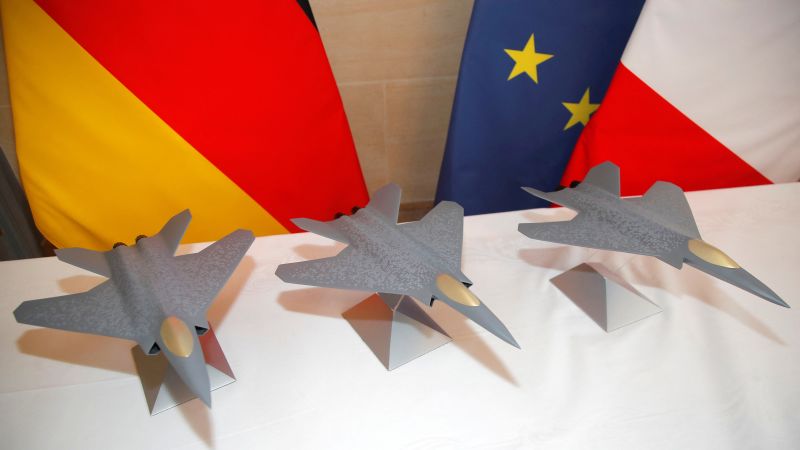
Germany and France drop joint fighter – Leaders from Germany and France have decided to terminate their collaborative effort to create a next-generation combat aircraft, according to officials. The agreement, reached during a summit in Montenegro, marks the end of a significant European defense initiative that had faced prolonged uncertainty. The move reflects deepening tensions between key industrial players, including Airbus and Dassault Aviation, which have been unable to reconcile their differing priorities. This decision has raised concerns about the future of European military cooperation, as the project was seen as a cornerstone of the continent’s rearmament strategy.
Deadlock Over Specifications and Control
The partnership, which began under the leadership of former German Chancellor Angela Merkel and current French President Emmanuel Macron in 2017, has been strained by disagreements over the aircraft’s design and operational control. German Chancellor Friedrich Merz and Macron reportedly spent hours deliberating the matter during the EU-Western Balkans summit, where they concluded that a breakthrough was unlikely. Merz advised Macron to halt further development, citing the inability of the two firms to align on core requirements. Airbus, representing Germany and Spain, and Dassault Aviation, France’s lead contractor, remain at odds over technical details and intellectual property rights.
Officials noted that the project’s core fighter jet, a central component of the initiative, had become a focal point of contention. The aircraft was intended to be a cutting-edge platform, integrated with drones and a classified “combat cloud” system. However, months of negotiation have yielded little progress, with both sides stuck on fundamental issues. Despite this, the two leaders have tentatively agreed to keep the broader program alive, focusing on the development of non-core systems under the same umbrella name: Future Combat Air System (FCAS).
Implications for European Defense
The collapse of the joint venture highlights the challenges Europe faces in modernizing its military capabilities. With Russia posing an escalating threat, Western officials have urged European nations to accelerate rearmament. Yet, the inability to agree on the next-generation fighter jet has cast doubt on the continent’s ability to coordinate large-scale defense projects. Macron, who had championed the initiative for years, emphasized its importance for Franco-German collaboration and European unity. However, the failure to resolve key disputes has exposed the fragility of such partnerships.
A European source close to the talks described the compromise as a “face-saving” approach, allowing the project to remain technically viable without fully committing to the core fighter. FCAS, a generic term for advanced air systems, will continue to be developed, though its future remains unclear. The agreement enables Macron to step back from the core fighter without formally abandoning the entire program. This symbolic gesture aims to preserve the project’s reputation while addressing the immediate deadlock between Airbus and Dassault.
“It’s hardly ideal signaling either to Washington or to Moscow,” said Douglas Barrie, a senior fellow at the International Institute for Strategic Studies. “The project was meant to demonstrate Europe’s capability to lead in defense innovation, but the impasse suggests a lack of consensus among key players.”
Historical Context and Industrial Rivalry
The decision to end the core fighter project echoes past disagreements between France and Germany. In the 1980s, France withdrew from the Eurofighter Typhoon program, citing similar concerns about industrial balance and control. This time, the conflict has grown more public, with Airbus and Dassault increasingly at odds over their roles in the initiative. Analysts suggest the dispute reflects deeper structural differences between the two aerospace giants, particularly regarding the level of autonomy each seeks in the design and production process.
Merz, meanwhile, has questioned the necessity of developing a manned sixth-generation fighter jet. He argued that Germany’s air force could achieve its goals through alternative strategies, including a focus on nuclear-capable aircraft or carriers. “We don’t need a jet that requires carrier operations,” Merz stated, emphasizing the country’s need for a more flexible and cost-effective approach to defense modernization. This stance has drawn criticism from some within Germany’s aerospace sector, which has long supported the project as a way to maintain its technological edge in the industry.
“SCAF has been on life support for three years,” remarked Francis Tusa, a UK-based defense analyst. “The project’s survival now hinges on whether France and Germany can agree on a shared vision, even if it means compromising on the core aircraft.”
Workforce and Industrial Impact
The termination of the project has been met with mixed reactions. Germany’s IG Metall union praised the decision, calling it a “necessary step” that aligns with the country’s long-standing concerns about fair competition in the aerospace sector. “We’ve seen for months that Dassault and Airbus cannot cooperate on equal terms,” said Jürgen Kerner, Deputy Chairman of IG Metall. “This decision protects both the aviation industry and the workers who have invested years into the project.”
Despite the setback, the FCAS initiative will proceed, albeit with a reduced scope. The “combat cloud” and drone systems will continue under the same name, though their development will not be tied to the core fighter. This allows the program to retain its strategic importance while freeing the partners to pursue separate initiatives. France’s defense ministry has yet to issue a formal statement, but Macron has expressed regret over the outcome, stating that the partnership had “significant potential” to strengthen European security.
The collapse of the joint fighter jet project underscores the complexities of European defense integration. While the initiative was initially hailed as a symbol of unity, the divergent interests of its industrial partners have led to its demise. Analysts warn that this could set a precedent for future collaborations, as nations prioritize national interests over collective goals. For now, the focus shifts to salvaging the remaining components of FCAS, with hopes that the two countries can find common ground in other areas of defense cooperation.
As the project nears its end, questions remain about its legacy. Will the decision strengthen or weaken European military coordination? With the US intensifying its push for transatlantic defense partnerships, the absence of a unified European response may leave the continent vulnerable. Yet, the FCAS framework may still serve as a foundation for future initiatives, proving that even in the face of rivalry, collaboration can persist—albeit in a modified form.
