
Freed Gaza flotilla activists accuse Israeli forces of sexual violence and abuse while in custody
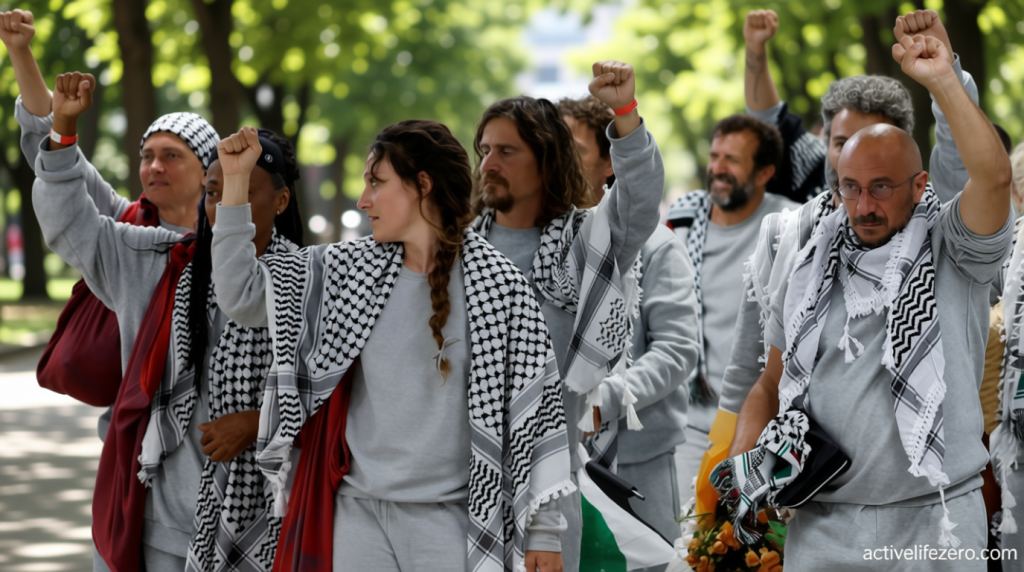
Freed Gaza Flotilla Activists Report Sexual Violence and Abuse During Detention
Freed Gaza flotilla activists accuse Israeli – More than 400 activists who were part of a humanitarian flotilla intercepted by Israeli forces on their way to Gaza have publicly claimed they endured beatings, torture, and sexual violence while held in custody. The group, known as the Global Sumud Flotilla, was detained during a multi-day operation after departing from Turkey, with their final arrest occurring on Tuesday. The survivors now allege that the treatment they received was both brutal and systematic, prompting global outrage and calls for accountability.
Humanitarian Mission and Interception
The Global Sumud Flotilla, which transported 428 individuals and essential supplies such as food, medicine, and medical equipment to Gaza, was detained by Israeli authorities after its journey from Turkey. The operation spanned several days, during which the ship was halted and its passengers questioned. Following the detention, the activists were deported back to Turkey, where they shared their experiences with international media. These accounts have since ignited discussions about the treatment of detainees and raised concerns about the legality of the actions taken by Israeli forces.
According to Adalah, an Israeli human rights organization that represents the flotilla activists, its legal team documented testimonies describing severe physical and sexual abuse. Survivors claimed they were hit with rubber bullets, tasered, and subjected to beatings that left them with suspected fractures. Some accounts detailed instances of sexual violence, including “multiple reports of rape,” with one activist stating that they were “forcibly penetrated by a handgun” during the detention period.
International Backlash and Allegations
While Israeli authorities have dismissed the allegations as “false and entirely without factual basis,” the testimonies continue to fuel international criticism. Adalah’s international advocacy coordinator, Miriam Azem, emphasized that these claims represent the most intense form of violence encountered by the group over the past decade. She noted that some survivors opted not to share details due to fear of retaliation, while others were still in Israeli custody at the time of their interviews.
Juliet Lamont, an Australian filmmaker and activist, described her experience aboard the Israeli “prison boat” as a “nightmare.” She recounted being beaten and sexually assaulted by five men in a confined shipping container during her detention. Speaking at Istanbul Airport on Thursday, Lamont wore the gray tracksuit provided by the Israel Prison Service and stated that the violence was part of a “relentless and planned campaign” aimed at deterring future activism. “You know they’ve broken our bones, but they haven’t broken our soul,” she said, highlighting the psychological toll of the ordeal.
Testimonies of Brutality
Further accounts from activists, including Zack Schofield, an Australian national, painted a harrowing picture of the treatment in custody. Schofield, who was interviewed by journalists in Istanbul, described being “zip-tied in a torture position” with his hands behind his back for 40 minutes, nearly vomiting from the pain. He also witnessed other detainees being “chokeslammed” to the ground and subjected to physical assaults involving knees to the chest and head impacts. “It was a constant barrage of violence,” he said, detailing the brutality he endured during the immigration process.
Other video testimonies filmed at Istanbul Airport on Thursday echoed similar claims of severe mistreatment. Activists spoke about being held in cramped spaces, subjected to prolonged interrogations, and experiencing both physical and emotional abuse. These accounts underscored the widespread nature of the alleged violations, with some survivors reporting injuries that required medical attention. Germany, for instance, stated that its nationals had been harmed during the operation, though it did not specify the extent of the injuries. Reuters reported that Italian prosecutors were also examining potential crimes, including kidnapping and sexual assault, linked to the incident.
Canada Condemns the Treatment of Its Citizens
The allegations have drawn strong reactions from foreign governments. Canadian Foreign Minister Anita Anand highlighted the “appalling abuse of Canadians” during her Friday statement, calling the treatment “grave” and insisting that those responsible should be held accountable. Anand emphasized that Canada had received detailed information about the mistreatment, which included physical torture and sexual assaults, and that the government would not tolerate such conduct.
Meanwhile, the Israel Prison Service (IPS) maintained that its procedures were lawful and that the accusations were “generalized.” In a statement to CNN, the IPS asserted that all prisoners and detainees were treated in accordance with legal standards, with trained staff monitoring their conditions. It added that any complaints were thoroughly investigated through official channels. However, the survivors’ testimonies challenge this narrative, suggesting that the treatment went beyond routine procedures and included targeted aggression.
Juliet Lamont’s account of being confined in a shipping container with no access to light or air has become a central part of the narrative. She described the environment as “like a cage,” with guards using force to subdue and intimidate the activists. The use of physical restraints and aggressive tactics during the detention process has been cited as evidence of a broader pattern of abuse. Adalah’s representatives have urged the international community to take these claims seriously, stating that the activists are willing to testify further if given the opportunity.
The accusations come amid a broader climate of international scrutiny over Israel’s treatment of detainees. The far-right National Security Minister, Itamar Ben-Gvir, has been a focal point of criticism, with some activists suggesting that his rhetoric may have influenced the harsh measures taken against the flotilla. Despite the IPS’s defense, the survivors’ experiences have sparked a debate about the balance between security and human rights in Israeli detention facilities.
As the international community continues to demand transparency, the testimonies of the flotilla activists serve as a powerful reminder of the challenges faced by those advocating for humanitarian causes in the region. The events have not only highlighted individual suffering but also raised questions about the systemic nature of the abuse and its implications for the treatment of detainees in Israel. With more details emerging, the pressure on Israeli authorities to address these allegations grows stronger, setting the stage for potential legal and diplomatic consequences.
