
Ferrari unveils its first electric car – and it comes with a $640,000 price tag
Ferrari Unveils Its First Electric Car – and It Comes with a $640,000 Price Tag
Ferrari unveils its first electric car – On Monday, Ferrari made its debut with a fully electric vehicle, signaling a major pivot in the luxury sports car industry. This bold step marks a departure from the brand’s historic reliance on internal combustion engines, as it joins a growing list of automotive giants redefining their identities in the face of shifting consumer preferences and regulatory pressures. The car, named Luce—Italian for “light”—is Ferrari’s first five-seater model, a significant innovation that targets a broader demographic beyond traditional enthusiasts. While the company has long been synonymous with high-performance gasoline-powered machines, the Luce represents a calculated gamble to capture a new segment of buyers who value technology and sustainability without compromising on the thrill of driving.
A Design Revolution Led by a Visionary
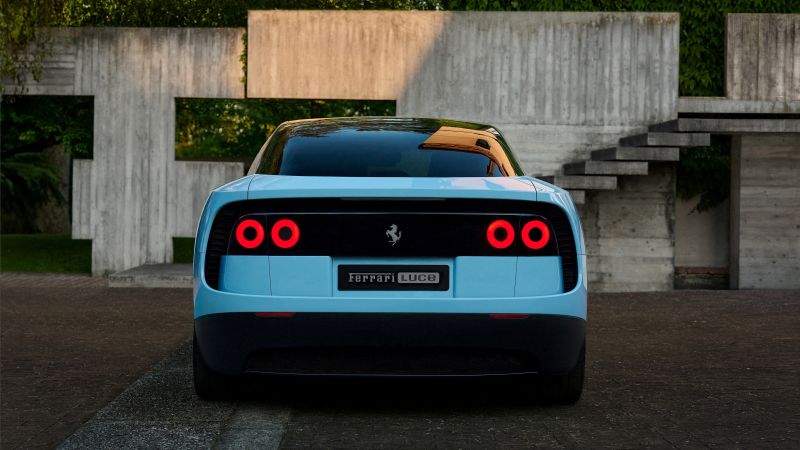
Ferrari’s new electric model was developed in collaboration with Jony Ive, the former Apple design chief and founder of the creative agency LoveFrom. Ive’s involvement underscores Ferrari’s commitment to blending cutting-edge engineering with refined aesthetics, a philosophy that has become increasingly vital in the electric vehicle (EV) era. The Luce’s design, which features a larger body and expansive glass surfaces, breaks from the carmaker’s aggressive, muscular styling traditionally associated with its iconic sports cars. This approach aims to balance innovation with the brand’s heritage, ensuring that the vehicle maintains its prestige while appealing to a modern audience.
“It’s the result of five years of work,” said Ferrari’s CEO Benedetto Vigna during the unveiling event in Rome, addressing more than 200 journalists. The CEO’s remarks highlight the extensive effort behind the Luce, which incorporates advanced technology to preserve the visceral appeal of a traditional Ferrari. By amplifying natural vibration sounds from its electric powertrain, the car retains the emotional connection that has long defined the brand’s identity.
The Luce’s engineering team has prioritized performance, integrating four electric motors—one per wheel—to generate more than 1,000 horsepower. This setup ensures remarkable agility and power, even for a vehicle weighing over 2.2 tons. With a top speed exceeding 310 kph and a range of over 500 kilometers, the Luce is designed to meet the demands of both performance-oriented drivers and those seeking practicality. Ferrari’s marketing and commercial officer, Enrico Galliera, emphasized the car’s versatility, stating that it caters to a clientele that “still looks for something completely different, to be used in different moments of life.” This statement reflects the brand’s ambition to bridge the gap between luxury and everyday usability.
A Strategic Move to Capture Emerging Markets
Ferrari’s decision to launch the Luce is not just a product of internal innovation but also a response to external market dynamics. Competitors such as Porsche and Lamborghini have scaled back their EV ambitions due to weak demand, leaving room for Ferrari to assert itself in the electric vehicle space. The company is leveraging this opportunity to expand its reach into markets like China, where electric vehicles dominate and large petrol cars face heavy taxation. Galliera noted that the Luce’s combination of high-tech features and traditional craftsmanship makes it an ideal candidate for such markets, where consumers prioritize efficiency and design without sacrificing exclusivity.
The Luce’s trunk capacity, at 600 liters, is a standout feature for a luxury sports car, offering practicality that rivals like Tesla and Chinese EV manufacturers have yet to match. This space, along with the car’s four-seating configuration, is tailored to appeal to affluent families who may no longer need a second vehicle for daily use. The interior of the Luce retains Ferrari’s signature opulence, featuring leather upholstery, glass panels, and anodized aluminum accents. However, it introduces a hybrid approach to controls, combining physical buttons with digital interfaces—a compromise that aims to please both tech-savvy drivers and those who prefer tactile feedback.
The launch event itself was a spectacle, with five Luce prototypes displayed in a dazzling light show. These cars were painted in a range of colors—from Ferrari-red to white and light blue—symbolizing a fresh chapter for the brand. While the design diverges from the aggressive lines of Ferrari’s classic models, it still carries an unmistakable sense of sportiness, ensuring that the Luce remains instantly recognizable as part of the Ferrari family. The expanded body and glass-led design also suggest a move toward more aerodynamic efficiency, a critical factor for long-range electric vehicles.
Ferrari’s gamble with the Luce is rooted in its belief that the next generation of drivers—raised on technology and AI—will embrace electric vehicles as a natural evolution of automotive excellence. By integrating elements of both traditional craftsmanship and modern innovation, the company hopes to attract buyers who are tech-forward but still crave the unmistakable roar of a Ferrari engine. However, the Luce’s success will depend on its ability to balance these competing priorities without diluting the brand’s core identity. The $640,000 price tag, equivalent to €550,000, is a testament to Ferrari’s focus on exclusivity, but it also raises questions about accessibility in a market where EV prices are often steep.
As the automotive industry accelerates its transition to electric power, Ferrari’s Luce stands as a symbol of the brand’s adaptability. While some purists may argue that the Luce lacks the raw power of a gasoline engine, its engineers have worked diligently to ensure it delivers a driving experience that is both exhilarating and refined. The car’s ability to generate over 1,000 horsepower and achieve speeds above 310 kph positions it as a serious contender in the high-performance EV segment, even as it caters to a more diverse audience. With deliveries set to begin in the fourth quarter of 2026, the Luce represents a pivotal moment in Ferrari’s history—a vehicle that is as much about future possibilities as it is about honoring the past.
Ferrari’s design philosophy for the Luce is a blend of heritage and innovation. The use of physical controls, such as buttons and dials, contrasts with the all-digital interfaces of Tesla and some Chinese EV manufacturers, offering a tactile experience that many traditional car enthusiasts appreciate. This choice also aligns with the brand’s reputation for meticulous attention to detail, ensuring that even the smallest elements of the Luce reflect Ferrari’s commitment to excellence. Meanwhile, the car’s exterior design, with its expansive glass panels and minimalist lines, signals a willingness to embrace new aesthetics while maintaining the brand’s luxury quotient.
Despite its ambitious goals, the Luce faces an uphill battle in a market where electric vehicles are often perceived as compromising on performance and exclusivity. However, Ferrari is confident that its unique blend of technology and tradition will set the Luce apart. The company’s CEO, Benedetto Vigna, stressed that the Luce is not a compromise but a “new chapter” for Ferrari, one that combines the thrill of driving with the benefits of electric propulsion. As the first five-seater from the brand, the Luce also serves as a test case for how Ferrari can evolve while staying true to its roots. With its launch imminent, the vehicle is poised to redefine what a luxury electric car can offer, both in terms of performance and lifestyle appeal.
Technical Highlights and Competitive Edge
The Luce’s technical specifications are as impressive as its design. Its electric powertrain delivers a range of over 500 kilometers, making it suitable for long-distance travel without the need for frequent charging stops. This range, combined with its powerful motor setup, positions the Luce as a viable alternative to traditional high-performance cars. The car’s ability to generate more than 1,000 horsepower is a key selling point, particularly in a market where electric vehicles are often associated with lower power outputs compared to their gasoline-powered counterparts.
Additionally, Ferrari has emphasized the Luce’s agility, a trait that is crucial for a vehicle of its size. The four-wheel-drive system ensures that power is distributed efficiently, allowing the Luce to handle dynamic maneuvers with precision. These features, coupled with its advanced safety technologies and luxurious interior, make the Luce a compelling option for those who want the best of both worlds—high performance and everyday practicality. As the EV market continues to grow, Ferrari’s Luce is a strategic move that could redefine the luxury segment, proving that electric vehicles can still embody the essence of a Ferrari.
Ultimately, the Luce is more than just a car—it is a statement about Ferrari’s future. By introducing this model, the company is not only diversifying its product lineup but also challenging the notion that electric vehicles must sacrifice the soul of a performance car. With its striking design, cutting-edge technology, and a price tag that reflects its exclusivity, the Luce is set to
