
Death toll rises in Japan. Why does the country experience so many large earthquakes?
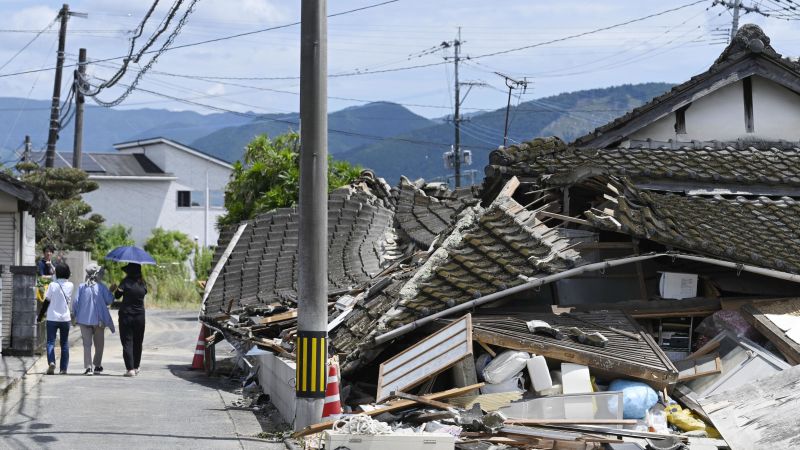
Japan’s Kumamoto Region Faces Another Devastating Tremor
Activelifezero.com – Japan continues to demonstrate why it remains one of the most seismically active nations globally. This week, a powerful 6.8-magnitude earthquake struck the southern Kumamoto prefecture, sending thousands of emergency personnel into action for search, rescue, and relief operations. According to public broadcaster NHK, officials confirmed 34 fatalities, though they cautioned that this count encompasses certain deaths where a direct connection to the seismic event has not yet been verified.
A Nation Built on Shifting Ground
Very few countries endure such regular and destructive earthquakes as Japan does. The archipelago rests upon the convergence of four tectonic plates—massive sections of Earth’s crust that never cease moving. Additionally, the nation occupies a position along the Ring of Fire, a sweeping 25,000-mile pathway encircling the Pacific Ocean. This geological zone hosts the planet’s most volatile volcanoes and experiences the highest concentration of seismic activity worldwide.
The Tuesday afternoon tremor made its presence felt around 4:30pm local time in Uki, a municipal area home to approximately 56,000 inhabitants situated south of Kumamoto prefecture. Following the initial shock, a series of aftershocks rippled through the region. The United States Geological Survey recorded the most powerful of these secondary events at 5.4-magnitude, occurring further to the south. Emergency officials have cautioned that comparable intensity shaking could continue throughout the coming days.
Rescue Operations Under Challenging Conditions
Recovery teams remain focused on extracting individuals trapped beneath collapsed structures. The earthquake caused significant structural damage, including the partial destruction of a Kumamoto shopping mall following what appears to have been a gas leak and subsequent explosion. Five victims perished inside the Aeon Mall Kumamoto, while additional casualties occurred when a chimney at a Yatsushiro paper manufacturing facility fell and struck people below.
Complicating rescue efforts are elevated temperatures that authorities have warned could lead to heatstroke. Residents are being urged to maintain proper hydration as forecasts indicate temperatures will exceed 35 degrees Celsius (95 degrees Fahrenheit) beginning Thursday. Prime Minister Sanae Takaichi addressed the situation on Thursday, stating, “For those who are waiting for aid, we will be devoting our full efforts to rescue activities and aid,” while also noting her commitment to restoring power to impacted zones.
Historical Context and Preparedness
The Kumamoto area had only recently recovered from a more substantial earthquake in 2016, which caused extensive destruction and claimed over 270 lives. Local resident Shoji Yonemitsu expressed his confusion to CNN, asking, “Why? Why does this keep happening around us here in Kumamoto?” He continued, “The shaking back then was on a whole different level. But yesterday’s quake was still pretty terrifying.”
Japan’s historical record contains numerous catastrophic seismic events. During classical and feudal periods, earthquakes frequently devastated urban centers, destroying wooden and paper structures that proved highly susceptible to post-earthquake fires. One particularly lethal event in 1498 is believed to have killed more than 30,000 individuals, although scholarly estimates vary. The Great Kanto earthquake of 1923 represented another devastating chapter, reducing portions of Tokyo to ruins and killing approximately 140,000 people.
Stronger construction standards were implemented beginning in the 1980s, and their value became evident during the 1995 Kobe earthquake, which killed over 6,000 people. Nearly every building that collapsed in Kobe had been constructed before the updated codes took effect. This tragedy initiated a comprehensive effort to enhance earthquake resilience, improve emergency response capabilities, and retrofit older structures to meet contemporary safety requirements.
Technology and Ongoing Vulnerability
As one of the world’s most prosperous nations, Japan possessed the financial resources necessary to invest heavily in technological solutions against tectonic disasters. Billions of dollars have flowed into advanced earthquake detection systems, evacuation protocols, and earthquake-resistant infrastructure. For Japanese citizens, seismic events have become an ordinary aspect of daily existence—children begin practicing evacuation drills while still in kindergarten.
Nevertheless, technology cannot eliminate all risk. The 2011 Tohoku disaster stands as the worst catastrophe in living memory for Japan. A magnitude-9.1 earthquake combined with a devastating tsunami triggered the Fukushima nuclear meltdown and resulted in nearly 20,000 deaths. Thousands of victims were never recovered. This event remains among the strongest earthquakes recorded in the twenty-first century.
Even smaller seismic events can prove fatal. In 2024, a magnitude-7.1 earthquake in Noto, western Japan, killed more than 700 people. The government continues to warn residents about the possibility of a once-in-a-century megathrust earthquake that could reshape the nation’s landscape. Other countries sharing the Ring of Fire—including Chile, Indonesia, the Solomon Islands, and the western United States—face similar geological challenges, though Japan’s dense population and advanced infrastructure make its seismic preparedness particularly noteworthy.
Related Reading
Frequently Asked Questions
What is Death toll rises in Japan Why does?
Death toll rises in Japan Why does is the main topic of this guide. The article explains the context, practical details, and next steps readers should understand.
Why does Death toll rises in Japan Why does matter?
Death toll rises in Japan Why does matters because readers are looking for a useful answer, not just a short summary. Good content should match search intent and help them decide what to do next.
