
Bomb attack near railway station in southwest Pakistan kills at least 23
Bomb Attack Near Railway Station in Southwest Pakistan Kills at Least 23
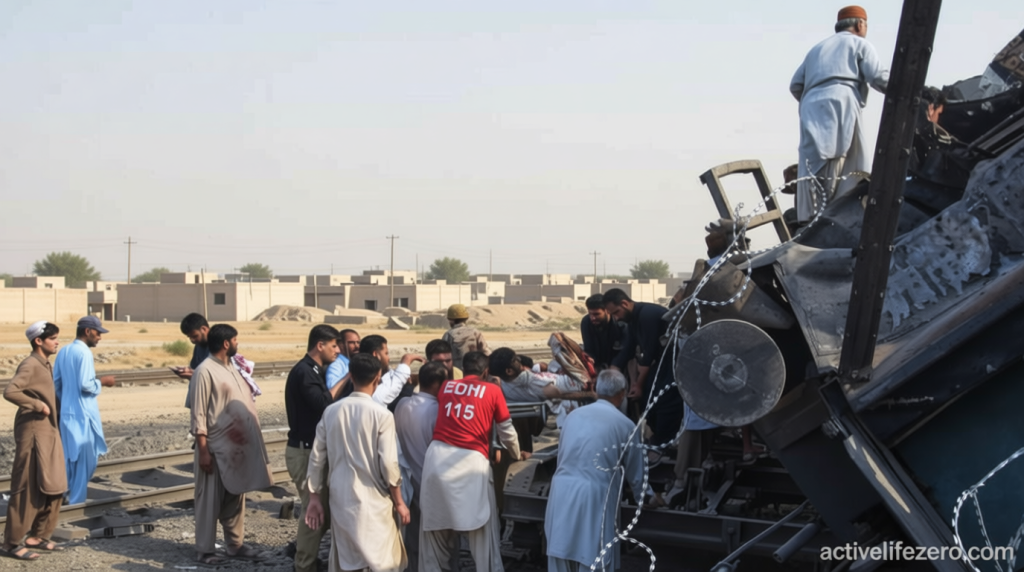
Bomb attack near railway station in southwest – On Sunday, a suicide bomb attack occurred near a railway station in Quetta, the capital of Pakistan’s Balochistan province, resulting in the deaths of at least 23 people and injuring 71 others. The explosion took place as a train was passing through the area, causing significant damage and chaos. According to emergency workers, the site of the attack remains under active investigation, with rescue teams working to recover victims and stabilize the situation.
Claim of Responsibility by Militant Group
The Baloch Liberation Army (BLA), a separatist organization seeking independence from Pakistan’s central government, has claimed responsibility for the attack. This marks another escalation in the group’s campaign of violence targeting infrastructure and civilians in the region. Preliminary findings from the police confirm that the blast was executed by a suicide bomber, though details about the method and timing of the attack are still under scrutiny.
“I was right there near the tracks. I can’t even believe how we survived,” a man who witnessed the explosion told Reuters. “The blast was so huge. Thank God, we made it out alive.”
Rescue Operations and Casualty Numbers
Rescue efforts and the evacuation of survivors are continuing as of now. Emergency workers reported that at least 23 bodies have been recovered from the scene, while 71 injured passengers have been transported to nearby hospitals. The situation has prompted an emergency declaration at Quetta’s hospitals, where medical staff are working overtime to treat the wounded. Deputy Superintendent Police (City) Qadir Qambrani noted that the casualty count may increase further, with estimates suggesting more than 100 individuals are either dead or injured. He emphasized that the exact numbers are still being verified as investigations progress.
Security Measures and Investigative Steps
Authorities have cordoned off the area around the railway station to facilitate the investigation. Security forces and bomb disposal teams are working in tandem to assess the extent of the damage and determine whether any additional devices were present. The focus of the inquiry includes identifying the perpetrator and understanding the circumstances that led to the attack. The BLA’s history of orchestrating large-scale bombings and suicide operations in Balochistan makes them a likely suspect in this incident.
Government Statements and Reactions
Pakistan’s Prime Minister Shehbaz Sharif condemned the attack, calling it a “heinous bomb explosion.” In a statement on X, he asserted that such cowardly acts of terrorism cannot undermine the resilience of the Pakistani people. Meanwhile, Interior Minister Mohsin Naqvi visited Quetta following the attack and convened a meeting with the chief minister of Balochistan. During the session, Naqvi reaffirmed the government’s commitment to addressing the threats posed by separatist groups, stating that “beasts targeted innocent people with extreme brutality” and vowing to restore security in the region.
Background on Balochistan’s Conflict
Balochistan, a province rich in oil and minerals, has long been a hotspot for separatist violence. The BLA, one of the most active militant groups in the area, has repeatedly carried out attacks aimed at destabilizing the region and drawing attention to their cause. Recent years have seen a series of bombings and gun assaults in Balochistan, often targeting security personnel, government buildings, and transportation hubs. The February attack, which the BLA claimed responsibility for, resulted in the deaths of at least 33 people, highlighting the ongoing threat posed by the group.
The attack near the railway station underscores the persistent tensions in Balochistan, where separatist movements have been fueled by grievances over resource distribution, political representation, and economic opportunities. Local residents have expressed concern over the frequency of such incidents, which have disrupted daily life and heightened security measures. The BLA’s tactics, including suicide bombings and coordinated assaults, have been a recurring feature of the conflict, with the group leveraging civilian casualties to amplify its impact.
Community Impact and Recovery Efforts
Quetta, a city with a population of over two million, has faced multiple security challenges in recent years. The latest attack has further strained the community’s ability to recover from previous incidents. Emergency workers described the scene as a mix of devastation and urgency, with teams racing to save lives and secure the area. The railway station, a critical transportation node, remains closed temporarily as authorities conduct a thorough examination of the damage.
Residents and commuters have shared their accounts of the attack, painting a picture of panic and confusion. Many recounted the suddenness of the blast and the difficulty of escaping the immediate aftermath. The incident has also raised questions about the effectiveness of security protocols in the region. While the BLA has claimed responsibility, experts caution that the group’s ability to execute such attacks highlights the challenges in curbing militant activity in Balochistan.
Broader Implications for Pakistan’s Security Strategy
The attack has reignited discussions about Pakistan’s security strategy in Balochistan. Analysts suggest that the region’s strategic importance, both economically and militarily, has made it a prime target for separatist groups. The BLA’s actions are part of a larger pattern of attacks aimed at weakening the central government’s grip on the province. With the ongoing investigation, authorities hope to uncover new insights into the group’s operations and improve their response to similar threats in the future.
International observers have noted the significance of the attack in the context of Pakistan’s broader security landscape. The BLA’s claim of responsibility not only reflects their growing influence but also underscores the complexity of the conflict. While the government has deployed additional forces to the province, challenges remain in balancing security with the need for economic development and political dialogue. The explosion near the railway station serves as a stark reminder of the risks faced by civilians in the region and the importance of sustained efforts to address the root causes of the unrest.
Looking Ahead: A Test for Resilience
As the investigation continues, the focus shifts to rebuilding trust in the region’s security apparatus. The government has pledged to take swift action against the BLA and other militant groups, with promises of increased military presence and community engagement. However, the success of these measures will depend on their ability to address the grievances that fuel separatist sentiment. For now, the people of Quetta remain on edge, awaiting further updates on the attack’s aftermath and the steps that will be taken to prevent future incidents.
The incident also highlights the vulnerability of public infrastructure in conflict zones. Railway stations, which are often bustling with activity, can become high-profile targets for militants seeking maximum impact. This attack has drawn comparisons to similar incidents in other parts of Pakistan, where attacks on transportation networks have been used to disrupt the economy and sow fear among the population. Despite the loss of life, the resilience of the people and the determination of the government to respond decisively offer a glimmer of hope in the face of ongoing challenges.
Conclusion: A Continuing Struggle
While the immediate focus is on recovery and identification of the attackers, the broader implications of the explosion near Quetta’s railway station linger. The BLA’s claim of responsibility reinforces their role as a key player in the province’s separatist movement, and the attack serves as a reminder of the persistent threat to Pakistan’s stability. As the investigation unfolds, the incident will likely shape the nation’s approach to security in Balochistan, with both short-term measures and long-term strategies being evaluated in the coming days.
