
After another fatal shooting, ICE faces a familiar test of credibility
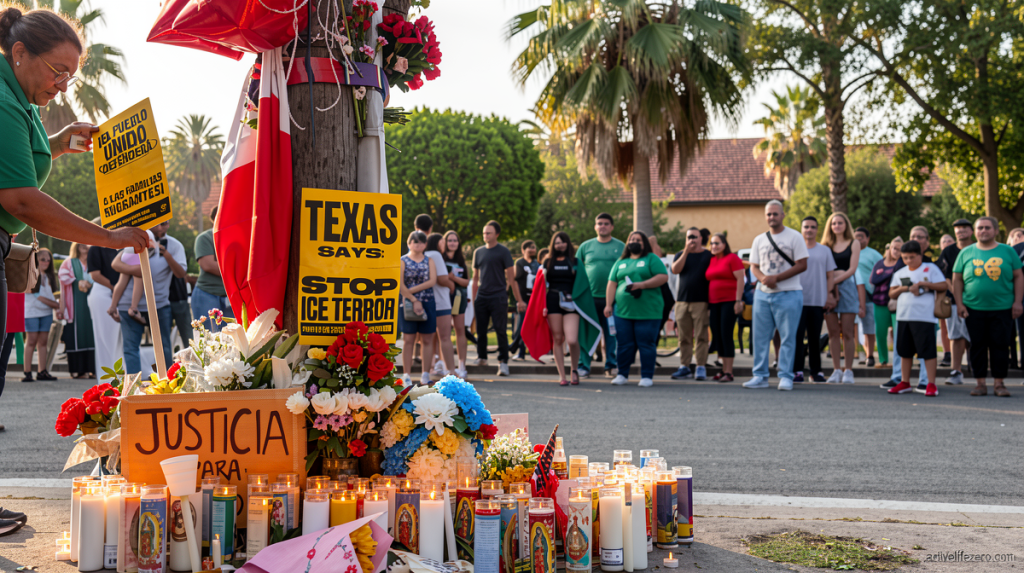
ICE Under Scrutiny Following Houston Shooting Incident
A Pattern of Hasty Conclusions
After another fatal shooting ICE faces – The Immigration and Customs Enforcement agency finds itself once again navigating a challenging moment of public accountability. This time, the controversy centers on Lorenzo Salgado Araujo, a fifty-two-year-old individual who lost his life after being shot by an immigration officer in Houston. The circumstances have reignited questions about whether the agency’s immediate responses to such incidents are well-founded or premature. According to reports, the shooting occurred during President Donald Trump’s expanded enforcement campaign across the nation. Within hours of the incident, before any comprehensive investigation concluded, administration representatives publicly declared that the involved officer had been acting in self-defense while under attack. This rapid assertion has become something of a routine occurrence in similar situations. While it is true that immigration agents frequently encounter threats and physical assaults during their duties, certain explanations offered by top officials in the aftermath of major incidents have not held up when examined against subsequent evidence. The Salgado Araujo case has therefore become a significant test of public trust in the agency’s transparency and accuracy.
What the Evidence Shows
Video footage acquired by CNN reveals unmarked sport utility vehicles trailing Salgado Araujo’s van before the fatal encounter. These unmarked vehicles are standard equipment for immigration agents participating in the nationwide sweep, often including rental automobiles. The recordings do not clearly indicate whether emergency lights were activated on the ICE vehicles. Without audio, it remains impossible to confirm if sirens were sounded during the attempted traffic stop. The footage captures the van coming to a halt, then reversing and proceeding slowly along a sidewalk while officers with visible law enforcement badges pursued on foot. Despite these visual records, no video has yet emerged showing the precise moment when the officer fired his weapon. Department of Homeland Security officials confirmed that a single officer discharged his firearm, with no other witnesses reporting additional gunfire. The medical examiner’s report established that Salgado Araujo succumbed to a gunshot wound inflicted on his torso.
Conflicting Narratives Emerge
In a statement released several hours after the shooting, ICE characterized the event as part of a targeted enforcement operation aimed at apprehending an undocumented individual. The agency alleged that Salgado Araujo attempted to flee, struck an ICE vehicle, ignored verbal instructions, and used his van as a weapon to endanger an officer. The statement concluded that the officer’s use of force was justified as self-defense to protect himself, fellow agents, and bystanders. However, a source with knowledge of the matter revealed to CNN that Salgado Araujo was not actually the intended target of the operation. This detail adds complexity to the agency’s initial explanation. A legal representative for two passengers inside the van at the time challenged the official account, denying that Salgado Araujo attempted to ram officers and questioning whether the officers genuinely faced danger. These counterclaims currently lack independent verification.
Historical Precedents
The agency’s swift defense in this case mirrors patterns seen in previous incidents, particularly the separate killings of Renee Good and Alex Pretti by immigration officers earlier this year in Minnesota. Good, a thirty-seven-year-old mother of three children, was initially portrayed by DHS officials as a criminal who tried to kill an officer with her vehicle in what was described as an act of domestic terrorism. Later-obtained video contradicted this version, showing Good driving away after officers surrounded her and ordered her to stop, with one officer positioned at the front of the vehicle appearing to fire as she moved away. Pretti, also thirty-seven and working as an intensive care unit nurse, faced a similar initial narrative from DHS and administration leaders, who characterized him as a domestic terrorist wielding a firearm and intent on causing widespread harm. Federal regulations permit officers to employ deadly force when facing an imminent threat of death or serious bodily injury. The Department of Homeland Security additionally instructs officers to maintain tactical discipline, specifically warning against intentionally and unreasonably positioning themselves in situations where deadly force becomes unavoidable.
A Test of Credibility
With minimal evidence beyond contradictory eyewitness accounts, the Salgado Araujo incident has become what observers call a Rorschach test for public interpretation. Different segments of society may view the same facts through different lenses, depending on their prior experiences and beliefs about law enforcement practices. The agency now faces the challenge of allowing a thorough investigation to unfold while managing public expectations and maintaining confidence in its processes. How this case ultimately resolves will likely influence perceptions of ICE’s credibility for years to come.
