The world’s most delicious pancakes

Daftar Isi
From Brittany to Brooklyn: A Global Tour of Pancakes That Transcend Borders
Activelifezero.com – Long before the modern breakfast menu existed, flat discs of cooked batter were already finding their way onto tables from the Mediterranean coast to the Siberian taiga. Whether sweetened with fruit preserves or loaded with smoked fish, whether fried in a copper pan over a wood fire or flipped in a cast-iron skillet, the pancake occupies a singular place in human culinary history — a food that predates virtually every national border and religious calendar. Butter and eggs, the two ingredients most commonly folded into the batter, made these discs a natural pre-fast offering in Christian traditions, while their versatility ensured they survived as weekend indulgences and holiday staples across continents.
What follows is not a ranking so much as a cartography: a survey of the most celebrated pancake traditions on Earth, each rooted in a specific geography, a specific ingredient, and a specific moment of cultural pride.
The Breton Crêpe: Culinary Theater Since the 13th Century
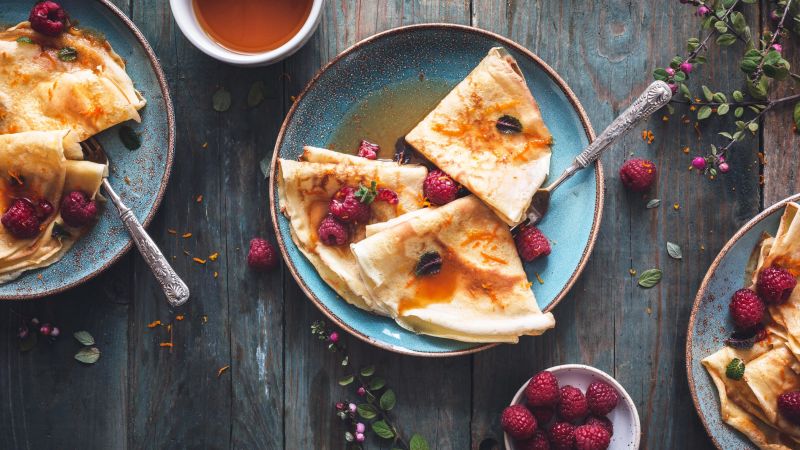
If a Pancake Hall of Fame ever opened its doors, the French crêpe would claim a permanent plaque. Born in the Brittany region of northwest France during the 13th century, these paper-thin discs have since conquered every continent’s dessert menu and savory plate alike. The sweet versions arrive draped in fruit preserves, chocolate, or cascading syrup; the savory incarnations — most iconically the crêpe au jambon — melt ham and cheese into a golden, folded parcel. What elevates the experience beyond mere eating is the preparation itself: the cook coaxes the batter to a precise viscosity, then executes a series of flips and folds that borders on performance art. Watching a skilled crêpier work is as close to theater as a kitchen gets.
Socca and Farinata: The Chickpea Pancake of the Riviera
Straddling the border between France’s city of Nice and Italy’s Ligurian coast, socca (called farinata in Italian) represents one of the oldest flatbread-pancake hybrids in Western cuisine. The recipe is almost aggressively simple: chickpea flour, water, olive oil, and seasoning. Traditionally, the mixture is poured into large copper pans filled with oil and slid into wood-fired ovens, producing a golden, blistered disc that shatters at the edges and yields a creamy interior. For those avoiding gluten, socca offers a satisfying alternative to pizza without sacrificing flavor. On the streets of Nice, vendors serve slices folded into paper cones and finished with a generous dusting of black pepper — a snack that has sustained generations of Riviera locals since at least the medieval period.
Blinis and the Maslenitsa Feast
In Russia and across Slavic-speaking countries, the blin — a thin, round pancake leavened with buckwheat flour and yeast — carries deep religious and seasonal significance. While fine-dining restaurants now present small, elegant blins crowned with caviar or smoked salmon, the traditional version is considerably larger and meant to be shared. Each year, the week immediately preceding the Christian observance of Lent is marked by Maslenitsa, a celebration in which pancakes appear at nearly every meal. A full week of blin-centric feasting, complete with folk music and communal gatherings, represents one of the most exuberant food rituals in Eastern European culture.
Hemp Protein Pancakes at Grand Resort Bad Ragaz
Switzerland’s reputation for health-conscious breakfasts finds an unusual expression in the work of Michelin-starred chef Sven Wassmer at Verve by Sven, located within the Grand Resort Bad Ragaz. Wassmer’s signature creation replaces wheat flour entirely with hemp protein, yielding a gluten-free disc that supports toppings of banana slices, toasted almonds, maple syrup, and — for those who wish — a small swirl of whipped cream. The result is a pancake that satisfies both the dietary-restriction crowd and the fine-dining palate simultaneously, a combination that has become increasingly sought after in Alpine hospitality.
Japanese Hotcakes: Soufflé Engineering on a Plate
The Japanese name “hottokeki” is, as the source text notes, essentially a phonetic rendering of “hotcakes.” What distinguishes these towering discs from their American counterparts is structure: egg whites are whipped into a meringue and folded into the batter, producing a soufflé-like interior that rises dramatically in the pan. The finished product is extra-tall, impossibly fluffy, and visually engineered for social-media capture. Toppings range from fresh berries and cream to maple syrup and crispy bacon. The cultural imperative is clear — photograph first, eat second.
Korean-Style Crispy Triangles
Unlike the batter-based pancakes discussed above, these fragrant, triangular pieces are formed from dough, which yields a texture that is simultaneously crispy, flaky, and chewy. Preparation is straightforward enough for home kitchens, and many diners dip the finished triangles in sauces built around soy or chili. Scallions provide a subtle sharpness straight from the pan or wok. Regional variations exist: the Shanghai-style version incorporates pork fat for added richness and decadence, pushing the dish further into savory territory.
The American Stack: Buttermilk, Bacon, and a 1796 Recipe
Thick, fluffy, and drenched in maple syrup with a contrast of salty, crispy bacon, the classic American pancake stack remains arguably the most universally recognized breakfast indulgence in the English-speaking world. The recipe lineage traces back to Amelia Simmons’s 1796 cookbook, American Cookery, which included a cornmeal-based preparation she called “Indian Slapjacks” — a dish that has since faded from memory. Modern iterations rely on buttermilk in the batter, which introduces a subtle tang while producing a finer crumb and greater loft. The cultural instruction is consistent: pile them high.
Latkes: The Potato Pancake of Ashkenazi Tradition
A celebrated element of Ashkenazi Jewish cuisine, the latke introduces an ingredient uncommon in pancake history: the potato. Grated and fried into golden, crispy discs, latkes are traditionally served during Hanukkah, often accompanied by applesauce and sour cream. Their presence on the holiday table connects a modern kitchen ritual to centuries of diaspora culinary adaptation, where available ingredients shaped what could be made and when.
“Pancakes every day for a week? We love the sound of it.”
Whether folded around melted cheese in a Breton kitchen, dusted with pepper in a Nice street cone, or stacked with bacon under a Canadian morning sun, the pancake endures because it asks nothing of its eater except appetite. It is, in the most literal sense, a food without ideology — adaptable, ancient, and endlessly reinventable.
Related Reading
Frequently Asked Questions
What is The world s most delicious pancakes?
The world s most delicious pancakes is the main topic of this guide. The article explains the context, practical details, and next steps readers should understand.
Why does The world s most delicious pancakes matter?
The world s most delicious pancakes matters because readers are looking for a useful answer, not just a short summary. Good content should match search intent and help them decide what to do next.