
Britain has unveiled one of world’s toughest social media bans for kids. Here’s what to know
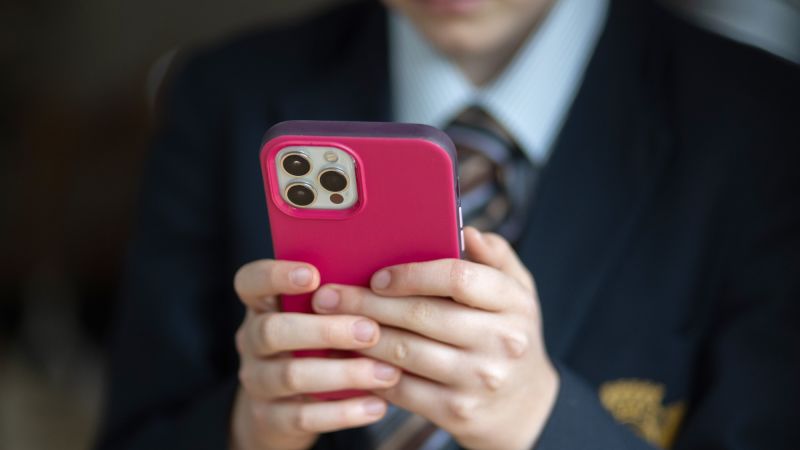
Britain Introduces Stringent Social Media Restrictions for Minors
Britain has unveiled one of world – Prime Minister Keir Starmer has announced a sweeping new policy aimed at curbing online risks for children, marking the UK as one of the first nations to implement a strict social media ban for those under 16. The measure, described as “more robust than any country’s previous efforts,” seeks to limit access to platforms where users interact directly, such as Snapchat, TikTok, YouTube, Instagram, Facebook, and X. Messaging apps like WhatsApp and Signal remain exempt, according to the UK government’s statement released on Monday. This initiative is part of a broader strategy to address the growing concerns about digital harm, including cyberbullying, exposure to inappropriate content, and online predators.
The UK’s Comprehensive Plan
Starmer emphasized that the new rules would “empower parents” by offering a clearer framework for safeguarding children’s online experiences. The government plans to introduce the legislation to Parliament before Christmas, with enforcement expected to begin in the spring of 2027. Unlike previous bans, which focused on age verification, this policy targets the core functionalities of social media platforms, such as livestreaming and communication with strangers. The UK claims its approach will be more effective, as it blocks not just access but also the tools that facilitate harmful interactions.
“The changes will back parents grappling with the risks for children that come from the online world and help empower them by providing a clear decision on what is safe and age-appropriate for children,” said Starmer in the statement.
The UK is not alone in its efforts. Earlier this month, Malaysia enacted a similar ban, and in February, Spain followed suit by introducing strict age verification requirements for platforms. Meanwhile, France, Denmark, and Norway have also announced plans to restrict children’s access to social media. Australia, however, was the first nation to implement such a policy, banning 10 platforms for under-16s in December. Despite its pioneering status, Australia’s ban has faced challenges, as evidenced by a recent survey conducted by its eSafety commissioner.
Global Trends in Youth Digital Protection
Australia’s experience highlights the complexities of enforcing digital restrictions. A survey of 898 parents and carers of children aged 8 to 15, carried out from January 19 to February 2, revealed that approximately 70% of children who had accounts before the ban on December 10 still maintain them. This suggests that while the policy has reduced overall participation, many minors continue to bypass safeguards. The eSafety commissioner noted that the ban has not yet produced measurable outcomes, though it has shifted the focus toward proactive measures by platforms and regulators.
“While there are fewer under-16s with social media accounts than there were four months ago, it is clear significant numbers of children aged under 16 are still on social media,” said Australia’s eSafety commissioner in a March report.
The UK aims to address these gaps by introducing a more comprehensive model. While Australia’s ban focuses on platform access, the UK’s plan extends to blocking specific features that pose risks. This includes restricting livestreaming and direct communication with strangers, which could reduce opportunities for exploitation. The government also plans to collaborate with the UK communications regulator, Ofcom, to develop a robust enforcement strategy. Technology Secretary Liz Kendall added that the UK will build on Australia’s framework, making it “far harder for children to bypass safeguards.”
Challenges and Concerns
Despite the government’s optimism, experts caution that a ban alone may not be sufficient. Lynn Perry, chief executive of Barnardo’s, warned that the measure is “not a silver bullet.” She argued that social media companies must take primary responsibility for ensuring platform safety, while regulators and policymakers must hold them accountable. “It is not, and has never been, children’s job to keep themselves safe,” Perry stated, underscoring the need for ongoing vigilance.
“It is as important as ever that social media companies take responsibility for making their platforms safe and the government and regulators robustly hold them to account,” said Perry in a Monday statement.
Chris Sherwood, CEO of the National Society for the Prevention of Cruelty to Children (NSPCC), praised the UK’s approach as a “watershed moment for child protection.” However, he stressed that enforcement remains critical. “The Government must continue to put pressure on Big Tech and not let them off the hook,” Sherwood added. He also called for stricter regulations to ensure platforms are held to higher standards, particularly in protecting younger users.
Comparing the UK’s Strategy to Global Precedents
While the UK’s ban is more stringent than Australia’s, it builds on the lessons learned from other nations. Spain, for instance, introduced a ban in February that requires platforms to use strict age verification tools. Malaysia’s enforcement of its own restrictions has also drawn attention, though its impact is yet to be fully assessed. The UK’s move appears to align with these international trends, reflecting a global shift toward prioritizing youth digital safety.
Starmer framed the policy as a response to the “digital Wild West,” where online risks have outpaced regulatory frameworks. The government argues that the ban will create a clearer boundary between safe and harmful online environments, reducing exposure to content unsuitable for children. However, the effectiveness of the measure depends on how well platforms adapt to the new rules and how efficiently regulators can enforce them.
The Road Ahead
As the UK prepares to implement the ban, it faces the challenge of balancing protection with access. The policy’s success will hinge on the collaboration between government, tech companies, and regulators. Meanwhile, the eSafety commissioner in Australia noted that platforms like Snapchat, TikTok, Facebook, Instagram, and YouTube are under investigation for non-compliance, despite no fines having been issued so far.
With the UK’s ban set to take effect in 2027, the global conversation on youth digital protection is likely to intensify. The policy serves as a model for other nations seeking to address the unique challenges of online harm. Yet, as experts highlight, the fight against digital risks requires continuous innovation and accountability from all stakeholders. The goal is not just to limit access but to create a safer, more regulated digital landscape for the next generation of users.
Starmer’s announcement underscores the growing recognition of social media’s dual role as both a tool for connection and a source of danger. By targeting the most harmful aspects of these platforms, the UK hopes to set a new standard for child protection in the digital age. However, the policy’s ultimate impact will depend on its implementation and the ability to adapt to evolving online threats.
As the world watches the UK’s approach, the debate over digital regulation continues. While bans offer a clear starting point, they must be paired with education, monitoring, and enforcement to truly safeguard children’s online experiences. The UK’s initiative represents a significant step forward, but its success will also rely on the collective efforts of parents, educators, and tech companies to ensure the digital space is as safe as possible for young users.
