
At the Venice Biennale, everyone’s lining up for the toilets
At the Venice Biennale, everyone’s lining up for the toilets
The Controversial Beginnings
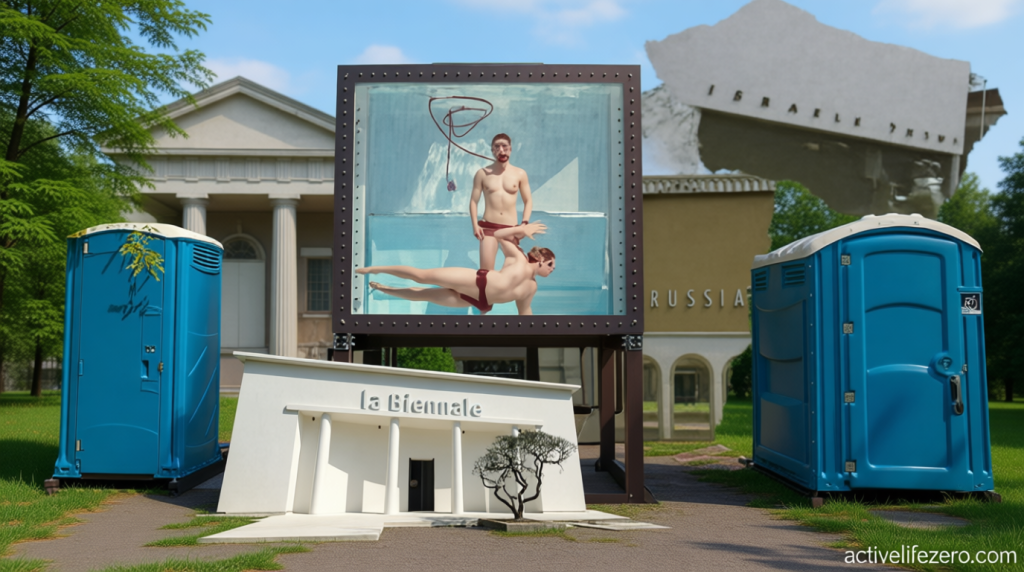
At the Venice Biennale everyone s lining – The 61st edition of the Venice Biennale kicked off with a flurry of drama, setting the stage for a year marked by unexpected twists. A tragic incident involving the chief curator, public debates over the inclusion of Russia, Israel, and the United States, and the abrupt departure of the prize jury all contributed to a tense atmosphere. Yet, as the opening week unfolded, the most talked-about spectacle was not a painting or sculpture but a set of portable toilets. These installations, crafted by choreographer and performance artist Florentina Holzinger, became the centerpiece of the Austrian pavilion, drawing crowds and sparking conversations about the event’s broader themes.
A Wet Exhibit with a Message
Stepping into the Austrian pavilion, visitors encountered a stark contrast between cleanliness and chaos. The structure, a white cube that has been a staple of the Giardini della Biennale since 1934, was transformed into an immersive experience. Inside, two onsite toilets were not just functional but symbolic, as they filtered and pumped sanitized water into a massive aquarium tank. Performers floated for four hours at a time, breathing through scuba masks, while a nearby room overflowed with brown wastewater. This juxtaposition of purity and pollution was intentional, aiming to challenge perceptions of hygiene, art, and the human body’s relationship with the environment.
“The show invites viewers to reconsider the patriarchal systems that currently shape our lives,” stated Nora-Swantje Almes, the curator of the Austrian pavilion. Her words underscored the exhibit’s critique of societal norms, blending performance art with ecological commentary. The concept, titled “Seaworld Venice,” invited audiences to reflect on the consequences of human actions, particularly in the context of ecological disaster.
Controversy Over Participation
Amidst the artistic innovation, political tensions simmered. Russia’s return to the Biennale after its absence in 2022 and 2024 sparked widespread criticism. The European Commission had threatened to withhold a $2 million grant if the event did not exclude Russia, a decision that raised questions about geopolitical alignment and artistic neutrality. Meanwhile, the Israeli pavilion remained locked and empty, its presence overshadowed by a smaller satellite exhibition held outside the main Giardini. The U.S. pavilion, featuring the work of artist Alma Allen, also struggled to generate interest, with its organizers facing scrutiny for a disorganized selection process.
Unforgettable Moments in the Giardini
As the Biennale’s preview days progressed, the Giardini della Biennale turned into a cultural hub of activity. Dangling deer sculptures, toilet-themed installations, and protests outside the Russian pavilion highlighted the diversity of experiences. One of the most memorable moments occurred during the preview, when a brief but intense demonstration led by Russian dissidents Pussy Riot and Ukrainian feminists FEMEN drew attention to the event’s political undertones. The protest, though short-lived, added a layer of urgency to the discussions surrounding the Biennale’s role as a global platform for artistic and ideological expression.
The Quiet Triumph of Simone Leigh
While the Austrian exhibit dominated headlines, other pavilions quietly made their mark. The U.S. pavilion, though underwhelming during the preview, eventually showcased work by Simone Leigh, who had previously won the Golden Lion prize in 2022. Her triumph as the first Black woman to represent the United States at the Biennale was a testament to her impact on the art world. Yet, the absence of crowds during the initial days suggested that the pavilion’s success might have been more muted than anticipated. The decision to include Russia in this year’s lineup, despite previous boycotts, added complexity to the event’s narrative, with some critics arguing that the Biennale had become a political battleground.
A City Transformed into a Cultural Carnival
As the Biennale unfolded, Venice itself became a vibrant cultural carnival. Beyond the official Giardini and Arsenale sites, the city hosted a series of events that reflected the festival’s broader influence. At the Gallerie dell’Accademia, a museum adjacent to the Grand Canal, renowned performance artist Marina Abramović presented “Transforming Energy,” an interactive experience designed to slow visitors down. The exhibit, led by young facilitators in white coats, invited participants to engage with Abramović’s work in a meditative manner, contrasting with the high-energy atmosphere of the Austrian pavilion.
The Broader Impact of the Biennale
With over half a million visitors expected to attend the event over the next six months, the Biennale’s scale and reach were undeniable. The exhibition spanned 31 permanent national pavilions and additional spaces, offering a platform for over 100 artists from around the world. Despite the controversies and the toilets stealing the spotlight, the event remained a landmark in the art world. Its ability to generate both excitement and debate ensured that it would be remembered not just for its artistic contributions but also for its role in reflecting the cultural and political currents of 2026.
Legacy of a Defiant Exhibit
As the Biennale’s opening week drew to a close, the Austrian pavilion’s bold experiment left a lasting impression. The blend of performance, installation, and ecological critique challenged traditional notions of art and audience engagement. For many, the toilets were more than a gimmick—they were a metaphor for the tension between order and disorder, cleanliness and decay. The exhibit’s success demonstrated that the Biennale could be a space for unconventional ideas, even as it grappled with the weight of political decisions and the expectations of its global audience.
Conclusion: A Year of Unpredictable Art
From the initial chaos to the quiet triumphs and provocative installations, the Venice Biennale 2026 proved to be a year of unpredictability. The portable toilets, once a simple convenience, became a symbol of the event’s evolving identity. As the fair continues, it will be fascinating to see how these early challenges shape the broader narrative. In a world where art and politics are increasingly intertwined, the Biennale’s ability to adapt and inspire remains its greatest strength. Whether through a scuba-masked performer in an aquarium or a locked Israeli pavilion, the 61st edition left an indelible mark on the art world and beyond.
