
The World Cup game that no one wants to win
The World Cup game that no one wants to win
The World Cup game that no one – Cape Verde has emerged as the surprise team of the tournament, defying expectations by advancing to the knockout stage after a remarkable draw with Spain in their opening match. This small nation, often overlooked in international soccer, has now secured a spot in the Round of 32 following a second draw, this time against Saudi Arabia. Meanwhile, Spain’s hopes took a hit when they fell to Uruguay in a dramatic late-night clash, leaving the European champions to face an unexpected challenge: a showdown with Argentina, the reigning world champions, and the legendary Lionel Messi. This setup creates a high-stakes scenario where both teams may find themselves reluctant to secure a victory, as the implications of a win could disrupt their path forward.
A Different Path for the Underdogs
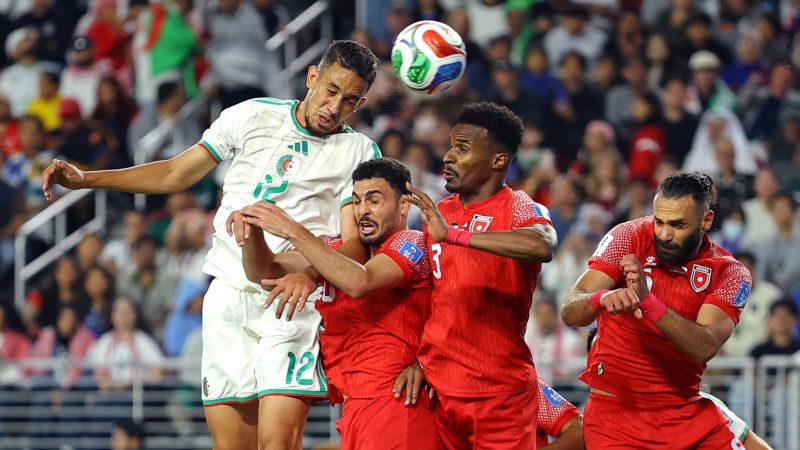
With the Group J tie between Austria and Algeria set for Saturday, the stakes are equally high. The outcome of this match will determine who finishes second and earns an automatic berth in the Round of 32. However, the twist lies in the potential for both teams to benefit from a draw. If Austria loses, they could still qualify as one of the best third-placed teams and face Switzerland in the next round. Conversely, a win for Austria would leave Algeria in a precarious position, forcing them to confront Spain in a potentially grueling encounter. The same dilemma applies to Algeria: a loss might eliminate them from the tournament, while a draw ensures a safer path.
The situation highlights how FIFA’s revised World Cup rules can create unexpected dynamics. In previous tournaments, teams often focused on maximizing points, but here, the balance shifts. The goal is not just to win, but to avoid outcomes that could lead to more difficult fixtures later. This has turned the game into a strategic puzzle, where players and managers must weigh immediate success against long-term consequences. Momentum plays a crucial role, and the pressure to perform is amplified by the stakes involved.
Why a Draw Might Be the Best Move
The draw between Austria and Algeria seems like a logical choice for both sides. For Austria, it ensures a safer progression and a less daunting opponent in the knockout rounds. For Algeria, it avoids a direct clash with Spain, which could be a massive hurdle. However, the teams are not exactly aligned in their goals. While Algeria needs a draw to secure a favorable match, Austria’s best bet lies in a win. This contradiction means neither side will have a clear motive to settle for a tie, even though it could benefit both.
Teams like Spain, which already secured their spot in the next round, may also be motivated to keep the game as close as possible. A draw with Algeria would allow Spain to avoid a potentially tough matchup with Argentina, while a loss for Algeria would eliminate them from contention. This creates a scenario where both teams are incentivized to play for a draw, despite the pressure to win. The tournament’s structure, designed to reward consistency and performance, has instead created a situation where the goal is to avoid the worst possible outcome.
Other Groups and Strategic Considerations
Not all groups are as entangled in this kind of dilemma. In the England-Croatia-Ghana group, the situation is more straightforward. England, having already secured their place in the knockout stage, will aim to finish first to set up a more favorable path. A win or even a draw could ensure they lead the group, while a loss would require them to rely on other results. Croatia and Ghana, on the other hand, are in a race to finish second, with both needing a decisive result to advance. A draw between them would allow the team with more points to progress, but a loss for either could still keep them in the tournament as a lucky loser.
For England, the focus is not only on qualifying but also on managing their squad. After a crushing 6-1 victory over Panama in 2018, the Three Lions have shown they can dominate when conditions are right. However, a 0-0 draw with Ghana has raised questions about their consistency. This match against Croatia and Ghana will be crucial in proving whether they can maintain their momentum. The team may also look to rotate players, especially with key stars dealing with minor injuries. This strategy could help them conserve energy for later rounds, even if it means a slightly less aggressive approach in this game.
The Human Element in Tournament Strategy
While the rules of the game remain the same, the psychological aspect of the World Cup adds a layer of complexity. Players are not just competing for points; they are representing their nations, and the weight of expectation can be overwhelming. In this case, the players from Austria and Algeria may find themselves in a unique position—where their best interests could align with a draw, even though the instinct to win is deeply ingrained in them.
Football fans, too, are caught in this paradox. While they may hope for their team’s victory, they also recognize that a win for the opponent could be beneficial. This is a rare occurrence in soccer, where the desire to win is usually universal. Yet, in the World Cup, the balance of power shifts. The rules of the tournament, which reward teams for consistency, have created a situation where the goal is not just to win but to avoid the repercussions of a decisive outcome. The beauty of the game lies in its unpredictability, and this scenario is a testament to that.
As the tournament progresses, the impact of these strategic choices becomes clearer. In some cases, a draw may be the best outcome for all involved, even if it means neither team celebrates a victory. The challenge for the players, managers, and fans is to navigate this unique landscape while staying true to the spirit of the game. Whether it’s Cape Verde facing Argentina, or Algeria and Austria in a tense battle, the World Cup continues to deliver moments that defy logic and elevate the excitement of the sport.
“This is a fascinating twist in the World Cup, where the goal isn’t just to win, but to manage the outcomes that matter most. It’s a reminder that soccer is as much about strategy as it is about skill,” said Kyle Feldscher from CNN.
The game on Saturday will be more than just a match—it’s a test of will, where both teams must balance ambition with caution. The rules of the tournament, while designed to ensure fairness, have instead created a scenario where the desire to win is tempered by the need to avoid the worst possible result. For fans, this is a rare opportunity to witness a match that could shape the rest of the tournament in unexpected ways.
As the World Cup continues to unfold, the dynamics of these group stages will remain a key factor in determining which teams advance. The outcome of Saturday’s matches, whether it’s a draw or a decisive victory, will have lasting effects. While some teams may be eager to win, others will be content with a draw. The result is a tournament that keeps its audience guessing, proving once again that soccer is a game full of surprises.
