
State Department says it’s trying to help Cape Verde goalkeeper’s mother get to US for the World Cup
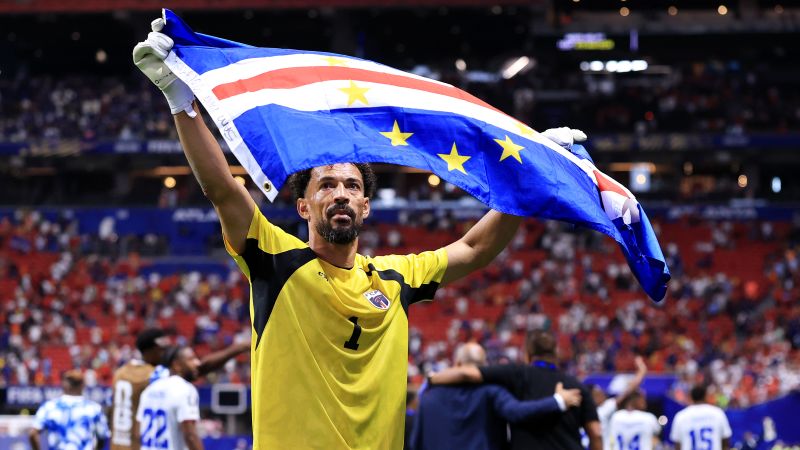
State Department Says It’s Trying to Help Cape Verde Goalkeeper’s Mother Get to U.S. for the World Cup
State Department says it s trying – Following a stunning 1-1 draw with Spain in their opening World Cup match, Cape Verde goalkeeper Vozinha has become the focus of international attention, not just for his performance but for his personal story. A State Department official disclosed on Tuesday that the U.S. government is actively working to assist Vozinha’s mother in securing a visa to attend the tournament in person. This effort comes after the player revealed that his mother was unable to make the trip due to financial constraints tied to a visa bond requirement.
“
She didn’t manage to be here because of the visa … the money we have to pay for the visa,” Vozinha said after the match. “We didn’t manage on time, and I would like her to be here.”
The bond, which was instituted by the Trump administration, requires citizens from 50 countries—including Cape Verde—to pay up to $15,000 as a guarantee for their visa applications. This policy was introduced in response to concerns about visa overstays, particularly among certain nationalities. Vozinha’s mother, however, faces a unique challenge: she does not currently hold a valid passport, a hurdle that has delayed her ability to travel to the U.S. for the World Cup.
According to a source close to the situation, the mother is in the process of obtaining her passport and is hopeful that the State Department’s intervention will help streamline her journey. The official noted that there was no formal record of a visa request for the player’s mother, but emphasized that the U.S. Department of State has a policy in place to waive bonds for immediate family members of athletes and team personnel. “The Department is actively reaching out to this player’s family to assist with visa services,” the official added, highlighting the agency’s commitment to supporting Cape Verde’s representation in the tournament.
The visa bond waiver program is designed to ease the financial burden on families of athletes competing in the World Cup. The State Department’s website states that nationals from qualifying countries, such as Cape Verde, can have their bond costs eliminated if they are related to a player or team member. This includes spouses, children, and parents, as well as other essential support staff. The initiative aims to encourage family participation in the games and celebrate the athletes’ achievements beyond the pitch.
Vozinha’s unexpected heroics in the match against Spain have already sparked a wave of national pride for Cape Verde, a small island nation with a population of roughly 530,000. His seven crucial saves against the European champions have not only salvaged a historic result but also thrust him into the global spotlight. Many analysts had predicted a heavy defeat for the team, similar to Germany’s 7-1 rout of Curaçao in the same tournament’s opening stages. Instead, Vozinha and his defenders held the line for 90 minutes, delivering the most significant victory in Cape Verdean soccer history.
The impact of the win has been immediate and widespread. The nation’s citizens took to social media to celebrate the achievement, while fans worldwide shared in the joy. Vozinha’s Instagram account, which had around 50,000 followers before the match, has since surged to over 9.7 million as of Tuesday afternoon. This meteoric rise in popularity is attributed in part to a Brazilian broadcaster who highlighted the player’s performance, amplifying his visibility on a global scale.
Despite the success, Vozinha remains focused on the upcoming challenges. Cape Verde will face Uruguay in the next round of the World Cup on Sunday at 6 p.m. ET in Miami, where they will aim to build on their historic draw. The player’s mother, once a casualty of the visa bond policy, is now a symbol of the family’s connection to the sport and the broader narrative of Cape Verde’s rise in international football.
The visa policy’s effect on Cape Verde’s football community has been a topic of discussion. While the bond requirement is a financial hurdle for many, it has also drawn attention to the importance of family support in sports. Vozinha’s case underscores how even the smallest nations can find themselves in the spotlight, especially when their athletes perform against the odds. The State Department’s involvement in his mother’s visa process highlights the intersection of sports and diplomacy, as the U.S. seeks to bolster its ties with nations participating in the 2026 World Cup.
For Cape Verde, the World Cup represents more than just a sporting event—it is a chance to showcase their resilience and passion for the game. Vozinha’s performance in the first match has already set a high bar for the rest of the tournament, and his mother’s potential presence in the stands could add a personal touch to this milestone. The team’s journey, however, is not without obstacles, as they prepare to face Uruguay in a match that could define their early campaign.
As the World Cup progresses, the story of Vozinha and his family serves as a reminder of the human elements behind the competition. While the visa bond policy may have initially barred his mother from attending, the State Department’s proactive approach suggests a broader effort to ensure that the families of athletes can share in their successes. This case also raises questions about the accessibility of the visa process for smaller nations and whether the policy will be adjusted to better support such families in the future.
Cape Verde’s performance in the opening match has been a testament to their determination. Vozinha’s ability to withstand the pressure of facing Spain, a team known for its technical prowess, has drawn praise from fans and experts alike. The result has not only bolstered the team’s confidence but also inspired a new generation of players in the nation. With their first World Cup match behind them, the squad is now looking to the next challenge, hoping to maintain their momentum as they navigate the tournament’s unpredictable landscape.
The State Department’s role in facilitating Vozinha’s mother’s travel to the U.S. has been both a practical and symbolic gesture. By addressing the visa bond issue, the agency is helping to create a more inclusive environment for international athletes and their families. This support extends beyond Vozinha, as the Department has been working with other teams to ensure their loved ones can attend matches. The policy’s flexibility, especially for immediate relatives of players, has been a key factor in these efforts.
Vozinha’s journey from the Portuguese second division to the World Cup stage is a remarkable one. At 40 years old, he represents a rare blend of experience and tenacity, qualities that have been on full display during the tournament. His success has not only reshaped his career but also created a ripple effect for Cape Verde’s football community. As the nation’s pride grows, so too does the hope that future generations will follow in his footsteps, potentially with the support of a more streamlined visa process for their families.
The upcoming match against Uruguay will be a test of how far Cape Verde can go in the tournament. With the World Cup’s opening rounds already full of surprises, the team’s performance against the South American powerhouse could determine their path forward. For Vozinha, the focus is on the game, but the prospect of his mother being present adds a layer of emotional significance to each moment. The State Department’s assistance in making that possible underscores the importance of connecting with the personal stories behind the sport, even in the high-stakes world of international competition.
As the tournament unfolds, Vozinha’s story continues to captivate audiences. His ability to overcome the visa bond challenge and bring his mother closer to the action is a testament to the power of perseverance. Whether the outcome of the next match will cement Cape Verde’s place in the competition remains to be seen, but for now, the team’s historic draw and the support of the U.S. State Department have created a powerful narrative that transcends the field of play.
