Trump’s middle finger to the GOP’s midterm worries

Daftar Isi
Trump’s Mixed Signals on Midterm Support Leave Republicans Questioning His Commitment
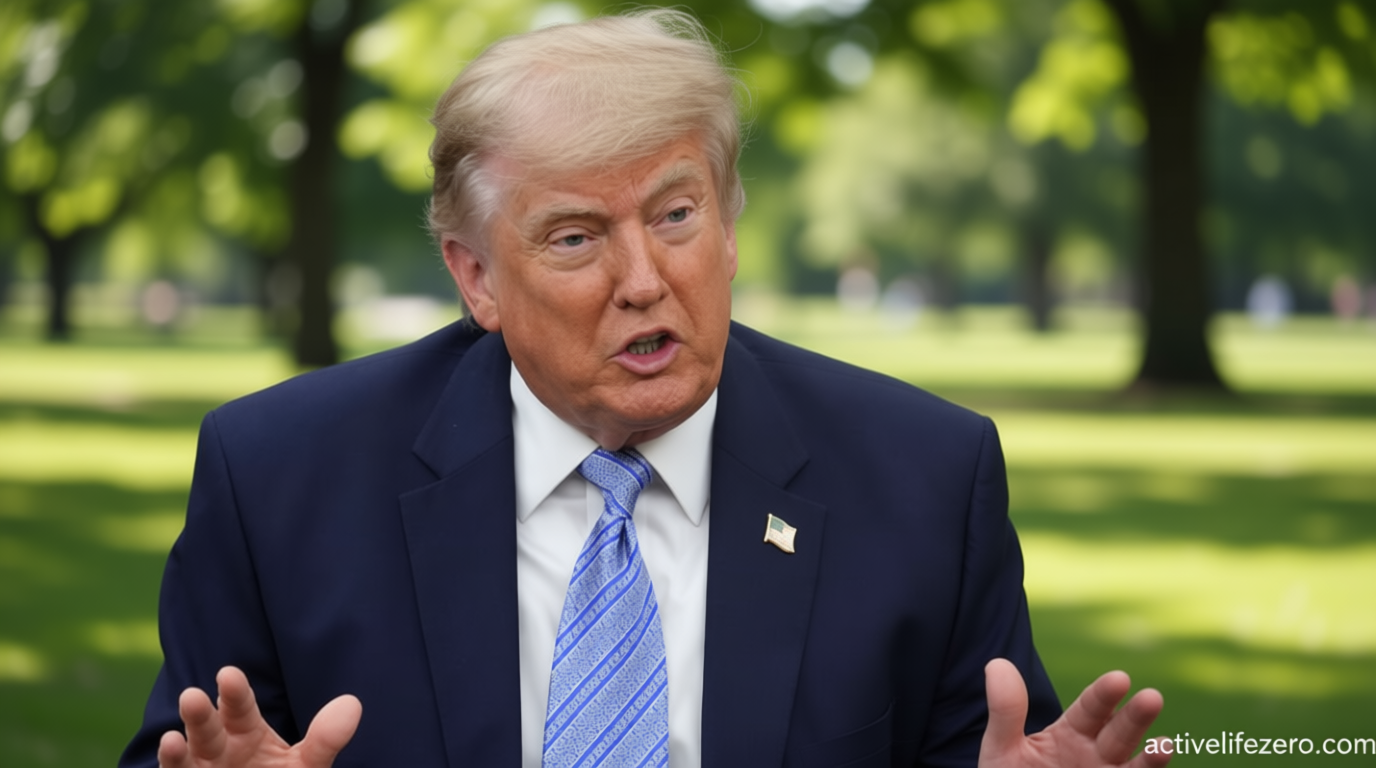
Activelifezero.com – President Donald Trump delivered a series of comments that simultaneously acknowledged and downplayed the importance of the upcoming midterm elections, leaving members of his own party to wonder about his level of engagement. During a recent interview with Punchbowl News, which was recorded on Thursday and made public on Friday, the president addressed claims that he remains largely indifferent to whether Republicans maintain control of Congress in 2026.
When Jake Sherman posed the question directly, Trump offered a straightforward denial. “It’s not right,” he responded, emphasizing that his party would “fight hard” and that victory held “very important” significance for the nation. Yet his subsequent remarks painted a more complicated picture of a president who views his political involvement as optional rather than obligatory.
A President Who Feels He Has Already Won
Trump framed his occasional appearances as a favor to fellow Republicans rather than a necessity. He pointed to his financial independence and scheduling flexibility as evidence of his generosity.
“I could spend it on pretty much anything I want,” Trump said regarding his personal war chest. “I didn’t have to be away in Nevada yesterday, I didn’t have to be in Los Angeles yesterday making speeches. I didn’t have to be supporting all the people. I have a busy schedule.”
Perhaps most telling was his assertion that he had already secured victory in his own political journey. Trump revealed that he had recently informed someone that he had “already won his own campaign,” which explained why he felt no urgency to campaign actively. “I’m not campaigning,” he stated matter-of-factly.
Blaming Republicans for Their Own Troubles
The comments that likely caused the most frustration among GOP strategists came when Trump shifted responsibility for electoral challenges onto his own party members. He suggested that voter dissatisfaction stemmed from anger directed at Republicans specifically, rather than at him personally.
“The question is, will [people] vote? Because a lot of them are very angry at Republicans, to be honest with you,” Trump said. “They’re angry at Republicans, but they’re not angry at me.”
This assessment contradicts substantial polling data. Trump’s approval ratings have historically hovered at unpopular levels, with surveys indicating that as many as two-thirds of Americans disapprove of his performance. Such figures are comparable to those recorded during the corresponding periods of Richard Nixon’s and George W. Bush’s presidencies.
A Pew Research Center poll provided particularly revealing numbers. Eighty-one percent of Democrats and Democratic-leaning independents indicated their midterm ballot would reflect opposition to Trump. In contrast, only 44 percent of Republicans and GOP-leaning independents expressed confidence that their vote would support the president. Even when accounting for base voters who might blame Republicans rather than Trump, recent polling—including surveys conducted by CNN—demonstrates that between 30 and 50 percent of Republican voters harbor dissatisfaction with various aspects of Trump’s agenda.
Policy Priorities Over Political Convenience
Perhaps most concerning for Republicans is Trump’s apparent willingness to pursue policies that could alienate voters, even as midterm elections approach. His handling of tariffs, the ongoing conflict in Iran, his tendency to rename government initiatives after himself, and his renovation efforts in Washington, DC, have all generated unfavorable public sentiment.
Despite these headwinds, Trump has shown no inclination to moderate his positions for political benefit. Instead, he has escalated controversial measures that divide his own party. His insistence on eliminating the filibuster and his push for the “SAVE America Act”—legislation that appears unlikely to pass—demonstrate a president unconcerned with maintaining legislative momentum for his party.
His comments about the Iran conflict further illustrate this pattern. In May, when questioned about whether economic concerns influenced his diplomatic efforts, Trump dismissed such considerations entirely.
“I don’t think about Americans’ financial situation. I don’t think about anybody. I think about one thing: We cannot let Iran have a nuclear weapon. That’s all,” he declared.
Shortly thereafter, he added: “I’m in no hurry. You never think, ‘Oh, the midterms. I’m in a hurry.’ I’m in no hurry.” And then came the blunt statement: “I don’t care about the midterms.”
The Iran Factor and Voter Sentiment
During a Fox News interview earlier this week, Trump suggested his objective extended beyond merely concluding the Iran conflict—he wanted to achieve victory, despite the remote likelihood of such an outcome. When host Trace Gallagher asked when he might reconsider his negotiating approach given Iranian unreliability, Trump indicated no immediate timeline.
“I have plenty of time,” Trump said. “You know, people talk about the midterms. For the midterms, they want to see winning.”
Republicans, however, may not possess such luxury. Prolonged military engagement has driven fuel costs upward, creating additional pressure on voters already grappling with economic uncertainty. While Trump’s strategic patience regarding Iran may serve diplomatic objectives, it does little to address the political realities facing GOP candidates heading into November.
Related Reading
Frequently Asked Questions
What is Trump s middle finger to the GOP?
Trump s middle finger to the GOP is the main topic of this guide. The article explains the context, practical details, and next steps readers should understand.
Why does Trump s middle finger to the GOP matter?
Trump s middle finger to the GOP matters because readers are looking for a useful answer, not just a short summary. Good content should match search intent and help them decide what to do next.