
Trump now claims Iran has already been denuclearized. So what was the point of the war?
Trump Claims Iran Already Denuclearized, Questioning War’s Purpose
Conflicting Narratives Emerge as President Seeks Exit from Unpopular Conflict
Trump now claims Iran has already been denuclearized, a statement that has sparked considerable debate about the rationale behind the ongoing military campaign. President Donald Trump initiated hostilities against Iran back in February, pointing to an impending nuclear danger as the primary cause for military action. However, this reasoning faced immediate scrutiny due to his previous statements regarding the status of Tehran’s atomic infrastructure. For eight months prior to the outbreak of fighting, he had consistently maintained that the Iranian nuclear program was already completely destroyed. Specifically, just fourteen days before combat commenced, the President stated that joint operations conducted by the United States and Israel during June 2025 had eliminated any possibility of Tehran developing atomic weapons.
Now, seeking to distance himself from a widely criticized military engagement, Trump is presenting further confusing messages regarding the current state of the Iranian threat. Following over four months of fighting and significant economic repercussions globally, the administration had aimed to secure nuclear components and finalize an agreement preventing future Iranian armament. Suddenly, Trump suggests these objectives are no longer required. He declares the conflict successful because Iran is supposedly already free of nuclear capabilities, implying that the extensive efforts to obtain materials and secure a lasting deal were unnecessary all along.
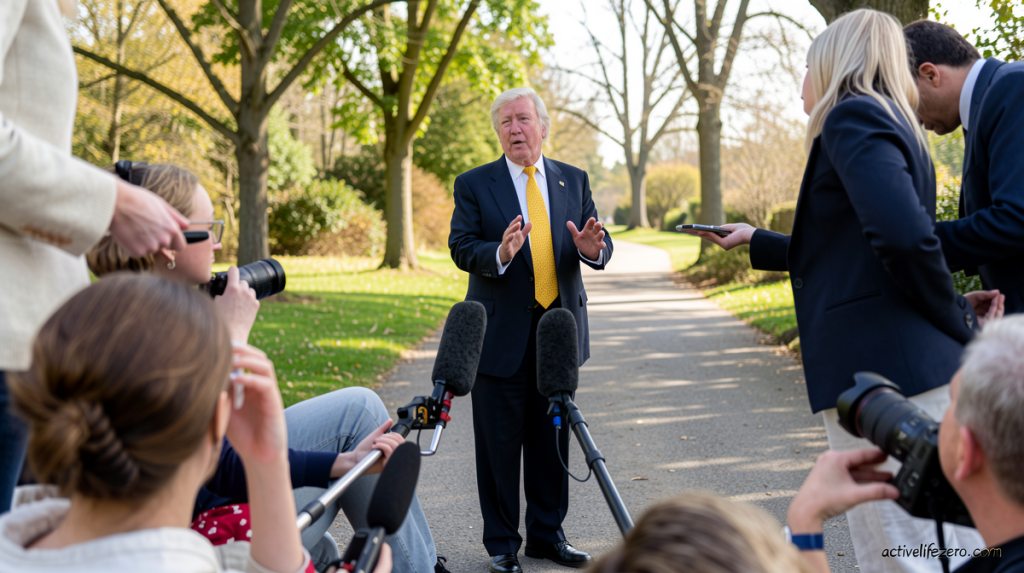
During a gathering in Turkey on Wednesday, Trump reiterated this stance multiple times while attending a NATO summit. Responding to inquiries about whether the campaign had reached a strategic stalemate, he insisted otherwise. He framed the situation not as a failure, but as a completed mission.
“I was there for one reason: that Iran cannot have a nuclear weapon. I call it, we denuclearize Iran,” Trump declared. “And that’s happened; they will never have a nuclear weapon.”
The President elaborated on his position by describing the location of the nuclear stockpiles as being buried deeply beneath mountains, making them nearly impossible to retrieve. Additionally, he highlighted American surveillance systems that monitor these sites via cameras to prevent unauthorized access. He emphasized the security of the situation, noting that the materials are secure and inaccessible to adversaries.
“There’s no way they have a nuclear weapon,” he added.
In another setting during the same period, when questioned about retrieving the nuclear substances, Trump asserted that the U.S. effectively possesses them already. He argued that the depth of the burial ensures American exclusivity over the resources.
“We’ve already got the nuclear material, because it’s so far underground,” Trump explained. “Nobody’s going to be able to get it except us. They can’t get it.”
He labeled the outcome a “tremendous success,” suggesting that the war has achieved its ultimate goal despite the ongoing conflict.
This narrative serves as evidence that Trump may be preparing to withdraw from the conflict without meeting all initial targets. While Treasury Secretary Scott Bessent recently emphasized securing the materials as a critical requirement, Trump has hinted that this might not be essential if the items remain inaccessible and monitored from space. Perhaps the more significant implication is that these remarks cast doubt on the original reasons for entering the war. The justification has been inconsistent since the beginning, beyond the earlier claims of destruction.
The administration has alternated between four primary objectives throughout the duration of the war. Initially, threats in January focused on changing the Iranian government rather than the nuclear issue alone. Trump has even suggested that regime change could occur naturally as a consequence of the military pressure being applied. Furthermore, economic sanctions were intended to weaken Tehran’s financial position, while diplomatic efforts sought to establish long-term regional stability. Each objective has shifted in priority as circumstances evolved, creating confusion among both domestic and international observers.
As the situation develops, critics argue that Trump’s latest statements undermine the credibility of the entire military operation. If Iran was already denuclearized before the war began, then the billions spent and lives lost may have been largely unnecessary. Supporters counter that the current approach ensures lasting security through deterrence rather than physical removal of nuclear assets. Regardless of perspective, the evolving narrative demonstrates how political messaging can adapt to justify policy decisions after the fact.
