
Trump downplays Chinese election interference five days after describing breach of historic proportions
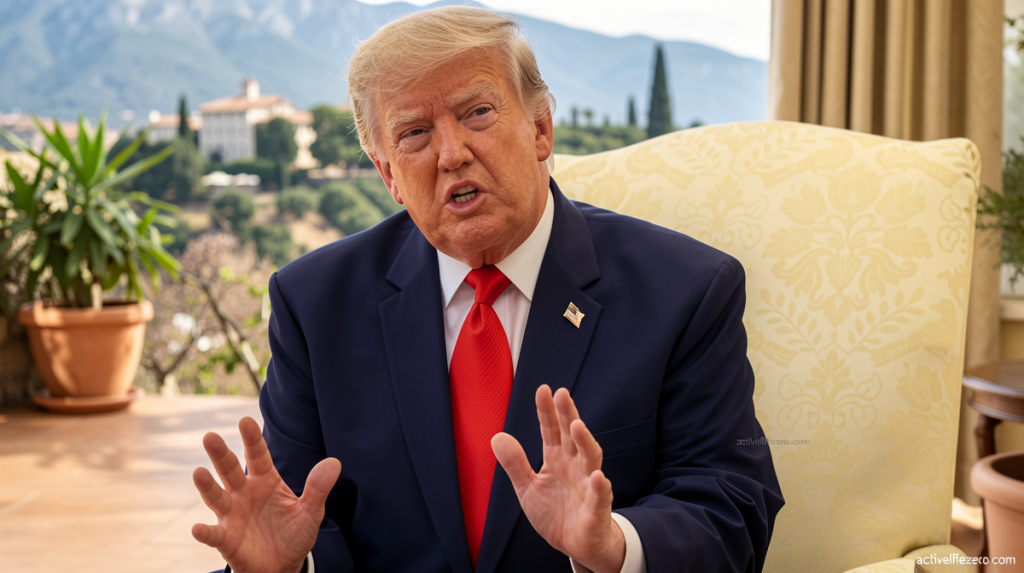
Trump Softens Stance on Chinese Election Data Breach Following Initial Alarm
A Shift in Tone After Historic Accusation
Activelifezero.com – Just five days after delivering a forceful address in which he characterized Chinese election interference as “the largest compromise of election data in history,” President Donald Trump appeared to minimize the severity of Beijing’s actions. Speaking on Tuesday, the president suggested that the United States was engaging in comparable activities toward China, framing the situation as a mutual exchange rather than a unilateral violation.
During his remarks, Trump offered a somewhat vague commitment that American officials would engage in discussions with their Chinese counterparts regarding the matter. However, he provided no indication of forthcoming punitive measures and seemed eager to move past the controversy. “It took place a long time ago. I think China is maybe a little bit different today than it was then,” he remarked, attempting to place the incident in a more distant temporal context despite its recent public revelation.
The Scale of the Alleged Breach
The president’s initial characterization of the incident stood in stark contrast to his subsequent casual treatment of the issue. During a primetime speech last week, Trump had accused China of secretly obtaining approximately 220 million American voter records beginning in 2020. He described the situation as creating “an unprecedented election security nightmare” for the nation, emphasizing the potential vulnerability of the electoral process.
“They do things and we do things to them,” he stated on Tuesday. “I’ll be honest, we do things to them too. It’s not a one-way street.”
This comparison to American activities abroad served to normalize what could otherwise be viewed as a significant breach of electoral integrity. By suggesting parity between American and Chinese actions, Trump appeared to diminish the perceived gravity of the Chinese acquisition of voter information.
Diplomatic Considerations and Future Relations
The timing of Trump’s comments proved particularly noteworthy given ongoing diplomatic preparations. A White House official confirmed just one day after the president’s speech that planning for President Xi Jinping’s upcoming state visit to the United States was proceeding according to schedule. The visit, anticipated for September, represents one of the most significant diplomatic engagements between the two nations in recent years.
“It took place a long time ago. I think China is maybe a little bit different today than it was then,” Trump said.
When questioned about whether the president was contemplating any form of retaliation against China—including the possibility of imposing sanctions—the White House declined to provide a response. This silence left observers uncertain about the administration’s ultimate course of action regarding the alleged interference.
Contextualizing the Response
Trump’s evolution from alarm to acceptance raises questions about the administration’s priorities and the factors influencing his public statements. The president’s willingness to discuss the matter without immediate consequences suggests that diplomatic considerations may be weighing heavily on his decision-making process. The upcoming visit from President Xi adds another layer of complexity, as maintaining positive bilateral relations could be viewed as strategically important regardless of the election interference allegations.
The president’s assertion that China has changed since the alleged breach began in 2020 provides a narrative framework for his more lenient stance. By characterizing the incident as something that occurred “a long time ago,” Trump effectively distances the current administration from the full implications of the original accusation while avoiding any commitment to concrete remedial action.
As discussions with Chinese officials continue, the American public will likely await further clarification regarding whether the president’s downplaying of the incident represents a genuine assessment of the situation or a strategic calculation influenced by broader geopolitical considerations.
