Trump asks Supreme Court to OK sweeping changes for mail ballots

Daftar Isi
Supreme Court Faces Urgent Mail-Ballot Ruling Weeks Before Midterms
Activelifezero.com – The nation’s highest court now stands at the center of a constitutional clash over who controls the flow of ballots through America’s postal system. With the November midterm election less than two months away and the first mail ballots already entering delivery routes this week, the Trump administration has filed an emergency appeal asking the justices to grant the US Postal Service broad authority to hold back mail ballots that do not meet newly imposed formatting and identification standards. The move bypasses lower courts still working through the dispute and places the 6-3 conservative bench under intense time pressure to resolve a question that touches tens of millions of voters.
A March Executive Order Sparks Months of Litigation
The legal battle traces back to an executive order the president signed in March, which granted federal agencies an unprecedented operational role in the mechanics of elections. Voter advocacy organizations and a coalition of 23 states led by Democratic governors immediately challenged the directive in federal court, contending that neither the White House nor the post office should determine which ballots actually reach voters’ hands. The lower court issued a temporary order blocking the rule’s central provision while it weighed a request for preliminary relief — an order set to expire within days.
Despite that temporary block, the administration chose to run directly to the Supreme Court rather than wait for the lower court’s full ruling. The Justice Department framed its Thursday filing as a request for a short-term order permitting the Postal Service to implement its new regulations immediately. In doing so, the department leaned heavily on the argument that the changes are necessary to guard against fraud in the federal mails.
“Without intervention, the lower court order blocking the administration partially nullifies the Postal Service’s efforts to address the risk that the federal mails will be used to perpetrate voter fraud — a particularly pernicious species of fraud that dilutes the votes of lawful voters.”
The Administration’s Framing: Mail Rules, Not Election Rules
Throughout the appeal, the White House has insisted the regulations concern postal operations rather than electoral administration. The department characterized its requirements as “only modest envelope-design and addressee-information requirements,” emphasizing that the president’s authority over the mails is the operative power at stake.
“The rule thus plainly does not seize control of states’ administration of elections. It simply imposes reasonable preparation requirements for certain election-related mail.”
Trump and several Republican states that back him have similarly described the executive order as a minimal set of postal adjustments aimed at strengthening election security. Critics, however, view the framework as a power grab over state-run mail ballot systems — a system the president has repeatedly and without evidentiary support blamed for his 2020 defeat by former President Joe Biden.
What the Regulations Would Actually Require
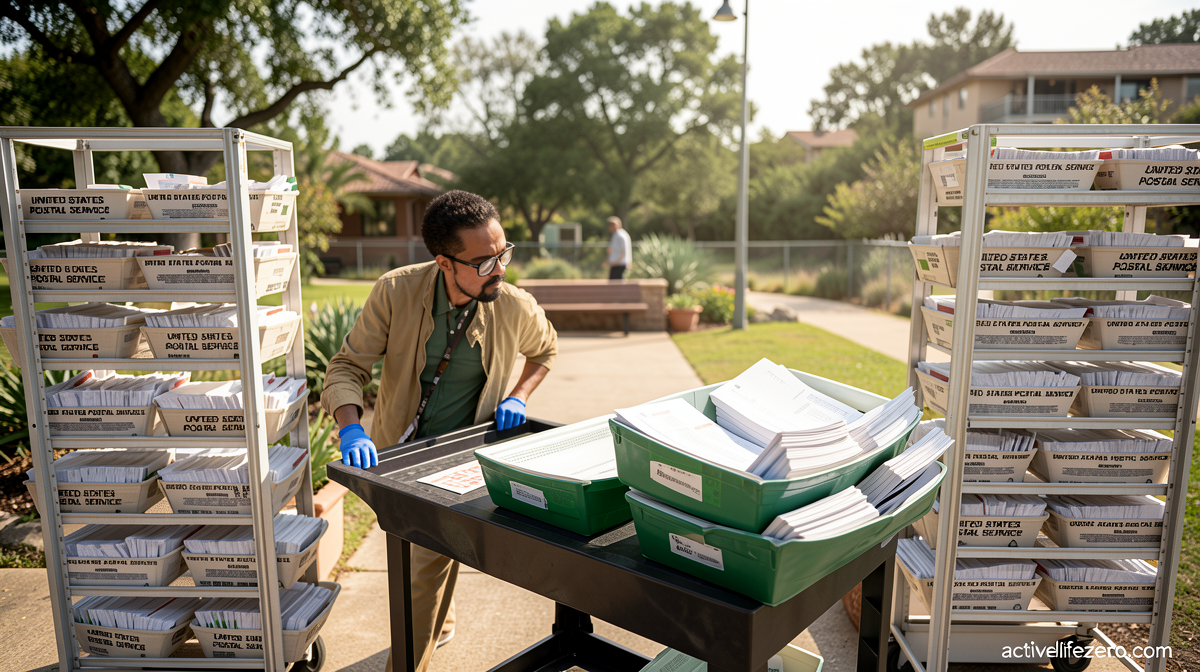
Under the proposed rules, states would be obligated to transmit lists of their eligible mail voters to the Postal Service through an online portal before ballots could be dispatched. If a recipient’s name does not appear on that list, the USPS would refuse delivery of the ballot. The regulations would additionally mandate that election-mail envelopes carry unique bar codes tied to individual voters.
Election officials across multiple states have warned that adopting an entirely new mail-ballot infrastructure weeks before an election risks systemic breakdowns in ballot processing. A whistleblower report further alleged that the Postal Service is rushing to complete a complicated implementation plan that could potentially disenfranchise millions of Americans. Many officials have stated plainly that the window for safely restructuring mail-voting operations has already closed.
The ACLU’s Response and the Court’s Timeline
Sophia Lin Lakin, director of the ACLU’s Voting Rights Project and part of the legal team representing the voting-rights groups, called the filing an overreach born of administrative urgency rather than judicial necessity.
“USPS’s mail ballot rule is an unconstitutional attempt to upend mail voting on the eve of an election. The district court temporarily blocked the rule’s key provision while it decides the request for preliminary relief through an order set to expire within days. Yet President Trump’s administration is running to the Supreme Court anyway. The only emergency here is the one the administration created.”
The court has requested a response brief by Tuesday morning — a procedural signal that the justices are unlikely to grant the administration’s request immediately. Before the court can examine the USPS regulation on the merits, the administration must clear a procedural hurdle: the lower court’s temporary order is not normally appealable. The high court has, however, permitted such appeals in limited circumstances in the past, and Solicitor General D. John Sauer, the administration’s top appellate attorney, has argued the justices should do so here.
Why the Timing Matters
The justices most recently touched this issue in August, siding with the Trump administration on a related question. Since then, the Postal Service has supplied additional detail about how it intends to operationalize the president’s directive. That added specificity has sharpened critics’ concerns about implementation logistics in the compressed pre-election window.
Mail voting has become a cornerstone of American elections, particularly in states where a majority or near-majority of ballots arrive by post. The question before the court, stripped of its procedural complexity, is whether the executive branch may condition the delivery of a ballot on compliance with federal formatting rules that states did not design and did not consent to. For voters in states where mail ballots constitute the primary or sole voting method, the answer will determine whether their ballots arrive at all — and on what schedule. The court’s decision, whatever its outcome, will set a precedent for how much federal authority can intrude into the operational details of state-administered elections, a boundary that has been contested since the founding era.
Related Reading
Frequently Asked Questions
What is Trump asks Supreme Court to OK sweeping?
Trump asks Supreme Court to OK sweeping is the main topic of this guide. The article explains the context, practical details, and next steps readers should understand.
Why does Trump asks Supreme Court to OK sweeping matter?
Trump asks Supreme Court to OK sweeping matters because readers are looking for a useful answer, not just a short summary. Good content should match search intent and help them decide what to do next.