Trump administration faces pushback after looking to privatize land on Yosemite National Park

Daftar Isi
Yosemite Land Swap Proposal Sparks Outcry Over Private Development in America’s Most Iconic Wilderness
Activelifezero.com – The idea of a Nevada-based real estate firm carving a private access road through federally protected wilderness in one of the nation’s oldest and most beloved national parks has ignited a firestorm of opposition among elected officials, conservation groups, and park employees. At the center of the controversy is a proposed land exchange between the National Park Service and Kingsbarn Realty Capital, a developer seeking to build a shorter route to an 83-acre parcel it acquired in early 2024. The plan, still under internal review, would allow the company to construct a road cutting through what is currently parkland, granting easier vehicular access to a site where it intends to develop a small residential village and retail properties.
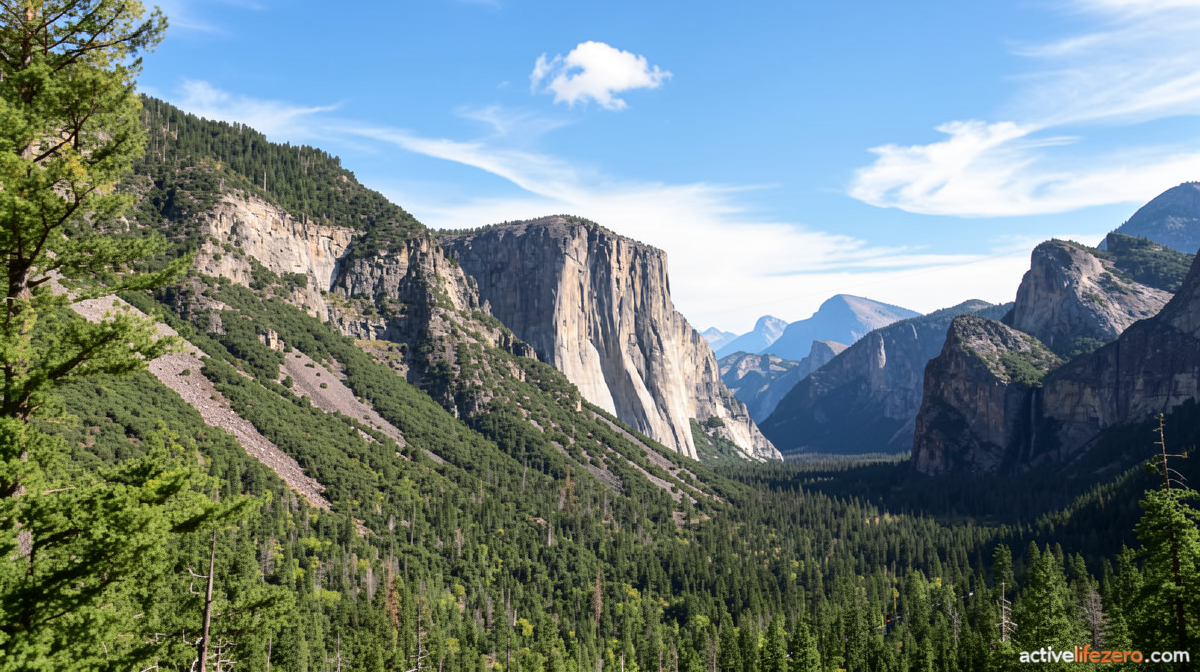
Yosemite National Park, established in 1890 and spanning roughly 1,200 square miles across Mariposa and Tuolumne counties in California’s Sierra Nevada, has long been regarded as a symbol of American wilderness preservation. Its granite cliffs, ancient sequoia groves, and alpine meadows draw millions of visitors annually. The prospect of private commercial development encroaching on its boundaries has struck a deep nerve with those who view the park as a commons belonging to all citizens.
The Mechanics of the Proposed Exchange
According to documents reviewed and statements from Lanny Davis, attorney for Kingsbarn, the developer’s current access to the parcel — known as “Hazel Green Ranch” — requires a 25-mile drive along existing public roads. The firm’s stated objective is to construct a considerably shorter access road that would pass through land presently administered by the park service. Davis clarified that even under the proposed arrangement, residents of the development would still face a 45-minute drive to reach the Yosemite Valley floor.
The land exchange structure itself reflects a legal constraint. In a budget proposal submitted to Congress for the current fiscal year, the National Park Service acknowledged that it lacks the statutory authority to simply transfer the parcel to Kingsbarn outright. A formal exchange — trading one parcel for another of roughly equivalent value — is the mechanism through which the transaction could proceed under existing federal land law.
Kingsbarn purchased the Hazel Green Ranch property from a private owner in February 2024, Davis confirmed. Jeff Pori, the company’s chief executive, made multiple donations to President Donald Trump’s joint campaign committee for the 2024 presidential race, as reflected in federal campaign finance records. Kingsbarn told reporters on Saturday that it had not discussed the proposal with the White House.
“While it’s true that the National Park Service is part of the executive branch of the federal government and is an agency within the U.S. Department of the Interior, Kingsbarn has had not had any communication or contact with the White House on this proposed plan.”
Interior Department Pushes Back Against Pressure Narrative
The Department of Interior, which oversees the National Park Service, issued a statement asserting that no political pressure has been applied to reach a predetermined outcome and that no final decisions have been made. A department spokesperson emphasized that any land exchange or access proposal involving park lands would be subject to all applicable federal statutes, regulations, and departmental policies, including mandatory environmental review and public notification processes.
That procedural language, while standard, carries particular weight here because the proposal would require a full Environmental Impact Statement under the National Environmental Policy Act, public comment periods, and review by multiple federal agencies before any exchange could be finalized. The timeline for such a process typically spans several years.
Local Officials Say They Were Kept in the Dark
County officials in both Mariposa and Tuolumne — the two counties that partially encompass Yosemite — told reporters that neither the park service nor Kingsbarn had communicated with them about the proposal. Both said they first learned of the plan on Friday, underscoring questions about transparency in how the matter was being advanced.
Union and Conservation Voices Raise Alarm
The Yosemite Leadership of National Federation of Federal Employees Local 465, a union representing park employees including rangers and administrative staff at Yosemite, posted on Instagram that it was “appalled” by the proposal.
“As stewards of Yosemite, the ceding of public lands for private interests is antithetical to what we stand for as employees of the National Park Service.”
The union added that it was “incredibly concerned about the implications of this private development for the working conditions of an already overwhelmed staff,” pointing to chronic understaffing and burnout among rangers tasked with managing visitor flows, wildfire risk, and wildlife protection across the park’s vast acreage.
Democratic lawmakers, national park advocacy organizations, and members of the climbing community responded swiftly, many describing the nation’s parks as “sacred” spaces that should remain beyond private commercial encroachment. California Governor Gavin Newsom, a Democrat, posted on X: “Trump is hellbent on destroying everything that is sacred and beautiful about this country. California won’t stand by while he grifts our public lands.”
A Pattern of Shrinking Federal Wilderness
The Yosemite proposal does not exist in isolation. Earlier in the administration’s tenure, moves were made to reduce the acreage of federally protected land in Utah and to permit portions of Big Bend National Park in Texas to be used for border security infrastructure. Separately, directives from the White House have ordered the removal of certain interpretive signs, the rollback of species protections, and the reassignment of park staff — actions that have placed additional strain on already stretched ranger workforces.
For Yosemite specifically, the shadow of a prior attempt looms. Media reports from 2012 indicated that a previous owner of the same parcel sought to build a comparable shorter road through parkland, only to have the project blocked by a federal court. Whether the current proposal would survive similar judicial scrutiny remains an open question, though the legal and environmental hurdles are substantial.
As the proposal moves through internal agency review, the coming months will test whether the federal government treats its most storied wilderness as a commons to be preserved or as a resource to be parceled out. For now, the road — literal and figurative — runs through one of America’s most treasured landscapes, and the public is watching closely.
Related Reading
Frequently Asked Questions
What is Trump administration faces pushback after looking?
Trump administration faces pushback after looking is the main topic of this guide. The article explains the context, practical details, and next steps readers should understand.
Why does Trump administration faces pushback after looking matter?
Trump administration faces pushback after looking matters because readers are looking for a useful answer, not just a short summary. Good content should match search intent and help them decide what to do next.