
Supreme Court to decide if migrants detained for months must receive bond hearings
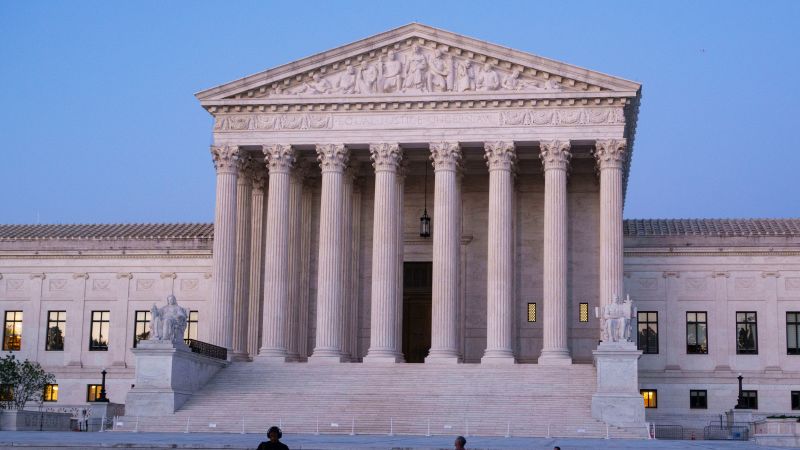
Supreme Court to Decide if Migrants Detained for Months Must Receive Bond Hearings
Supreme Court to decide if migrants – The U.S. Supreme Court has taken up a pivotal legal question that could reshape immigration policy: whether the government is allowed to detain noncitizens for extended periods without requiring them to attend bond hearings. This case, which centers on two green card holders, has drawn widespread attention due to its potential impact on the Trump administration’s approach to immigration enforcement. The decision may determine whether prolonged detention without due process is constitutionally permissible, challenging the legal framework that has been central to recent deportation efforts.
Two Green Card Holders at the Heart of the Dispute
The case involves two men who were detained for months without receiving bond hearings to evaluate their eligibility for release. One was held for seven months, while the other endured nearly two years of immigration proceedings. Both were convicted of aggravated felonies, which placed them under the jurisdiction of mandatory detention laws. Their removal cases were pending, yet neither was granted a formal opportunity to argue whether they should be released on bond. This lack of procedural safeguards has raised concerns about the fairness of the detention process.
Immigration officials sought to deport the men to the Dominican Republic and Jamaica, respectively. Their prolonged detention has sparked debates over whether the government’s authority to detain noncitizens is absolute or if it must provide a chance for them to demonstrate their ties to the U.S. or their low risk of fleeing. The men’s attorneys argue that the absence of bond hearings undermines their right to due process, a principle they claim is enshrined in the Constitution.
A Federal Appeals Court’s 2024 Ruling
In 2024, a federal appeals court in New York ruled that the due process clause of the Constitution mandates bond hearings for noncitizens held in prolonged detention. The court’s decision emphasized that individuals should not be confined without a chance to prove their eligibility for release. This ruling directly targeted the Trump administration’s policies, which had expanded mandatory detention for immigrants convicted of specific crimes, including aggravated felonies.
The administration contested this decision, arguing that it was “seriously misguided.” They contended that the ruling overreaches by imposing additional requirements on the government’s detention authority. This appeal has now reached the Supreme Court, which is set to weigh in on the legal validity of the bond hearing mandate. The court’s decision could either uphold the appeals court’s interpretation or reaffirm the administration’s stance on extended detention without hearings.
Mandatory Detention Laws and Policy Shifts
The law in question requires that noncitizens convicted of certain offenses be detained automatically. This provision has been a cornerstone of the Trump administration’s immigration strategy, enabling the government to detain large numbers of individuals without the need for judicial review. However, the administration has also reclassified some immigration offenses to widen the scope of mandatory detention, a move that has faced legal challenges.
These policy changes have led to increased scrutiny of the detention system. Critics argue that the law’s broad application has resulted in the prolonged separation of families and the detention of individuals who pose minimal risks to public safety. The current case highlights how these policies may conflict with constitutional protections, particularly when detention spans months or even years without formal assessments.
American Civil Liberties Union’s Role in the Case
The American Civil Liberties Union (ACLU) has been a key advocate for the two men at the center of the case. The organization argues that the Supreme Court should decline to hear the appeal, as the men’s circumstances already demonstrate the law’s flaws. One of the detainees had left the country before the case was brought to court, while the other was released and has since not been re-detained by Immigration and Customs Enforcement (ICE).
According to the ACLU, these outcomes suggest that the mandatory detention law is not being enforced consistently. The group contends that the government’s reliance on prolonged detention without bond hearings is arbitrary and violates the rights of individuals who are not considered flight risks. This argument underscores the broader tension between immigration enforcement efficiency and constitutional due process.
Previous Legal Precedent and Constitutional Questions
Similar legal questions were addressed by the Supreme Court in 2016, when it ruled on a case involving mandatory detention for noncitizens. In that decision, the court upheld the law but left open whether the Constitution requires bond hearings after extended detention. Justice Samuel Alito, writing for the majority, focused on the statutory language, which allows for indefinite detention of certain immigrants.
“The court reads the statute as forbidding bail, hence forbidding a bail hearing, for these individuals,” liberal Justice Stephen Breyer wrote in dissent at the time. “In my view, the majority’s interpretation of the statute would likely render the statute unconstitutional.”
Breyer’s dissent highlighted concerns that the law’s interpretation could strip away fundamental rights. The current case may serve as an opportunity to clarify this constitutional ambiguity, particularly in light of the prolonged detention of the two green card holders.
Challenges to the 2nd Circuit’s Standard
The Trump administration also challenged a 2024 ruling by the Second Circuit Court of Appeals, which established that the government must meet a higher standard of evidence to justify continued detention. The appeals court required the government to prove that a noncitizen is either a flight risk or a danger to the community, a threshold that critics argue is too stringent for immigration enforcement.
This higher standard has been a point of contention, as the administration argues it complicates the deportation process and allows for unnecessary delays. By appealing this decision, the Trump administration aims to assert that the law should permit detention without such rigorous evidence requirements, aligning with their broader approach to immigration policy.
Implications for Immigration Enforcement
The Supreme Court’s ruling on this case could have far-reaching consequences for immigration enforcement. If the court sides with the administration, it may reinforce the use of prolonged detention as a tool to expedite deportations. Conversely, a decision in favor of the appeals court could require immigration officials to provide more frequent bond hearings, potentially slowing the process and protecting individuals from indefinite confinement.
Legal experts are divided on the likely outcome. Some believe the court will uphold the administration’s position, citing the importance of administrative efficiency in immigration matters. Others predict a more balanced approach, recognizing the need for due process while allowing for flexible enforcement. The case reflects the ongoing struggle between the government’s authority to control borders and the constitutional rights of those detained within its system.
As the Supreme Court prepares to render its decision, the case has become a focal point for debates over immigration policy. The outcome may determine whether noncitizens are entitled to procedural safeguards during long-term detention or if the government retains the power to hold them without such protections. This ruling will not only impact the men at the center of the case but also set a precedent for future immigration enforcement actions.
