
Platner holds town hall in Portland as he looks to steady Senate campaign
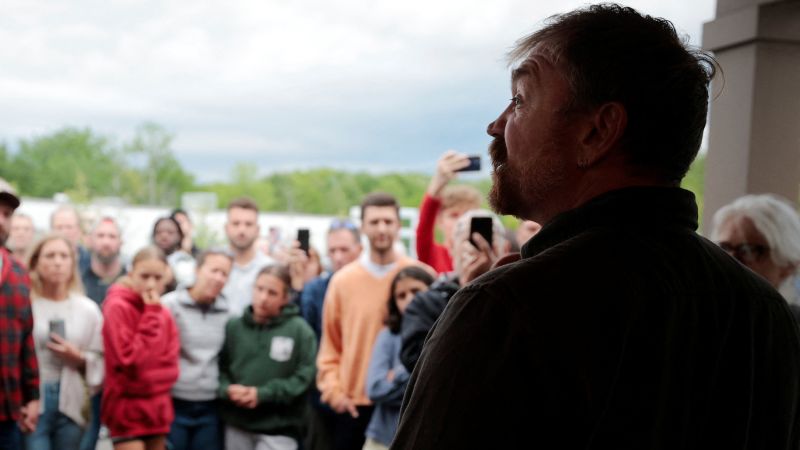
Platner Holds Town Hall in Portland Amid Senate Campaign Challenges
Platner holds town hall in Portland – Graham Platner, the Democratic Senate candidate in Maine, addressed a gathering of supporters in Portland on Sunday, where he spoke to a group of around 400 people who showed strong approval for his candidacy. The event, styled as a town hall meeting, took place just two days before a critical Democratic primary that many still view as a contest Platner is likely to win. However, recent allegations about his past behavior have introduced uncertainty into his campaign, particularly regarding his ability to defeat Republican incumbent Susan Collins, a longtime political figure in the state.
Allegations Surface Ahead of Key Primary
On Thursday, the New York Times published reports detailing claims from an ex-girlfriend that Platner had used physical force during arguments, including gripping her shoulders and twisting her arm behind her back. The incident was described as a moment of tension, with the ex-girlfriend also alleging he locked her in a room during a disagreement. Platner has dismissed these accounts as exaggerated, insisting they do not reflect the full picture of his conduct. Other former partners interviewed by the Times shared mixed views, with some highlighting his charisma and dedication, while others described him as emotionally volatile and prone to sharp criticism.
“We’re going to win on Tuesday and we’re going to win in November and we’re going to take power back for the people in this country,” Platner said, as the crowd erupted in applause and cheers.
These allegations come in the wake of additional news about Platner’s past, including messages he exchanged with multiple women while married. The stories have sparked debates within the Democratic Party, with some members expressing concern over his reputation. Despite this, no major Democratic endorsements have been withdrawn, and party leaders in Maine continue to back his bid, albeit with some hesitation.
Strategies to Reinforce Campaign Image
At Sunday’s event, attendees focused less on Platner’s personal history and more on his policy proposals. Questions centered around his stance on the US Supreme Court, his preferred Senate committees, and his views on a federal wealth tax. Platner used the opportunity to emphasize his commitment to representing Mainers’ interests, while also steering the conversation toward broader national issues.
“What has blown my mind is that everybody knows what’s going on,” he remarked in response to a query about misconceptions outsiders might have about Maine voters. Platner highlighted his desire to join the Senate Appropriations Committee and work on agriculture and healthcare initiatives, citing his alignment with Rand Paul of Kentucky on foreign policy as a reason for his interest in collaboration across party lines.
Controversy and Defenses
Platner’s campaign has faced scrutiny over social media posts that were perceived as dismissive of sexual assault, as well as a skull tattoo he initially claimed was not connected to Nazi symbolism. He has since apologized for the posts and acknowledged the tattoo’s significance, asserting he was unaware of its historical implications when he acquired it. These admissions have not yet shaken his base, with many maintaining faith in his ability to navigate the challenges.
Platner also took a pointed jab at Sen. John Fetterman, who has criticized him in recent weeks. Calling Fetterman a “creep” and comparing him to a “Nazi sympathizer,” Platner sought to distance himself from the Pennsylvania Democrat’s reputation for defying party unity. “I think people have been frustrated with Susan Collins,” said Debbi Conley, a 69-year-old retiree from Gorham, who admitted she would likely support Platner in the primary but remains cautious about his broader appeal.
Public Support and Political Resilience
Despite the controversies, Platner’s base remains largely loyal. During a rally in Bar Harbor on Friday, he was greeted with a standing ovation by attendees who declared their support for his candidacy. “Mainers have my back,” he proclaimed, reinforcing his connection to the state’s voters. Platner’s military background, which includes experiences with alcohol and post-traumatic stress disorder, has also been a focal point of his campaign. He has framed these challenges as part of his personal growth and as evidence of his dedication to public service.
Rahm Emanuel, a prominent Democratic strategist and potential 2028 presidential candidate, recently visited New Hampshire and noted that the outcome of the Maine race remains uncertain. “The jury is still out” on whether Platner can overcome the recent scrutiny, he said, adding that the campaign’s trajectory could either signal a shift in the party’s fortunes or a setback. “Everyone is holding their breath whether this is the start of something or the end of something,” Emanuel remarked, underscoring the national implications of the race.
Divided Opinions Among Supporters
While some voters remain steadfast in their support, others have raised concerns about Platner’s character. Kurt Fedora, a 62-year-old mental health worker from Buxton, attended the Portland event to hear Platner discuss working-class issues and fighting corruption. Fedora dismissed the recent allegations as a smear campaign by conservative opponents, stating, “They’re really reaching far to try to pin something on him. And it’s politics as usual.”
Conversely, a segment of the public has drawn parallels between Platner and former President Donald Trump, noting his tendency to deflect criticism and frame opponents as enemies. Debbi Conley acknowledged this comparison, though she noted her support for Platner remains strong. “I think people have been frustrated with Susan Collins,” she said, but added, “I’m still waiting to see how he handles the challenges ahead.”
Enduring Political Challenges
Platner’s campaign has been shaped by a blend of personal narratives and political strategy. While he has worked to present himself as a unifying figure, the controversies have highlighted the delicate balance he must maintain. His ability to connect with voters in the lead-up to the primary will be crucial, as the election is seen as a pivotal moment for the Democratic Party in the Northeast.
As the race approaches, Platner’s team is focusing on reinforcing his image as a fighter for Mainers, even as they acknowledge the hurdles ahead. With endorsements still in place and a vocal base rallying behind him, the candidate appears determined to position himself as the party’s best hope for reclaiming Senate seats in a state historically dominated by Republicans. Whether this momentum can be sustained remains to be seen, but for now, the town hall event in Portland has served as a testament to his current standing in the race.
