
Oral arguments are taking forever. Supreme Court justices have had enough
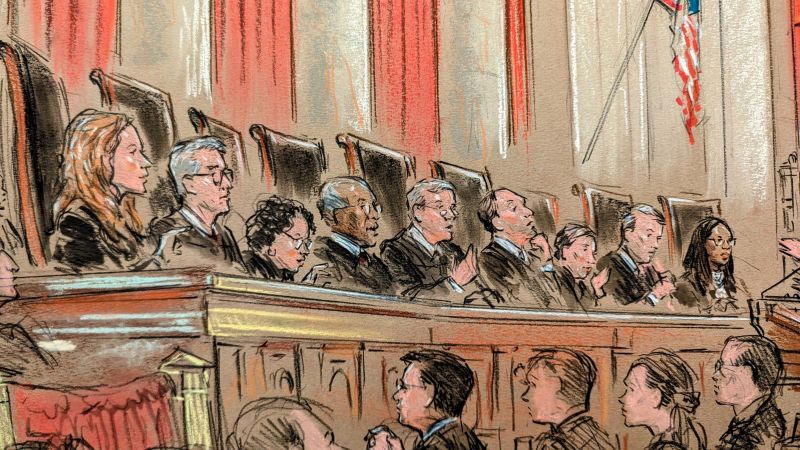
Supreme Court Oral Arguments Stretch Beyond Their Time Limits
Oral arguments are taking forever Supreme – Recent complaints from the Supreme Court’s own justices have highlighted a growing concern about the prolonged duration of oral argument sessions. While legal professionals have long debated the efficiency of the court’s proceedings, the issue has gained wider attention as justices increasingly voice their frustrations publicly. Chief Justice John Roberts, for instance, recently remarked at a judicial conference in Pennsylvania that the sessions are “way too long,” pledging to investigate the matter during the summer. Justice Samuel Alito, meanwhile, echoed similar sentiments in Texas, criticizing the format as “too much speechifying” and noting that it allows “too little asking real questions.” These comments suggest a shift from behind-the-scenes concerns to open critique of the process.
The Evolution of Oral Argument Format
The current structure of oral arguments, which began in October and conclude in April, has undergone subtle but significant changes since the pandemic. Initially, the court adopted virtual sessions, which required justices to follow a seniority-based system for asking questions. However, when the justices returned to the physical courtroom in 2021, a hybrid model emerged: a free-flowing exchange followed by a structured “seriatim” round. This compromise, while intended to balance efficiency and depth, has led to extended sessions as justices take more time to probe advocates and each other. The shift has also complicated efforts to adhere to time limits, a stark contrast to the rigid approach of former Chief Justice William Rehnquist, who was known for cutting off arguments mid-sentence.
According to a CNN analysis, the average length of oral arguments in the current term has reached nearly 90 minutes, an increase of almost 10 minutes from the 2020 term, which was conducted remotely. This trend has been most pronounced in high-profile cases, such as the one involving President Donald Trump’s global tariffs. That particular session, which technically covered two appeals, stretched to nearly three hours before the court ultimately ruled to strike down the policy. The extended time has raised questions about whether the format is affecting the court’s ability to maintain its reputation for brevity and precision.
Despite these criticisms, not all justices agree that the current system is flawed. Justice Clarence Thomas, who has historically remained silent during arguments, recently expressed no objection to the extended duration. At a conference in Miami, he joked that the longer sessions are not a problem for him, as he “doesn’t play golf, cards, or hang out.” His quip underscores the differing perspectives among justices, with some embracing the extended time as an opportunity for deeper engagement. Similarly, legal advocates have noted that the additional time allows for more nuanced exchanges, particularly during the seriatim phase, where they can address each justice individually without interruption.
The Liberal Wing’s Role in Extended Debates
The liberal justices, who often find themselves in the minority, appear to be the most vocal participants in these extended sessions. In recent terms, their tendency to elaborate on arguments has contributed to the overall length of proceedings. For example, Justice Sonia Sotomayor, the court’s most senior liberal justice, averaged over six minutes of speech per session in the current term, according to an analysis by Empirical SCOTUS founder Adam Feldman and political science professor Jake Truscott. Justice Ketanji Brown Jackson, who has become a prominent voice in the court, also frequently engages in lengthy dialogue during arguments. This dynamic may mean the impact of shortening the sessions falls disproportionately on the liberal bloc, as their prolonged contributions could be more easily trimmed without diminishing the substance of their critiques.
Tracking the major Supreme Court cases of 2026, analysts have observed that the extended format has altered the way justices interact with advocates. While the seriatim round allows for more detailed questioning, it also risks overshadowing the initial free-form debate, where the justices’ collective energy often drives the conversation. The compromise format, which blends spontaneity with structure, has created a rhythm that some justices find satisfying, while others, like Alito, argue it sacrifices the urgency that once defined oral arguments.
For the public, these extended sessions offer a rare window into the deliberations of the nation’s highest court. Livestreaming, which began during the pandemic, has made the debates more accessible, allowing viewers to witness the ideological clashes and nuanced reasoning that shape landmark rulings. However, the prolonged nature of the arguments has also sparked debates about their role in the court’s legitimacy. Tonja Jacobi, a law professor at Emory University, emphasized that the sessions are “very important for the court’s legitimacy,” as they demonstrate the justices’ commitment to thorough analysis. Yet, she also noted that the increased time has made it harder to maintain the perception of a swift and decisive judicial process.
While some legal professionals appreciate the additional time, others argue it has created a new challenge: keeping advocates and justices on schedule. The 60-minute time limit, once a defining feature of the court’s proceedings, has become more of a guideline than a rule. This flexibility, though beneficial for in-depth discussions, has led to concerns about the potential for delays in resolving cases. The pandemic’s influence on the format remains a key factor, as the transition to virtual hearings initially prioritized order and structure over the dynamic, sometimes chaotic, energy of in-person debates.
As the court continues to grapple with its procedural identity, the debate over oral arguments may reflect broader tensions within the judiciary. The conservative majority, which holds a six-justice supermajority, has shown a preference for concise exchanges, while the liberal justices have leaned into the opportunity for extended dialogue. This divergence in approach has not only reshaped the internal dynamics of the court but also influenced the public’s understanding of its role in shaping national policy. Whether the current format will endure or evolve further remains to be seen, but one thing is clear: the Supreme Court’s oral arguments have become a stage for both intellectual rigor and personal style.
Voices of Dissent and Agreement
Although the criticisms of the extended sessions are not unanimous, they have sparked a thoughtful dialogue about the balance between thoroughness and efficiency. Some legal experts argue that the additional time allows for a richer exchange of ideas, particularly in complex cases that require detailed scrutiny. Others, however, worry that the prolonged duration could lead to fatigue among advocates and justices, reducing the sharpness of their questioning. The pandemic’s disruption of traditional procedures may have accelerated these changes, but the question remains: are they a temporary adjustment or a lasting shift in how the court operates?
The next term’s oral arguments will be a test case for these evolving norms. With the justices’ preferences for time and style shaping the process, the outcome may depend on how effectively the court can reconcile its role as a deliberative body with its reputation for decisiveness. For now, the extended sessions continue to provide a platform for both the judiciary’s internal debates and the public’s fascination with the nation’s highest legal forum.
“The current approach may run on a bit long, but you cannot say you have not had a chance to say your piece,” Justice Clarence Thomas told a gathering of legal professionals in Miami. His comment, delivered with characteristic brevity, highlights the nuanced perspectives within the court about the value of extended debates.
As the Supreme Court navigates this new era of prolonged oral arguments, the stakes for both the justices and the public are high. The debates, whether short or long, will continue to shape the legal landscape and influence the interpretation of constitutional principles. Whether the court’s critics will see these sessions as a flaw or a feature of the evolving judicial process remains a matter of perspective — but one thing is certain: the way justices engage with each other and advocates will remain a defining aspect of the Supreme Court’s work.
