
Kennedy Center exterior remains covered after Trump’s name is removed
Kennedy Center Exterior Remains Covered After Trump’s Name Is Removed
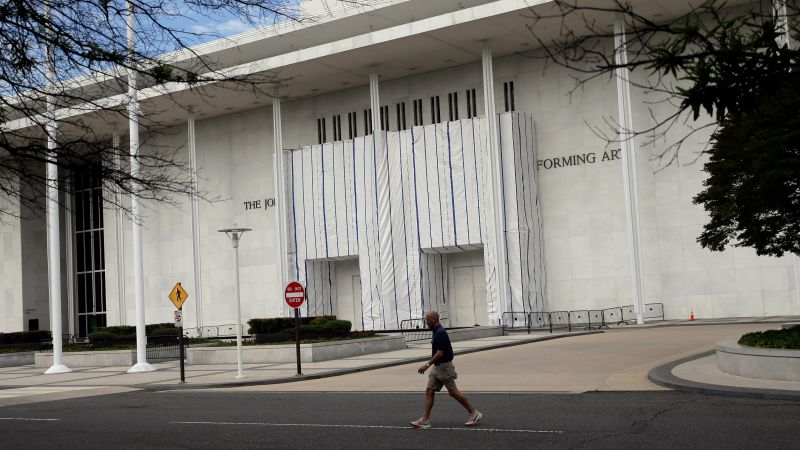
Kennedy Center exterior remains covered after – On Sunday, large striped tarps still draped over the Kennedy Center’s exterior, leaving visitors in a state of bewilderment. Many had traveled to the iconic cultural landmark in Washington, DC, expecting to see the removal of President Donald Trump’s name, which was officially taken down on Saturday following a federal judge’s ruling. However, the lingering coverings obscured the changes, sparking discussions about the significance of the event and the symbolic weight it carried for the city’s residents.
Visitors’ Mixed Reactions to the Coverings
Stephen Caken, a New York resident visiting the nation’s capital for an internship, expressed confusion over the continued presence of the tarps. “It seems like they’re trying to just kind of take away attention from this whole charade,” he remarked to CNN. His frustration mirrored that of other visitors who arrived hoping to witness the final phase of the name change. By Sunday afternoon, much of the building’s exterior where the metal letters were affixed in December had been masked, preventing clear visibility of the remaining alterations.
“To me, he’s trying to deface America’s symbols before he starts finishing defacing the country itself,” said John Mathew Smith, a Maryland resident who had made the journey to the Kennedy Center. Smith viewed the removal as part of a broader effort by Trump to undermine the nation’s cultural landmarks, arguing that the action reflected a pattern of symbolic erasure.
Tim Terpstra, a Washington resident living near the venue, noted the emotional impact of the event. “It would be nice to be able to see to make sure that it is down, and no vestiges of what was up there still remain,” he said, highlighting the desire for transparency. The tarps, which had been hastily erected, created a temporary barrier between the public and the historical markers that the center had previously displayed.
Legal Context of the Name Change
The removal of Trump’s name followed a legal decision by the US District Court, where Judge Christopher Cooper ruled that the Kennedy Center had violated federal law by adding the president’s name to its facade. The installation, part of a larger initiative to modernize the capital’s image, had been contested by critics who saw it as an affront to the center’s legacy as a tribute to President John F. Kennedy. The ruling came after an appeals court denied a request to pause the process, allowing the name change to proceed.
The Kennedy Center had initially resisted full compliance with the order, opting to keep Trump’s name in place while it pursued an appeal. This strategy aimed to delay the removal until the legal battle reached its conclusion. However, the eventual decision to take down the letters signaled a shift, with the venue now aligning with the court’s directive. The tarps, likely a precautionary measure, were still in place to protect the structure during the transition.
Broader Implications of Trump’s Influence on DC
Trump’s efforts to reshape Washington, DC, extended beyond the Kennedy Center. In his second term, the administration had continued to use the venue as a platform to promote works that reflected his cultural vision. This included hosting the Kennedy Center Honors in December and featuring the premiere of Melania Trump’s documentary. Additionally, the center had played a role in Trump’s national civics contest for high school students, further embedding his presence in the city’s cultural fabric.
Meanwhile, other projects aimed to alter the physical landscape of the capital. Trump had paved over the White House Rose Garden to create a patio reminiscent of his Mar-a-Lago estate, demolished the East Wing to make space for a grand ballroom, and changed the color of the Lincoln Memorial Reflecting Pool. These transformations were accompanied by symbolic gestures, such as the reinstallation of a controversial Confederate monument and the removal of references to George Mason’s ownership of slaves at his memorial, despite his historical advocacy for individual rights.
The name change at the Kennedy Center had sparked a wave of backlash from the arts community. Many artists had withdrawn from performances, citing the installation as a disruption to the venue’s original purpose. The conflict had drawn attention from Rep. Joyce Beatty, an Ohio Democrat and an ex-officio trustee of the board. She had swiftly launched a legal challenge against the decision, which eventually led to the court’s intervention. On Saturday, Beatty shared a celebratory video on social media, capturing herself dancing to “YMCA” by The Village People—a nod to the president’s popularized choreography.
The ongoing legal dispute underscored the symbolic importance of the Kennedy Center’s name. For decades, the venue had served as a cultural hub in the city, honoring Kennedy’s legacy while celebrating the arts. The addition of Trump’s name in December had been seen as a provocative move, blending the nation’s political history with its artistic identity. Now, with the name removed, the center faced the challenge of reconciling its past with the changes imposed by the ruling.
Despite the removal, the tarps remained, raising questions about the thoroughness of the process. Some speculated that the temporary coverings were a deliberate choice to maintain visual control over the site, while others believed they were a practical measure to protect the structure during the transition. The situation highlighted the tension between legal compliance and public perception, as the Kennedy Center navigated the aftermath of a significant political decision.
As the appeal process continued, the focus remained on the broader implications of Trump’s influence on DC’s cultural and historical landscape. The name change at the Kennedy Center was just one chapter in a larger narrative of the administration’s efforts to redefine the city’s identity. Whether the tarps would stay up or be removed by the end of the week remained uncertain, but the event had already ignited conversations about the role of public spaces in reflecting national values.
