
Justice Department announces criminal charges in Baltimore’s deadly Key Bridge collapse
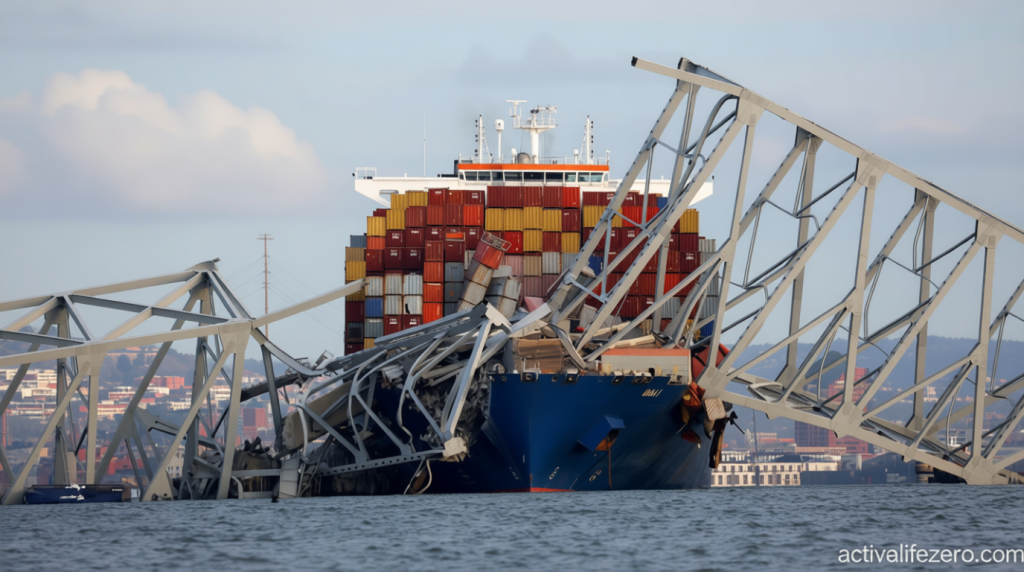
Justice Department Charges in Key Bridge Collapse
Justice Department announces criminal charges in Baltimore – The Justice Department has filed criminal charges in the aftermath of the deadly Francis Scott Key Bridge collapse in Baltimore. Two years after a container ship struck the bridge, leading to six fatalities and severe damage, federal prosecutors have named two Singapore-based firms and the vessel’s technical superintendent as defendants. The incident, which disrupted a vital shipping route, now faces legal scrutiny over alleged lapses in safety procedures and operational oversight. Officials emphasize that the charges highlight the systemic risks that contributed to the disaster, raising questions about accountability in maritime operations.
Accused Entities and Their Alleged Roles
Radhakrishnan Karthik Nair, an Indian national, stands alongside Synergy Marine Pte Ltd and Synergy Maritime Pte Ltd in the criminal case. The companies, based in Singapore and Chennai, India, are accused of manipulating safety documentation to conceal potential hazards. Nair, who oversaw the “Dali” vessel, is charged with willfully hiding a critical fault in its power system. Prosecutors argue he misled investigators by claiming ignorance of the ship’s reliance on a flushing pump, despite evidence pointing to his direct involvement in the incident.
“The government’s investigation revealed intentional efforts to downplay safety risks,” said Kelly O. Hayes, US Attorney for the District of Maryland, during a press briefing. She noted that the companies’ actions involved false statements and a failure to report known dangers. “We will use every tool at our disposal to track Nair, who remains in India,” Hayes added, underscoring the Justice Department’s commitment to holding the responsible parties accountable.
Technical Failures and Investigative Findings
FBI and Coast Guard teams initiated a criminal probe following the collision, which led to the arrest of non-US crew members. The focus of the inquiry centers on the ship’s modified systems, which prioritized operational efficiency over safety standards. The “Dali” used a flushing pump to supply fuel to two of its generators, a design flaw that became fatal when the vessel lost power. Investigators maintain that this dependency on a single system created a vulnerability that was not adequately addressed.
The Justice Department asserts that the ship’s failure to restart automatically after a blackout was a key factor in the disaster. “If the Dali had not depended on this flushing pump, the power loss would have been temporary,” the department explained in a statement. A loose wire connection, identified as the primary cause of the outage, triggered a cascade of system failures. The National Transportation Safety Board likened this oversight to a misplaced bolt in the Eiffel Tower, emphasizing its small scale but catastrophic impact.
Structural Vulnerabilities and Legal Disputes
While the bridge’s structural weaknesses were not evaluated by the Maryland Transportation Authority, they are now central to the case. Synergy Marine and Synergy Maritime argue the incident was primarily due to the loose wire, which they claim was beyond their control. “The probable cause of the collision was an electrical defect, not the companies’ actions,” they stated in a joint release. However, the Justice Department’s charges suggest a broader pattern of negligence and deliberate understatement of safety risks.
Jimmy Paul, a Special Agent with the FBI’s Baltimore Field Office, criticized the entities for prioritizing speed over thoroughness. “They failed to document, investigate, and report significant hazards,” he said, pointing to the flushing pump as a critical oversight. The obstruction charge against Nair rests on his conflicting testimony, which contradicts the evidence of his role in the ship’s power system. This legal battle will determine whether the companies’ actions were mere accidents or calculated missteps.
Implications for Maritime Safety and Legal Proceedings
The criminal case has sparked discussions about the need for stricter maritime safety regulations. The Justice Department’s focus on the companies’ transparency violations underscores a shift toward holding organizations accountable for systemic risks. As the legal proceedings continue, the case may influence future safety protocols and liability standards for vessel operators. The civil lawsuit filed by Baltimore adds another layer of financial accountability, aiming to recover costs from the incident’s aftermath.
With the charges now formalized, the Justice Department has set a precedent for addressing corporate negligence in transportation disasters. The trial will examine the technical and managerial failures that led to the collapse, potentially shaping how similar incidents are investigated and prosecuted. As the case progresses, the spotlight remains on the intersection of engineering oversight and corporate responsibility in the wake of the tragedy.
