
Judge dismisses charges against Kilmar Abrego Garcia, saying Todd Blanche spurred a ‘tainted investigation’
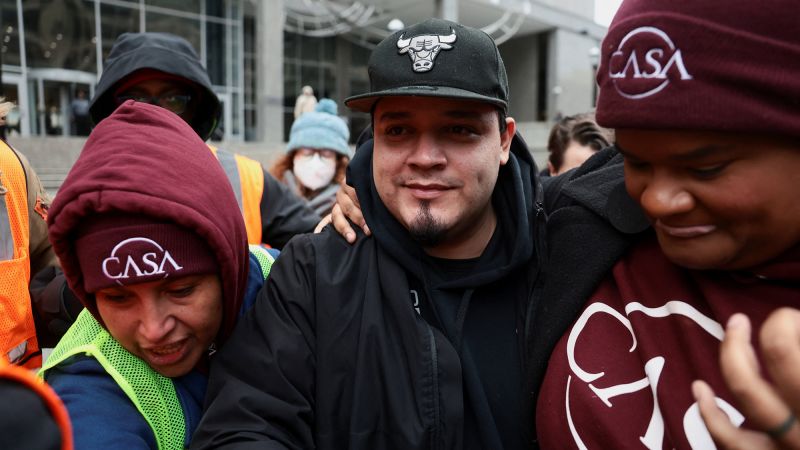
Judge Dismisses Charges Against Kilmar Abrego Garcia, Calling Investigation ‘Politically Motivated’
Judge dismisses charges against Kilmar Abrego – A federal judge in Tennessee has ruled to dismiss the criminal charges against Kilmar Abrego Garcia, attributing the case to a ‘tainted investigation’ initiated by then-acting Attorney General Todd Blanche. The decision, issued on Friday, marks a significant shift in the legal battle that has spanned years, highlighting the Trump administration’s controversial deportation practices and the role of judicial oversight in challenging them.
The Deportation That Sparked Legal Action
Kilmar Abrego Garcia, a Salvadoran national, was illegally deported by the Trump administration in March 2025 to a notorious mega prison in El Salvador. His journey to the United States began in 2011 when he entered the country without proper documentation. However, his legal status shifted in 2019 after an immigration judge determined that he had been targeted by a gang in El Salvador for his family’s pupusa business, which threatened his life. This ruling temporarily halted his removal to the country. Despite this, the administration proceeded with his deportation last year, defying judicial orders that had previously barred the action.
Abrego Garcia was arrested by U.S. officials on March 12, 2025, and placed on a plane to El Salvador days later. A federal judge had mandated that the administration bring him back to the United States, but officials resisted compliance for months. Eventually, a partnership with El Salvador led to his return in early June. Upon reentering the U.S., he was charged with two counts of human smuggling, allegations that his legal team argued were rooted in political bias rather than solid evidence.
The Tainted Investigation and Legal Arguments
On Friday, Judge Waverly Crenshaw dismissed the criminal case against Abrego Garcia, citing a “tainted investigation” by Todd Blanche, who at the time was serving as acting attorney general. The judge emphasized that the charges were not based on objective facts but were instead driven by the administration’s internal missteps. “The objective evidence here shows that, absent Abrego’s successful lawsuit challenging his removal to El Salvador, the Government would not have brought this prosecution,” Crenshaw wrote in his opinion.
“The evidence before this Court sadly reflects an abuse of prosecuting power,” Crenshaw added, underscoring the role of political influence in shaping the case. The dismissal underscores a pivotal moment in a legal saga that has grown increasingly complex, with Abrego Garcia becoming a symbol of the Trump administration’s aggressive deportation policies.
Abrego Garcia’s attorneys contended that the charges were selectively pursued to target him due to the administration’s public and private missteps. They argued that the government had reopened the investigation only after Abrego successfully vindicated his rights through a legal challenge, which the judge acknowledged. “The Government’s decision to pursue these charges was not grounded in fairness but in a desire to retaliate against Abrego for his earlier legal victory,” one of his defense lawyers stated.
A Political Campaign Under Scrutiny
The ruling has sparked renewed debate about the administration’s approach to immigration enforcement. Sean Hecker, a lawyer representing Abrego Garcia, criticized the White House and its legal advisors for using the case to demonstrate their commitment to swift deportation. “We are so pleased that he is a free man. Justifiably so. As this administration continually chips away at our democracy, we remain grateful for an independent judiciary that will dispassionately apply binding precedent to the facts,” Hecker said in a statement.
The case also exposed the broader strategy of the Department of Homeland Security, which has been attempting to deport Abrego Garcia to various African countries. Despite Costa Rica’s willingness to accept him and grant him legal status, the administration’s efforts to send him elsewhere were blocked by the release conditions imposed by Crenshaw. The Maryland judge overseeing Abrego’s immigration case has frequently mentioned the possibility of him self-deporting if his criminal charges are dismissed, a scenario now within reach.
Abrego Garcia’s legal team had previously sought to have Blanche testify in an evidentiary hearing to demonstrate the government’s selective enforcement. However, the defense relied on Blanche’s public comments to show that the Justice Department’s action was a direct response to the administration’s mistake in deporting him earlier in the year. “Blanche’s words directly confirm that the investigation was not impartial but was instead a strategic move to retaliate against Abrego for his legal victory,” a defense attorney noted.
Implications for the Judiciary and Immigration Policy
While judges rarely dismiss criminal cases based on claims of bad faith, Crenshaw’s decision sets a precedent that could influence future cases. His ruling highlights how the government’s actions can be scrutinized for their adherence to legal standards, particularly when they appear to be politically motivated. The case has also raised questions about the independence of the Justice Department, with critics accusing it of allowing executive pressure to shape legal outcomes.
Abrego Garcia’s story has been a focal point in the ongoing debate over immigration policy and judicial independence. His deportation, followed by the government’s reversal of the decision, illustrates the dynamic nature of U.S. immigration enforcement. The current dismissal not only frees him from criminal liability but also serves as a reminder of the power of the courts to hold the executive branch accountable.
With the Tennessee judge’s order, Abrego Garcia is no longer bound by the release conditions that had previously limited his movement. This development opens the door for further legal maneuvering, particularly regarding his potential self-deportation to Africa. As the administration seeks to finalize its immigration agenda, the case remains a critical test of the judiciary’s ability to resist political pressures.
The outcome of Abrego Garcia’s case is likely to have broader implications for the Trump administration’s deportation strategy. By dismissing the charges, the court has effectively called out the government’s use of legal tools to advance its policy goals. The decision could embolden other immigrants facing similar accusations, providing them with a roadmap to challenge their cases on grounds of selective enforcement.
Meanwhile, the administration continues to grapple with the consequences of its actions. While Abrego Garcia’s case has been resolved, the broader legal and political landscape remains in flux. The role of the Justice Department in shaping immigration policy has come under increased scrutiny, with Abrego Garcia serving as a central figure in this evolving narrative. As the case fades from public attention, the impact of the judge’s decision will linger, serving as a testament to the resilience of the legal system in the face of political influence.
