
How the 2026 primaries are reshaping the Democratic Party
2026 Primaries Redefine Democratic Party Dynamics
How the 2026 primaries are reshaping – As the 2026 Democratic primaries intensify, the ideological divide within the party has become more pronounced, with New York’s upcoming vote serving as a pivotal moment in the contest between progressive and centrist factions. Across states like Maine and California, primary elections have increasingly reflected deeper political rifts, splitting the party along generational and philosophical lines. This trend has created a new landscape for Democratic politics, where internal battles for influence are no longer confined to debates but manifest in tangible electoral outcomes.
Rise of Progressive Candidates
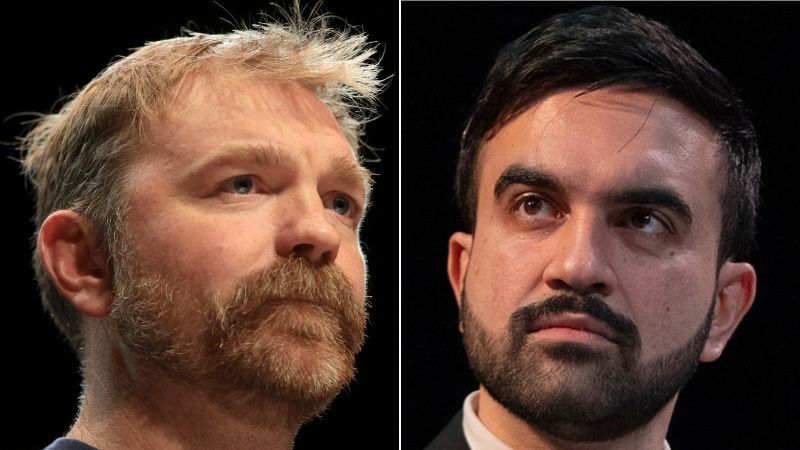
The left has emerged as a dominant force in recent primary races, securing key victories that signal a shift in the party’s direction. In Maine, Graham Platner’s Senate nomination has been bolstered by progressive support, while Zohran Mamdani’s mayoral bid in New York City highlights the growing power of grassroots movements. These wins are part of a broader pattern, with progressive candidates consistently outperforming centrist rivals in traditionally Democratic strongholds. However, the impact of this momentum remains uncertain, as the outcomes of congressional races in New York could further tilt the balance in favor of the left.
“The formal party structure is getting weaker and outside groups are getting stronger,” said Liam Kerr, co-founder of Welcome, a group advocating for Democratic centrists. “We have not been in a place (before) where entire ecosystems of groups are effectively running parties within the parties in explicit, direct, factional warfare.”
While the left’s success has been notable, centrists have also made strides in critical races. Xavier Becerra’s gubernatorial win in California and Josh Turek’s Senate victory in Iowa demonstrate that the center remains a formidable contender. Despite these gains, the left’s overall dominance in primary contests suggests a changing power dynamic. Joseph Geevarghese, executive director of Our Revolution, attributed this surge to a combination of sustained grassroots efforts and the strategic development of progressive networks.
Historical Parallels and Strategic Shifts
Analysts draw parallels between the current situation and the early days of Donald Trump’s presidency. During that period, Democratic voters grew frustrated with the party’s inability to counter Republican policies, leading to the rise of the “Squad” in the 2018 midterms. David Wasserman, a senior political analyst for the Cook Political Report, noted that the left’s expansion today mirrors that historic momentum. “When President Trump is actually in office and Democratic voters are more frustrated with their party’s capabilities to block him, they go even further in the direction of the left,” Wasserman explained.
The 2026 primaries represent a continuation of this pattern, with progressive candidates gaining traction in areas that were once considered safe for Democrats. This phenomenon has raised concerns among centrists, who argue that the left’s influence in strongholds may not translate to success in more competitive districts. “There’s a difference between winning in a safe Democratic House district and being competitive nationally, and that’s the tension within the party,” said John Lawrence, former chief of staff to Rep. Nancy Pelosi.
Infrastructure of the Progressive Movement
One key factor in the left’s dominance is the robust infrastructure they have built to identify, support, and fund candidates. Organizations such as Our Revolution, founded by Sen. Bernie Sanders, and the Progressive Change Campaign Committee, linked to Sen. Elizabeth Warren, have created a system to train and elevate left-leaning contenders. Justice Democrats, aligned with figures like Rep. Alexandria Ocasio-Cortez, and Leaders We Deserve, established by gun control advocate David Hogg, also play crucial roles in this network. Together, these groups have formed a “conveyor belt” that ensures a steady flow of progressive candidates into the political arena.
“These are not candidates coming out of nowhere — a lot of these candidates have run for down-ballot offices and gained governing experience,” said Geevarghese, emphasizing the long-term investment in progressive leadership. “The left’s success this year reflects years of preparation and grassroots energy.”
Michael Kazin, a Georgetown University historian and author of “What It Took to Win,” highlighted the declining influence of traditional party organizations as a catalyst for this conflict. “They are basically an empty shell, so everybody can jump in with their organization, their money and their supporters,” Kazin observed. This fragmentation has allowed progressive and centrist factions to operate independently, often clashing in ways that redefine the party’s identity.
While the left has made significant gains, the centrist movement continues to assert its presence. Centrists argue that the party’s national strategy still relies heavily on moderate candidates to win in swing districts and secure control of the House and Senate. For example, in races where the outcome is less certain, centrists have traditionally held an edge by appealing to a broader coalition of voters. However, the rise of progressive candidates in safe seats has introduced complications, as their influence could challenge the party’s ability to maintain unity in more competitive races.
Long-Term Implications
The 2026 primaries are more than just a series of elections; they mark a fundamental shift in how the Democratic Party operates. Historically, the party has functioned as a coalition of diverse interests, but the current level of institutionalized conflict between left and center is unprecedented. This has led to a situation where the party’s internal dynamics are shaping its electoral strategy as much as external factors.
For progressives, the focus remains on consolidating power and expanding their influence. The success of candidates like Mamdani and Platner has validated the movement’s approach, but it also raises questions about sustainability. Will the left’s momentum continue in districts where the opposition is stronger, or will the centrist factions find ways to counter this trend? The answer may depend on how the party balances its ideological factions while maintaining electoral viability.
Centrists, meanwhile, are pushing back against the left’s dominance, emphasizing the need for pragmatic leadership in a polarized political climate. They argue that while progressive ideals are important, the party must also appeal to moderate voters to secure broader support. This tension is likely to persist as the 2026 primaries unfold, with the New York vote serving as a microcosm of the larger struggle. The results could determine whether the Democratic Party becomes increasingly left-leaning or retains a more centrist orientation.
The Future of Democratic Politics
As the party navigates this new era of factional warfare, the role of external groups is becoming more critical. These organizations provide the financial and organizational resources that traditional party structures have struggled to match. This has led to a situation where the Democratic Party is, in many ways, a battleground for competing ideologies, with each side vying for control over its future direction.
The 2026 primaries underscore the importance of voter engagement and the evolving relationship between candidates and their supporters. With the rise of social media and digital fundraising, the ability to mobilize grassroots energy has become a decisive factor in elections. The left’s success in this regard suggests that their approach is resonating with younger voters and those disillusioned with the status quo, while centrists may need to adapt their strategies to remain competitive.
Ultimately, the outcomes of these primaries will shape the Democratic Party’s trajectory for years to come. Whether the left’s influence will continue to grow or if centrists can reclaim their dominance depends on the party’s ability to integrate diverse perspectives while maintaining a cohesive strategy. As the 2026 elections approach, the Democratic Party stands at a crossroads, with the choices made in the coming weeks likely to define its future identity.
