
Bill Gates says he didn’t witness crimes but may have been in presence of Epstein victims
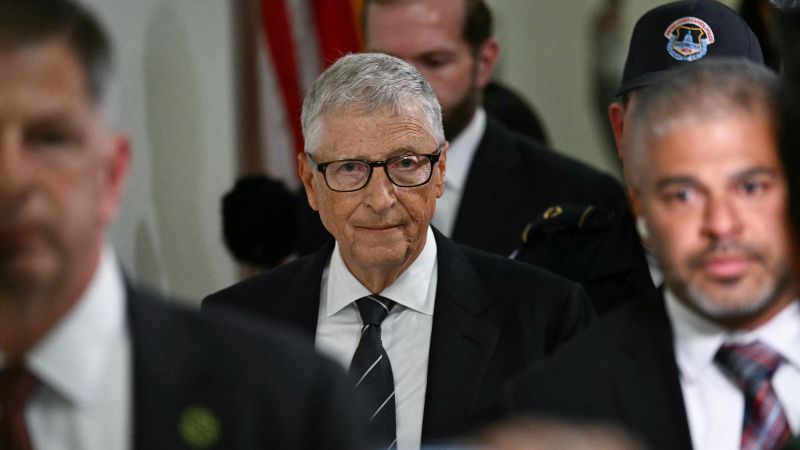
Bill Gates Testifies He Didn’t Witness Crimes but May Have Been Near Epstein Victims
Bill Gates says he didn t witness – A transcript of Bill Gates’ private interview with the House Oversight Committee has surfaced, revealing the Microsoft co-founder’s account of his interactions with Jeffrey Epstein. According to the document, Gates asserted that he never directly engaged with victims of the late financier’s alleged crimes, though he admitted to possibly being in their presence during certain occasions. The interview, which took place earlier this month on Capitol Hill, was part of the committee’s broader investigation into Epstein’s connections and the extent of his influence in political and financial circles.
Professional Relationship or Potential Involvement?
Gates described his relationship with Epstein as strictly professional, emphasizing that he never witnessed or took part in any sexual misconduct. However, Democratic Representative Robert Garcia challenged this during the session, noting that the committee’s findings suggest Epstein’s employees were also victims of abuse. This raises questions about whether Gates could have been in proximity to those affected by Epstein’s activities. “That’s a very good point,” Gates responded, acknowledging that he saw some of Epstein’s female staff at the end of a meeting on one of the financier’s private jets. He conceded that he may have been present when Epstein’s victims were around, though he did not claim to have seen them engaged in wrongdoing.
“I may have been in the presence of victims.”
The release of new Epstein documents by the Justice Department this year prompted the oversight panel to seek Gates’ testimony. These files raised concerns about his ties to Epstein, particularly as the financier’s criminal history became more prominent. Meanwhile, the committee also shared a transcript of Lesley Groff’s interview, Epstein’s longtime assistant, who described him as a “master manipulator” and admitted she was unaware of his crimes. Groff revealed that she had connected Epstein with former President Donald Trump, then a private citizen, via multiple phone calls over a decade. She stated she did not know the details of their conversations, though she confirmed their frequent communication.
Epstein’s Tactics and Gates’ Defense
Gates detailed how Epstein attempted to leverage personal information about him to gain influence. He recounted that the financier used details of his marital infidelity to pressure him into closer ties. This occurred shortly after Gates met Epstein in 2011, through Dr. Boris Nikolic, a trusted employee who Gates believes shared information about his two extramarital affairs. Gates claimed he was aware of Epstein’s “criminal conviction of a sexual nature” at the time but still pursued a professional relationship, believing the financier could help raise global health funding.
“I was aware the financier had a criminal conviction… but still said I was interested in pursuing a professional relationship.”
After cutting ties with Epstein in 2014, Gates recalled an instance where the financier emailed him seeking “reimbursement” for expenses tied to a woman he had an affair with. Gates said he informed his top executive, Larry Cohen, that they would not pay anything for Epstein’s claims. He also mentioned that Epstein drafted emails to himself in 2013 containing graphic, unverified allegations about Gates. These notes, filled with typos and harsh language, suggested Epstein accused him of facilitating sexual encounters and helping conceal a sexually transmitted infection from his wife. Gates, however, dismissed these claims as false, stating, “I never had an STD,” but admitted it’s possible he told Nikolic he was concerned about having one.
Regret Over Ignoring Epstein’s Reputation
Gates expressed regret over not fully considering Epstein’s criminal past when forming their relationship. He noted that despite Epstein’s attempts to invite him to his island or social events, he remained cautious due to the financier’s conviction. “I have regret that I didn’t factor that in to a greater degree,” he testified. Gates’ legal team argued that Epstein would have mentioned other affairs in the draft emails, which he claimed were used to compile negative information about him. “Epstein, when writing to himself, took every potential negative thing he knew… and some that are completely false,” Gates said, suggesting the emails were exaggerated or misleading.
The ongoing investigation has scrutinized Gates’ role in Epstein’s network, with the committee aiming to uncover any potential complicity. While Gates maintains his innocence, the evidence of Epstein’s manipulation and the presence of victims in his orbit continue to cast doubt. The panel’s inquiry also highlighted the broader issue of how Epstein’s influence extended into political circles, with Trump having long denied any wrongdoing linked to the financier. As the probe continues, Gates’ testimony remains a key piece of the puzzle, offering both defense and insight into Epstein’s methods.
Epstein’s Legacy and the Search for Truth
Lesley Groff’s testimony added another layer to the story, painting Epstein as a calculating figure who skillfully concealed his activities. She described how Epstein operated behind the scenes, connecting with Trump over the years without revealing his full history. The assistant’s account underscores the complexity of Epstein’s relationships, where personal and professional boundaries often blurred. Meanwhile, Gates’ acknowledgment of being near victims—though not directly involved—raises questions about the role of high-profile figures in Epstein’s network.
The committee’s release of these transcripts has intensified public scrutiny of Epstein’s associates, including Gates. While the Microsoft co-founder denies any wrongdoing, the detailed accounts from both his interview and Groff’s statements provide a clearer picture of the environment in which Epstein thrived. The investigation seeks to determine whether Gates’ connections to Epstein were purely professional or if they hint at deeper involvement in the financier’s schemes. As the inquiry progresses, the facts surrounding Gates’ presence and potential knowledge of Epstein’s crimes will be critical in shaping the narrative.
CNN has reached out to Gates’ and Groff’s representatives for further comments, but as of now, the transcripts stand as the primary source of their statements. Gates’ testimony, combined with Groff’s insights, has sparked renewed debate about the extent of Epstein’s reach and the complicity of those who worked with him. For now, the focus remains on the Microsoft co-founder’s claim that he never witnessed crimes but may have been in the presence of victims, a distinction that could influence the public’s perception of his role in the scandal.
