
Smartphones arrived just before the US fertility rate plunged. One study says it’s a direct cause
Smartphones Linked to US Fertility Rate Decline
Smartphones arrived just before the US fertility – As smartphones arrived just before the U.S. fertility rate plunged, a new study suggests their impact may be a direct cause. Over the past few decades, the U.S. has seen a steady decline in birth rates, prompting researchers to investigate possible explanations. While factors like rising living costs, birth control access, and economic shifts have been cited, a recent analysis by Caitlin Myers, an economist at Middlebury College and the National Bureau of Economic Research, points to smartphones as a pivotal influence. The study explores how the rise of mobile technology coincided with the nation’s fertility drop, offering a fresh perspective on the issue.
The Timing of Technological Shifts
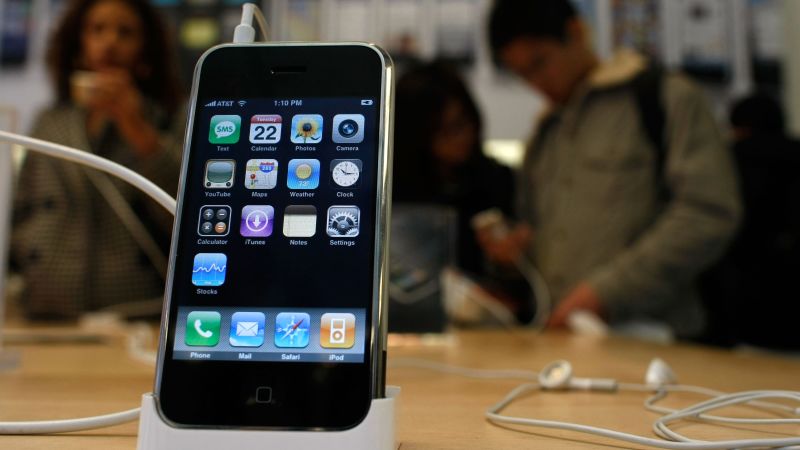
The researchers identified 2007 as a critical year, marking both the iPhone’s debut in the U.S. and the start of the Great Recession. Initially, many believed the economic downturn was the primary driver of the fertility decline. However, Myers and her team observed that the rate continued to fall even as recovery efforts began. This led them to question whether the smartphone’s introduction had fundamentally changed human behavior, affecting how individuals form relationships and make family decisions.
Hooper, Myers’ stepson, played a key role in the study. While working on his senior thesis, he examined how smartphones might influence social interactions among younger generations. He noted that his younger siblings interacted more through screens than in person, creating fewer opportunities for unplanned encounters. This insight prompted Myers to analyze the correlation between smartphone access and fertility trends, focusing on the spread of AT&T mobile broadband—essential for early iPhone use—and its impact on birth rates between 2007 and 2011.
Quantifying the Impact of Smartphones
The study found a notable difference in fertility rates between counties with high smartphone access and those with limited use. In regions where over 90% of residents had early access, the birth rate among 15- to 19-year-olds dropped by 26% over four years, compared to a 14% decrease elsewhere. For women in their 20s, the decline was 15% in high-access areas versus 10% in low-access ones. Even older demographics showed a slight shift, with fertility rates declining in smartphone-dense regions and increasing in areas with less coverage.
According to the findings, the early adoption of smartphones accounted for up to half of the U.S. fertility decline during this period. The researchers argue that the technology has altered how people spend time and prioritize interactions, potentially reducing the likelihood of unplanned pregnancies. Hooper noted that smartphones may have shifted focus from in-person connections to digital ones, making it easier for individuals to engage in virtual activities instead of physical ones that could lead to reproduction.
While the study’s conclusions are provocative, some experts acknowledge the role of smartphones in reshaping relationship dynamics. Dr. [Name], a social dynamics specialist, agrees that mobile devices have influenced how young people form connections. However, they emphasize that the fertility decline is part of a broader trend involving changing societal norms, economic pressures, and evolving gender roles. “Smartphones may amplify these shifts, but they are not the sole cause,” the expert added, highlighting the interconnected nature of modern challenges.
Myers and Hooper’s work raises important questions about the intersection of technology and human behavior. By isolating the smartphone’s role in the fertility decline, they aim to better understand how digital tools influence decisions about intimacy and family planning. Their research underscores the need to consider both technological and cultural factors when analyzing long-term demographic changes. As the U.S. continues to grapple with low birth rates, the study offers a compelling angle to examine the role of smartphones in this complex phenomenon.
