
RFK Jr. orders passenger from hantavirus-stricken cruise to remain in quarantine in Nebraska, despite CDC recommendation
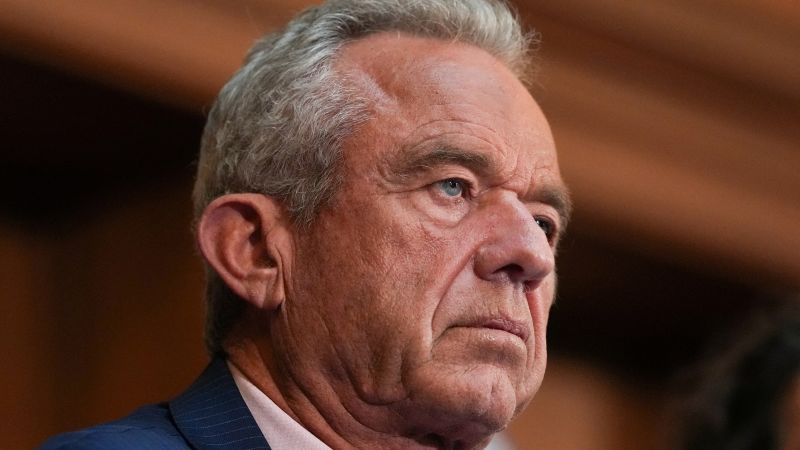
RFK Jr. Maintains Federal Quarantine for Hantavirus-Exposed Passenger Despite CDC Approval
RFK Jr orders passenger from hantavirus – In a recent decision, Robert F. Kennedy Jr., the U.S. Health and Human Services Secretary, has enforced a federal quarantine order for Angela Perryman, a U.S. citizen who contracted hantavirus while aboard the MV Hondius cruise. Perryman, 47, was initially cleared by a federal health expert to return home to Florida, but Kennedy’s directive has kept her in isolation at the National Quarantine Unit at Nebraska Medical Center. This move has sparked controversy, with Perryman expressing frustration over what she calls a “political stunt” and a lack of trust in public health authorities.
Quarantine Dispute: State vs. Federal Authority
Perryman is among 18 American passengers who were relocated to Nebraska Medical Center in early May after exposure to a rare hantavirus strain. While some opted to remain voluntarily for the full 42-day quarantine period, the majority were allowed to leave the facility provided their home states agreed to daily symptom monitoring and 24/7 oversight through June 21. Ten passengers have since returned to their states under these conditions, but Perryman’s case has remained unresolved.
The crux of the dispute lies in the differing monitoring protocols between Florida and the federal government. Florida’s health department proposed a less intensive approach, including once-daily telehealth check-ins, whereas the CDC had mandated continuous 24/7 surveillance. Perryman’s situation highlights the tension between state autonomy and federal mandates, with her feeling caught in the middle of a bureaucratic conflict. “At this point, it’s just a state-federal spat, and I’m just a hostage,” she told CNN, emphasizing her sense of entrapment.
Medical Review and CDC Recommendations
On Monday, Kennedy signed an order reaffirming the federal quarantine for Perryman. This followed a medical review conducted by Dr. Michael Bell, a CDC quarantine expert, who concluded that the less restrictive home monitoring plan proposed by Florida would suffice. Bell’s findings, outlined in a nine-page report, suggested that the state’s approach would adequately protect public health by preventing the spread of the virus, as long as Florida agreed to take responsibility for monitoring.
Bell’s conclusion was supported by testimony from Dr. Christopher Braden, acting director of the CDC’s National Center for Emerging and Zoonotic Infectious Disease, and Dr. David Fitter, head of the agency’s Division of Global Migration Health. Their assessments indicated that Perryman’s risk to the public was minimal under the proposed Florida plan, which relies on periodic telehealth assessments rather than constant supervision. “The testimony at the medical hearing persuaded me that measures CDC is imposing on Ms. Perryman are not the least restrictive available,” Bell wrote, advocating for her return home.
Contradictory Rulings and Public Health Justifications
Despite Bell’s recommendation, Kennedy maintained the federal quarantine, citing the necessity of stringent oversight to ensure public safety. His order did not address the specific details outlined in Bell’s report, leaving critics to question the decision’s rationale. According to a statement from the HHS spokesperson, Courtney Spencer, the administration’s choice was based on the medical reviewer’s findings and the guidance from Acting CDC Director Dr. Jay Bhattacharya. “In the absence of proper home monitoring by state authorities, the Administration’s quarantine order is necessary to ensure both Ms. Perryman’s and her community’s wellbeing,” Spencer explained.
Perryman, however, has accused the health system of using her as a “prop” and making inconsistent promises. She described her experience as one of betrayal, noting that the federal government had initially allowed her to leave but later reversed its decision. “If it had been from the beginning that ‘this is the reason that we need to do this, and there is an actual scientific justification,’ then that would have been OK,” she said. “If there was a scientific reason for this, if I could see that, yes, this actually does further public health, I would have agreed.”
Nebraska Medical Center’s Role and Ongoing Uncertainty
Nebraska Medical Center, which hosts the National Quarantine Unit, has stated that any inquiries regarding quarantine orders should be directed to the CDC. The center has not publicly commented on the specific case of Perryman, leaving the situation to be managed by federal authorities. Meanwhile, the Florida Department of Health has yet to respond to CNN’s request for comment on the matter, adding to the uncertainty surrounding the case.
Perryman’s ordeal has raised broader questions about the balance between federal oversight and state autonomy in public health crises. While the CDC’s original guidelines were designed to minimize the risk of transmission, the extension of her quarantine order has been criticized as unnecessary. The decision to keep her in Nebraska underscores the political dimensions of health policy, with some arguing that the federal government is prioritizing control over scientific flexibility.
Public Health Implications and Passenger Experiences
Many of the 18 passengers initially sent to Nebraska have since returned to their homes, with some expressing relief at being able to resume normal life. However, Perryman’s case has become a symbol of the challenges faced by individuals caught in the crossfire of state and federal health mandates. Her experience has also led to a loss of trust in medical professionals, as she claims the CDC has failed to provide clear reasoning for the extended quarantine.
Public health experts have debated the merits of both approaches. While continuous monitoring ensures maximum caution, especially with a rare and potentially severe virus like hantavirus, some argue that the risk is low enough to warrant a more lenient plan. Hantavirus, which can cause a deadly respiratory illness, is transmitted through rodent droppings, making it crucial to monitor symptoms in the early stages of infection. However, Perryman’s case has been extended beyond the original 42-day period, raising concerns about the consistency of the quarantine policy.
As the situation continues, the debate over federal versus state authority in public health remains unresolved. Perryman’s case illustrates the complexities of managing outbreaks in a country with decentralized health systems. While the CDC’s initial recommendations were based on scientific evidence, the final decision appears to be influenced by political considerations. This has left many questioning whether public health decisions are being made with transparency and fairness.
Conclusion: A Test of Trust and Policy
Angela Perryman’s quarantined status in Nebraska has become a focal point for discussions about the role of the federal government in health emergencies. Her story highlights the personal and professional toll of such decisions, as well as the broader implications for public health policy. While the CDC’s medical review suggested that her return home was feasible, the federal order has kept her isolated, with no clear timeline for release. As the debate continues, Perryman remains a key figure in the evolving narrative of hantavirus containment and the interplay between science and politics in health governance.
Her experience has also prompted calls for a reevaluation of quarantine protocols, with some advocates arguing that the current system is overly rigid. The incident underscores the importance of clear communication and collaboration between federal and state authorities to prevent situations where individuals feel trapped by conflicting guidelines. As the 42-day quarantine period extends, the outcome of Perryman’s case could influence future public health measures and set a precedent for how quarantines are enforced in the U.S.
Quotes from Angela Perryman
“I feel like I am in prison, and the health system has used me as a prop and a political stunt.”
“If there was a scientific reason for this, if I could see that, yes, this actually does further public health, I would have agreed.”
The ongoing conflict between federal and state health policies has placed Perryman in a difficult position, with her advocating for a more transparent and evidence-based approach. As the case unfolds, it will be crucial to determine whether the federal quarantine order is a necessary safeguard or an overreach that undermines public trust in the health system.
