
Gen Zers are more risk-averse. Experts say it’s ruining their dating lives
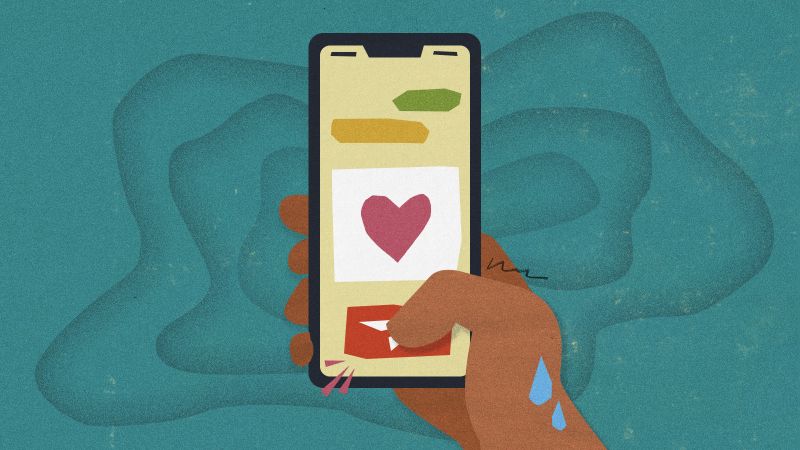
Gen Z Dating Dilemma: Fear of Rejection and the Social Media Effect
Gen Zers are more risk averse – Gen Zers, the digital generation raised on constant connectivity, are increasingly hesitant to take emotional risks in their relationships. This caution, while rooted in valid concerns, is creating a barrier to meaningful connections, according to experts. The fear of public humiliation, rejection, or emotional vulnerability is shaping how young people approach romance, often to their own detriment.
The Psychology of Avoiding Risk
When Jayden first developed feelings for a friend, the anxiety of potential failure overwhelmed her. “I kept imagining the worst—like a breakup or being laughed at for my vulnerability,” she said, sharing her story anonymously to protect her privacy. Yet, as her partner continued pursuing her, she discovered that her fear had been hindering her ability to embrace the relationship. “It wasn’t the relationship itself that was scary, but the idea of what might go wrong,” Jayden explained.
“People have always feared rejection, but today, that fear is amplified by the visibility of modern life,” said Paul Eastwick, a psychology professor at the University of California, Davis, and director of the attraction research lab. “The question isn’t just, ‘What if I’m rejected?’ It’s, ‘What if I’m judged?’”
Eastwick’s insights align with findings from a study by Brigham Young University’s Wheatley Institute and the Institute for Family Studies, which revealed that only about a third of young men and 20% of young women aged 22 to 35 feel confident in initiating romantic interactions. The research highlights a growing reluctance to engage in the uncertainties of dating, a shift that experts argue could be linked to broader societal pressures.
How Social Media Shapes Fear
For Gen Z, the internet has transformed rejection into a public spectacle. Unlike past generations, who faced judgment within their social circles, today’s youth are exposed to a global audience that can amplify embarrassment. “If you’re rejected in person, it’s a private moment,” said Gabriel Rubin, a justice studies professor at Montclair State University. “But on social media, it’s like the whole world sees your vulnerability.”
Rubin’s study, conducted through 108 interviews from November 2022 to April 2025, found that Gen Zers perceive more dangers in everyday life than their predecessors. These dangers range from personal insecurities to the fear of being misinterpreted online. “They’re hyper-aware of how their actions are perceived,” Rubin noted. “Every move is scrutinized, and that creates a pressure to avoid mistakes.”
This heightened awareness has led to the emergence of new dating rituals, such as “quiet relationships” and “soft launches,” where young people test connections before fully committing. Damian Bertrand, a 21-year-old reporter from South Carolina, described this trend as a way to minimize risk. “I’m not just worried about embarrassing myself, but also about accidentally making someone uncomfortable,” he said. “The goal is to stay safe, even if it means staying alone.”
The Cost of Avoiding Risk
Risk aversion, while a natural human trait, is becoming more pronounced in Gen Z. Richard Weissbourd, a child and family psychologist at Harvard Graduate School of Education, emphasized that relationships are essential for personal growth. “Learning to navigate close connections teaches us about ourselves and the world,” he said. “It’s one of the most valuable parts of being human.”
“Whether it’s romantic or platonic, the ability to form deep bonds is crucial,” Weissbourd added. “But when fear overshadows opportunity, it limits how we grow.”
Gen Z’s digital-native upbringing has made them acutely aware of the consequences of missteps. Every message, every photo, and every interaction is a potential source of public critique. “If you’re rejected, it’s not just a personal setback—it’s a social one,” said Rubin. “This creates a cycle of overthinking, where even the smallest actions are weighed against potential embarrassment.”
Experts warn that this risk aversion is not just a temporary trend but a cultural shift. The loneliness epidemic, which has intensified in recent years, may be exacerbated by Gen Z’s reluctance to engage in emotional risk-taking. “Young people today are more connected than ever, yet more isolated,” said Weissbourd. “The fear of vulnerability is keeping them from building the relationships that could alleviate that loneliness.”
Reevaluating the Role of Risk in Love
While risk is an inherent part of life, younger generations are struggling to balance it with certainty. Rubin pointed out that the concept of risk has become more complex for Gen Z. “They’re not just avoiding danger—they’re avoiding any possibility of discomfort,” he said. “This mindset makes them hesitant to try new things, even in love.”
The study also revealed that many Gen Zers internalize their fears, often prioritizing self-protection over spontaneity. “They’re not just avoiding rejection; they’re avoiding the emotional process of falling in love,” Rubin explained. “It’s a fear of being exposed, of not having control over the outcome.”
Yet, some argue that this caution is a necessary adaptation. “The world is more unpredictable now, with economic instability and mental health challenges,” said Eastwick. “It makes sense for young people to be cautious, but the problem arises when that caution becomes an obstacle to connection.”
Despite the challenges, there are efforts to counteract this trend. Some Gen Zers are experimenting with dating apps that offer privacy settings or anonymous interactions, allowing them to gauge interest without fear of immediate exposure. “It’s a way to test the waters without risking too much,” said Bertrand. “But it’s still not the same as taking a real chance.”
Towards a New Understanding of Risk
Experts encourage Gen Z to reframe their view of risk. “Taking a chance on love isn’t about being fearless—it’s about being present,” said Weissbourd. “The key is to recognize that some risks are worth it for the potential of growth and connection.”
Rubinstein’s research, presented at the Society for Risk Analysis’ 2025 Annual Meeting in Washington, DC, suggests that education and exposure could help shift this perspective. “If we teach young people to see risk as part of the journey rather than the enemy, they might be more willing to step out of their comfort zones,” he said.
As Gen Z navigates the complexities of modern dating, the challenge lies in balancing self-preservation with the desire for meaningful relationships. While social media has brought transparency and global visibility, it has also heightened the stakes of rejection. “The irony is that the tools meant to connect us are also making us more anxious,” Eastwick said. “But with awareness, we can turn that anxiety into opportunity.”
In the end, the question remains: is Gen Z’s caution a safeguard or a limitation? For Jayden, the answer was clear. “When I finally took the risk, it wasn’t just about love—it was about trusting myself again,” she said. “Maybe the next step is learning to embrace the uncertainty.”
As the study continues to gain attention, it raises important questions about how to foster confidence in a world that feels increasingly judgmental. Whether through personal growth, social media reform, or new dating strategies, the path forward may involve helping Gen Z see that risk is not just a threat, but a chance to grow—and to connect.
