
Brain impacts on former elite soccer players may worsen mental health and focus in midlife
Soccer Players Face Potential Brain Health Challenges in Midlife, New Study Suggests
Brain impacts on former elite soccer – While much attention has been directed toward American football and its effects on the brain, emerging evidence indicates that soccer athletes may also experience neurological consequences. According to fresh research presented at the July 2026 Alzheimer’s Association International Conference in London, retired professional soccer players demonstrate signs of possible brain-related impacts during their middle years. This investigation shifts focus toward a globally beloved sport that has received comparatively less scientific scrutiny than tackle football.
Initial Findings Reveal Early Neurological Symptoms
The preliminary study indicates that neurological symptoms might appear in soccer players sooner than commonly anticipated. Among the 142 former professional athletes examined—comprising 126 men and 16 women between the ages of 30 and 60—researchers observed several notable patterns. The abstract, which outlines initial results and has not yet undergone peer review for journal publication, notes that ex-players showed greater likelihood of experiencing anxiety, depression, and difficulties with cognitive functions such as thinking and decision-making when compared to individuals without contact sport backgrounds.
Lead researcher Caleigh Lynch, who serves as a research technician at both Imperial College London and the UK Dementia Research Institute Centre for Care Research & Technology, explained the uncertainty surrounding causation.
“We don’t know if this is something that’s due to playing soccer for a long time and those repetitive head impacts, or is it something that is intrinsically different for people who decide to player soccer professionally and who are good at soccer,”
she stated.
Brain Scans Show Structural Differences
The investigation utilized multiple assessment methods, including questionnaires, clinical evaluations, and neuroimaging. Although researchers found no substantial effects on overall cognition—which encompasses abilities like memory retention and attention span—brain imaging revealed reduced gray matter volume. Gray matter serves as the brain’s primary information processing center. The decreased gray matter appeared in areas responsible for memory, decision-making, attention, and emotional regulation when compared to non-contact sport participants.
Dr. Thomas Parker, the senior study author and a clinical lecturer and consultant neurologist at Imperial College London and the UK Dementia Research Institute Centre for Care Research & Technology, emphasized the significance of examining midlife athletes.
“Studying people in detail before that stage, you can get an idea of a trajectory before things like dementia become apparent,”
he noted, highlighting that most previous research has concentrated on individuals beyond age 70, when dementia manifestations typically surface.
Headers and Repetitive Head Impacts
While these structural brain variations and elevated psychological symptom reports might stem from factors unrelated to soccer, they could alternatively signal neurological consequences from repeated head injuries. Dr. Michael Alosco, codirector of clinical research for the Boston University CTE Center and vice chair of research for neurology, was not connected to this investigation but commented on its importance.
“Seeing more research on other sports, including soccer, perhaps the world’s most popular sport, is really important to see if the risks apply to those sports too,”
he observed.
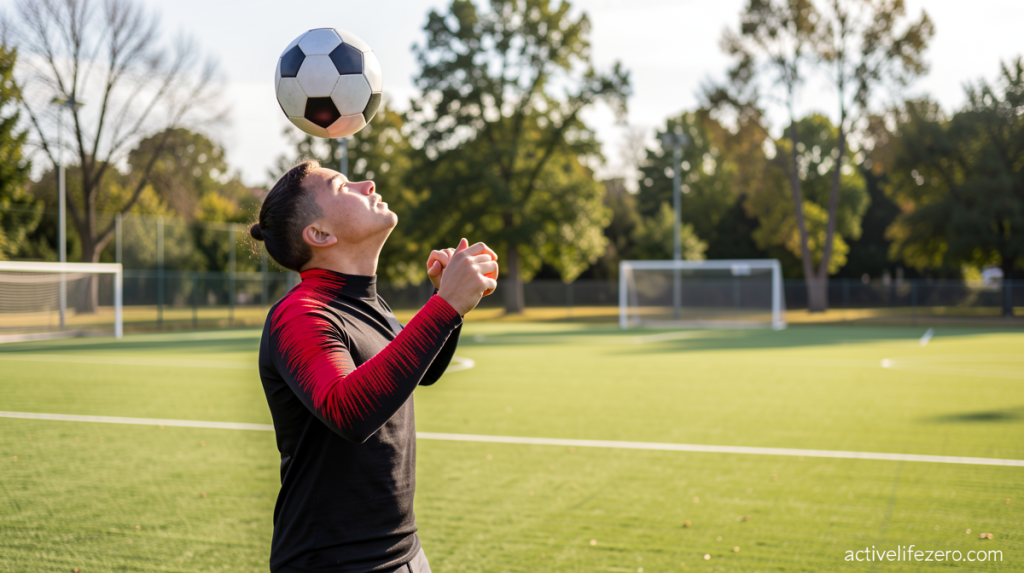
Contrary to popular belief, concussions may not represent the primary concern in soccer. Dr. Alosco clarified that while concussions can produce severe outcomes for certain individuals, the majority of people recover completely. The real issue involves cumulative head impacts throughout an athlete’s career. In soccer, these impacts originate from player collisions and, significantly, from “headers”—when players strike the ball with their heads.
Preliminary Data Points to Future Research
The results mirror patterns observed in American tackle football research, where athletes frequently report psychiatric symptoms like anxiety and depression at younger ages. Nevertheless, the current data remains preliminary. Scientists plan to examine larger participant groups, conduct additional testing, and monitor individuals over extended periods to better understand long-term impacts. Researchers across various athletic disciplines continue investigating whether these symptoms directly result from head impacts or correlate with other athlete-related factors, with further studies undoubtedly required to clarify these relationships.
