
South Korea to invest $576 billion in AI chip production with Samsung and SK Hynix
South Korea to Invest $576 Billion in AI Chip Production with Samsung and SK Hynix
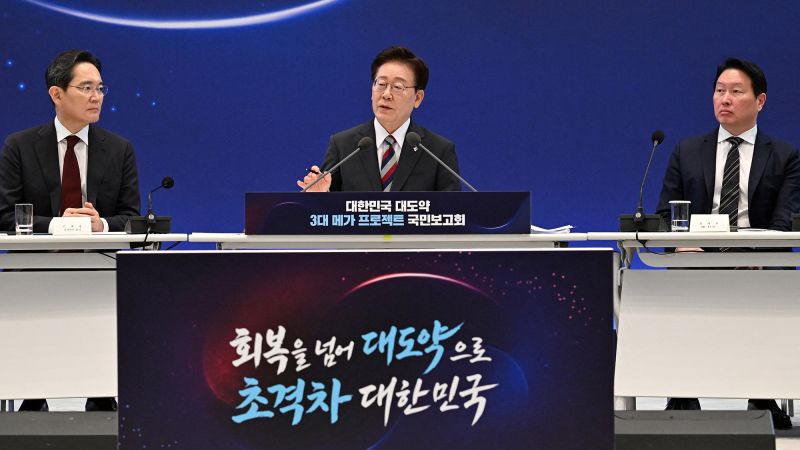
South Korea to invest 576 billion – South Korea has unveiled a transformative initiative aimed at bolstering its position in the global AI chip industry, with a total investment exceeding $576 billion planned over the coming years. President Lee Jae Myung’s address on Monday highlighted a strategic shift toward semiconductor manufacturing and artificial intelligence development, emphasizing the need to outpace competitors in critical technology sectors. This move is not only about enhancing technical capabilities but also addressing economic imbalances by expanding industrial hubs beyond the capital region.
President Lee’s Vision for Technological Sovereignty
The president’s declaration signifies his most ambitious effort to date, linking AI innovation with infrastructure development to drive long-term growth. “We must secure the core elements of AI faster than any other country,” he stated during a televised press conference. “Semiconductors, physical AI, and AI data centers are the triple axis for our great leap forward.” By prioritizing these three pillars, Lee aims to position South Korea as a global leader in next-generation computing technologies while ensuring regional economic equity.
Central to this strategy is the collaboration between the government and leading tech firms. Samsung Electronics and SK Hynix, the world’s two largest memory chipmakers, have pledged to contribute significantly to the project. The combined investment from these companies, alongside local partners, will fund the construction of two new chip fabrication sites in South Korea’s southwest region. This geographic expansion is intended to alleviate pressure on existing production facilities in the Seoul metropolitan area, which have reached capacity.
Geographic Diversification and Regional Partnerships
President Lee’s plan includes partnerships with local governments in Gwangju and South Jeolla province, which will allocate 5-20 trillion won to support the new ventures. Additionally, a further 81 trillion won is earmarked for establishing a chip packaging cluster in the Chungcheong area, strategically located near Seoul. These investments underscore the government’s commitment to fostering a nationwide semiconductor ecosystem, reducing reliance on a single region.
The southwest region, particularly Gwangju, is being positioned as a key player in this shift. Lee noted that the area’s abundant power resources and underutilized infrastructure provide a unique advantage for large-scale chip production. “To meet the rapidly increasing demand for semiconductors, we need to quickly complete the production hubs that are currently under construction,” he explained. “At the same time, we must secure overwhelming production capacity in advance through large-scale new investments, including in the southwestern region.”
Existing sites centered around Yongin and Pyeongtaek have already reached their limits, prompting the need for new clusters. The government’s role in this expansion is critical, as it will ensure that the infrastructure required for advanced manufacturing—such as electricity, water, logistics, and skilled labor—meets the demands of the AI revolution. This initiative also aligns with broader efforts to strengthen South Korea’s economic resilience by creating jobs and boosting local industries outside the capital.
Industry Impact and Global Competition
The decision to invest in AI chips comes at a pivotal moment in the global race to develop advanced computing systems. High-bandwidth memory chips produced by Samsung and SK Hynix are essential components for next-generation AI applications, including machine learning and autonomous systems. As demand for these chips surges, South Korea’s move to expand production capacity is seen as a strategic response to ensure supply chain security.
Industry experts note that diversifying chip manufacturing beyond Seoul could address long-standing infrastructure bottlenecks. However, they caution that building state-of-the-art fabrication plants requires more than just financial backing. Advanced logistics, a deep network of suppliers, and highly skilled labor are equally vital. “The southwest region has the potential to become a major hub, but scaling up production quickly will depend on the availability of these resources,” said one analyst.
Lee’s vision also includes leveraging the region’s underused power infrastructure. By tapping into this resource, South Korea aims to reduce energy costs and enhance its competitive edge. “This is not just about meeting current demand; it’s about preparing for the exponential growth of AI technologies in the coming decade,” he added. The government’s collaboration with local authorities ensures that the necessary support systems are in place, from grid expansion to workforce training programs.
Challenges and Opportunities Ahead
While the plan outlines a clear roadmap, challenges remain. Building cutting-edge facilities requires significant time and resources, and the transition from existing sites to new ones may take years. Additionally, the southwestern region’s industrial base is still developing compared to Seoul’s well-established semiconductor industry. “This is a bold step, but it’s crucial to balance speed with quality,” said another industry insider. “The goal is to create sustainable capacity without compromising technological standards.”
Despite these hurdles, the potential benefits are substantial. By spreading production across multiple regions, South Korea can mitigate risks associated with over-reliance on a single area. This approach also opens opportunities for rural and mid-sized cities to attract investment and talent, fostering a more balanced economic landscape. Lee’s emphasis on regional development reflects a broader national strategy to ensure that no area is left behind in the digital transformation.
Industry analysts predict that the combined efforts of Samsung, SK Hynix, and the government could solidify South Korea’s dominance in the AI chip market. With the world’s leading tech companies already operating in the Seoul region, the new sites in the southwest are expected to create a parallel production network. This dual approach may allow the country to meet global demand more efficiently while reducing transportation and energy costs.
“The triple axis of semiconductors, AI, and data centers is the foundation for South Korea’s future technological leadership,” Lee reiterated. “This investment is not just about manufacturing; it’s about creating an ecosystem that supports innovation, sustainability, and economic growth.” As the projects progress, the success of this initiative will depend on the seamless integration of government policies, corporate strategies, and regional capabilities. The coming years will test South Korea’s ability to transform its ambitions into reality, but the commitment to this vision is evident.
“We must secure the core elements of AI faster than any other country. Semiconductors, physical AI, and AI data centers are the triple axis for our great leap forward.” – President Lee Jae Myung
With the announcement of these projects, South Korea is positioning itself as a key player in the global AI chip supply chain. The $576 billion investment is projected to create thousands of jobs, stimulate local economies, and strengthen the country’s industrial base. As the world races to harness AI’s potential, South Korea’s bold move to diversify production may set a new standard for regional development in the technology sector.
